In healthy ecosystems, organisms interact in a relationship that helps maintain one another's existence. Stress can disrupt this interaction, compromising the survival of some of the members of such relationships. Here, the authors investigate the effect of stress on the interaction between anemones and their microbiome. Their study suggests that stress changes the composition of the surface microbiome of the anemone D. lineata, which is accompanied by an increase in mucus secretion. Future research into the composition of this stress-induced mucus might reveal useful antimicrobial properties.
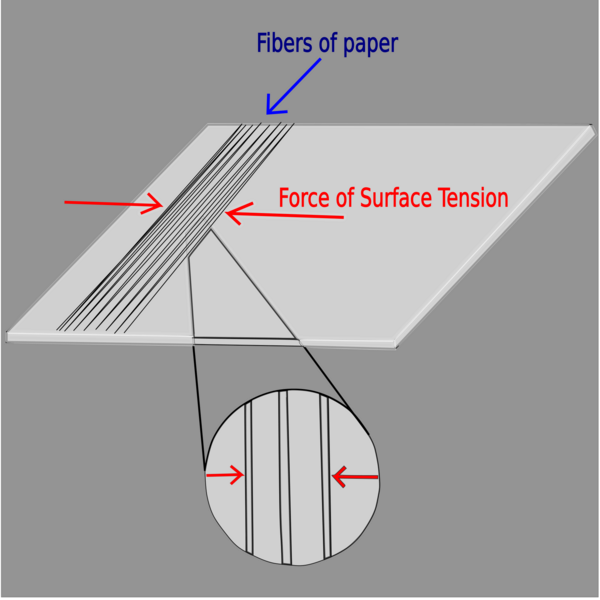
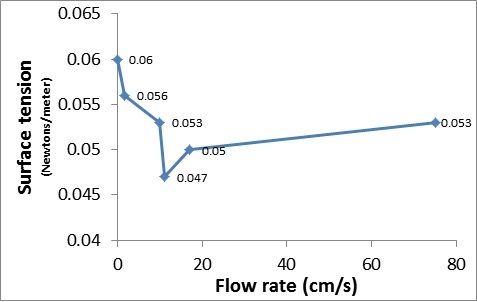
Surface tension and viscosity are both measures of how "sticky" a liquid is, but are they related? The authors here investigate the surface tension and viscosity of mixtures of water with different concentrations of agar agar, flour, or detergent. Surprisingly, they find that the least viscous mixtures had the strongest surface tensions, indicating that the two properties are not linked.
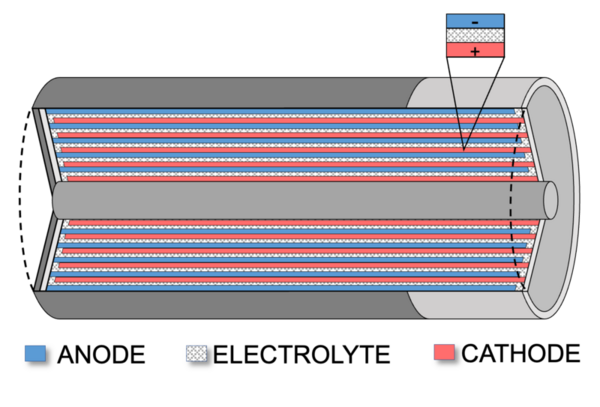
Rechargeable batteries are playing an increasingly prominent role in our lives due to the ongoing transition from fossil energy sources to green energy. The purpose of this study was to investigate variables that impact the effectiveness of rechargeable batteries. Alkaline (non-rechargeable) and rechargeable batteries share common features that are critical for the operation of a battery. The positive and negative electrodes, also known as the cathode and anode, are where the energy of the battery is stored. The electrolyte is what facilitates the transfer of cations and anions in a battery to generate electricity. Due to the importance of these components, we felt that a systematic investigation examining the surface area of the cathode and anode as well the impact of electrolytes with different properties on battery performance was justified. Utilizing a copper cathode and aluminum anode coupled with a water in salt electrolyte, a model rechargeable battery system was developed to test two hypotheses: a) increasing the contact area between the electrodes and electrolyte would improve battery capacity, and b) more soluble salt-based electrolytes would improve battery capacity. After soaking in an electrolyte solution, the battery was charged and the capacity, starting voltage, and ending voltage of each battery were measured. The results of this study supported our hypothesis that larger anode/cathodes surface areas and more ionic electrolytes such as sodium chloride, potassium chloride and potassium sulfate resulted in superior battery capacity. Incorporating these findings can help maximize the efficiency of commercial rechargeable batteries.
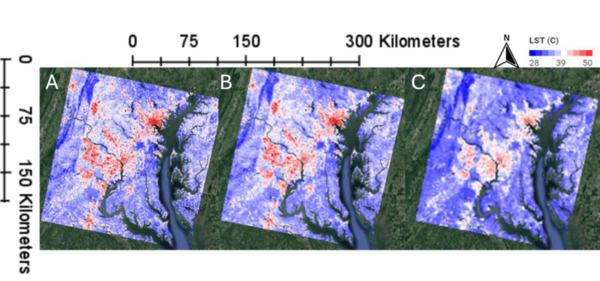
Image credit: Meister, Horvath, and Brown de Colstoun
This manuscript investigates the urban heat island (UHI) effect by utilizing two satellite datasets: Landsat (high spatial resolution, lower temporal resolution) and MODIS (lower spatial resolution, high temporal resolution). The authors hypothesized that Landsat would provide better spatial detail, while MODIS would better capture temporal variations. Their analysis in the Washington D.C.–Baltimore region supports these hypotheses, demonstrating that Landsat offers finer spatial details, whereas MODIS provides more consistent seasonal patterns and better detects heatwave frequencies.
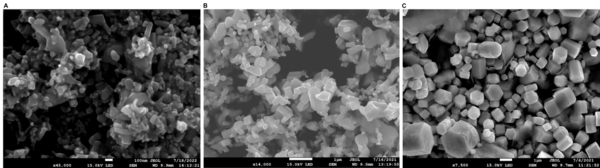
In this article the authors looked at how temperature was impacted when alumnium was added in various forms to aqueous copper(II) solutions. Their study investigates the impact of surface area on chemical reactions.
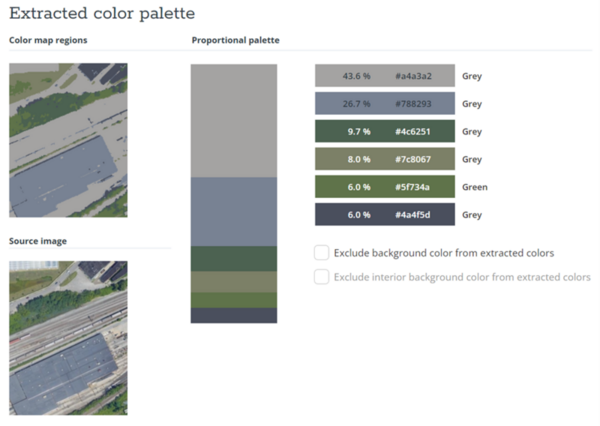
Almost all urban areas face the challenge of urban heat islands, areas with substantially hotter land surface temperatures than the surrounding rural areas. These areas are associated with worse air and water
quality, increased power outages, and increased heat-related illnesses. To learn more about these areas, Ustin et al. analyze satellite images of Cleveland neighborhoods to find out if there is a correlation between surface area development and surface temperature.
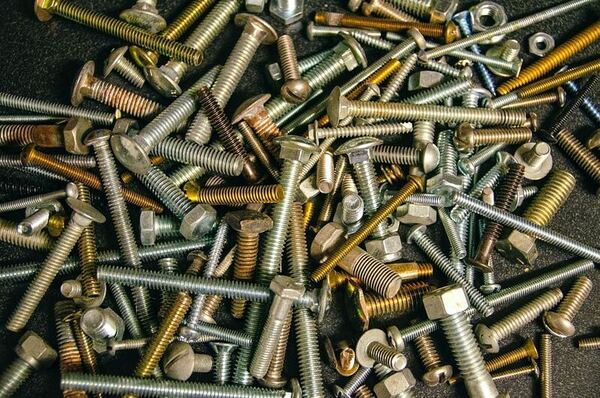
In the aerospace industry, various surface processing or coatings are widely used. However, no detailed research on the aerospace fastener tensile and double shear strength variation due to surface processing has been conducted. Thus, the purpose of this study was to systematically evaluate the effect of surface processing on the standard aerospace fastener's tensile and shear properties.