Browse Articles

Examining the impact of consecutive losses on gambling: When do we decide to quit?

Kim et al. | Apr 28, 2026

Examining the impact of consecutive losses on gambling: When do we decide to quit?
Image credit: Kim, Cragun, and Kim

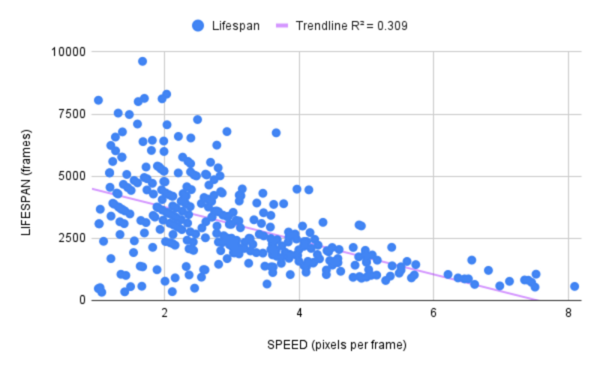
This article explored the question of when do people decide to stop gambling and further tries to extrapolate why people stop gambling at that point. Their study showed that people tend to quit gambling after 4 consecutive losses, significantly more than 1-3 consecutive losses or a win previous to quitting. They also found that participants commonly quit at a point value approximately 5 points greater than or less than their starting balance. The authors concluded that these results may be important in understanding how to cut down on excessive gambling or in creating policies that make it easier for people to disengage from gambling.

Read More...

A multi-dimensional analysis of NFL red zone efficiency

Kim et al. | Mar 16, 2026

A multi-dimensional analysis of NFL red zone efficiency
Image credit: Ben Hershey

Here the authors investigated the relationship between offensive play-calling styles and scoring success within the NFL's red zone by analyzing play-by-play data and expected points metrics. Their findings suggest that a conservative approach to play design and execution is more strongly associated with maximizing efficiency and point-value gains than aggressive strategies.

Read More...

Exploring the Factors that Drive Coffee Ratings

Agarwal et al. | May 19, 2025

Exploring the Factors that Drive Coffee Ratings

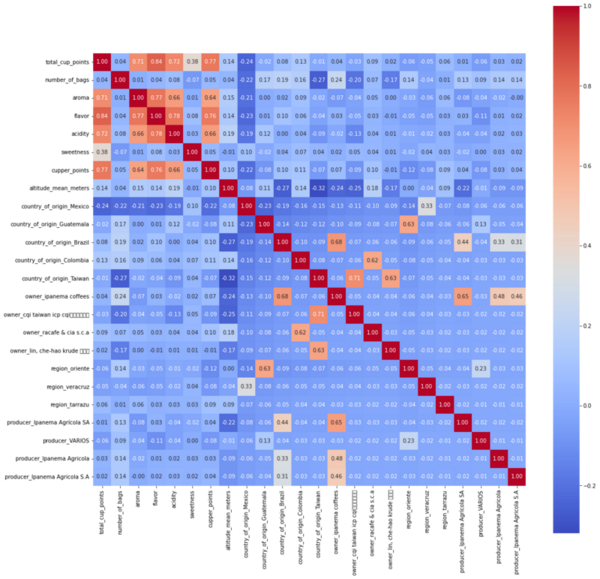
This study explores the factors that influence coffee quality ratings using data from the Coffee Quality Institute. Through a regression model based on gradient descent, the authors aimed to predict coffee ratings (total cup points) and hypothesized that sweetness and the coffee producer would be the most influential factors.

Read More...

Solubility of graphite and the efficacy of using its dissolved form as a conductive paste

Kirby et al. | Aug 23, 2024

Solubility of graphite and the efficacy of using its dissolved form as a conductive paste

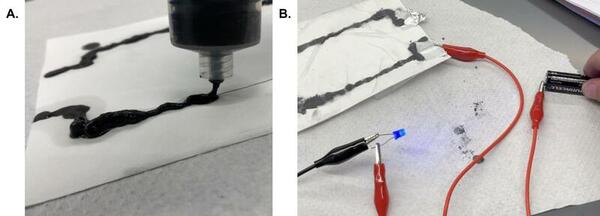
This study explored the use of graphite's conductivity for circuit boards by creating a conductive paste through exfoliation with organic solvents and sonication. The combination of acetone and sonication was found to be the most effective, producing a high-conductivity paste with desirable properties such as a low boiling point. While not a replacement for wires, this conductive paste has potential applications in electronics and infrastructure, provided that key engineering challenges are addressed.

Read More...

Suppress that algae: Mitigating the effects of harmful algal blooms through preemptive detection & suppression

Natarajan et al. | Jul 17, 2023

Suppress that algae: Mitigating the effects of harmful algal blooms through preemptive detection & suppression
Image credit: Sharanya Natarajan

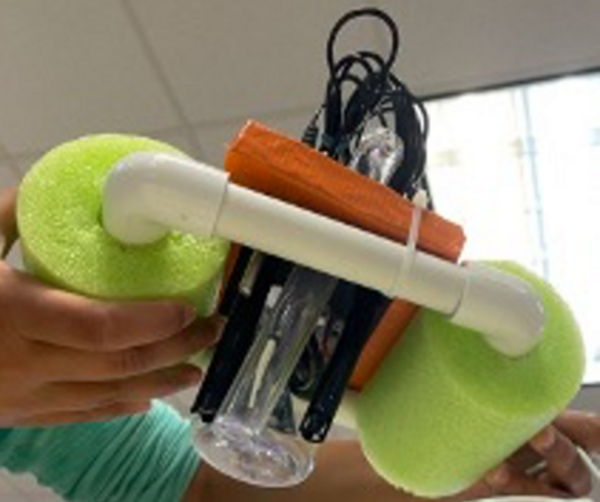
A bottleneck in deleting algal blooms is that current data section is manual and is reactionary to an existing algal bloom. These authors made a custom-designed Seek and Destroy Algal Mitigation System (SDAMS) that detects harmful algal blooms at earlier time points with astonishing accuracy, and can instantaneously suppress the pre-bloom algal population.

Read More...

Fractals: Exploring Mandelbrot Coordinates and qualitative characteristics of the corresponding Julia Set

Thomas et al. | Jul 07, 2022

Fractals: Exploring Mandelbrot Coordinates and qualitative characteristics of the corresponding Julia Set

Here based on an interest in fractals, the authors used a Julia Set Generator to consider a specific point on the Mandelbrot set with an associated coordinate. In this manner, they found that the complexity of the Mandelbrot and Julia Sets are governed by relatively simple rules, revealing that the intricate patterns of fractals can be defined by defined by simple rules and patterns.

Read More...