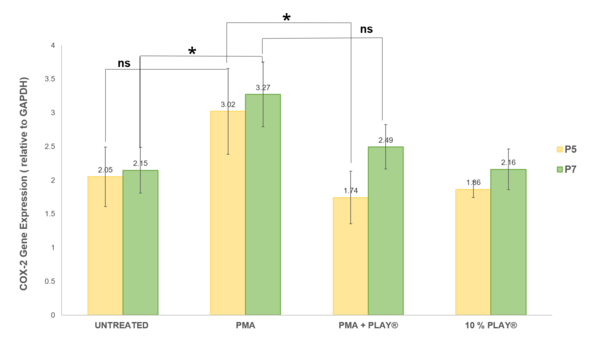
The authors seek to accelerate wound healing by reducing inflammation with a cocktail containing growth factors and bioactive modulators.
Read More...Evaluation of in vitro anti-inflammatory effect of PLAY® on UC-MSCs: A COX-2 expression study
The authors seek to accelerate wound healing by reducing inflammation with a cocktail containing growth factors and bioactive modulators.
Read More...Impact of gadodiamide (Omniscan) on a beef liver catalase ex vivo model
Here, seeking to better understand the effects of gadolinium-based contrast agents, dyes typically used for MRI scans, the authors evaluated the activity of catalase found in beef liver both with and without gadodiamide when exposed to hydrogen peroxide. They found that gadioamide did not significantly inhibit catalase's activity, attributing this lack of effects to the chelating agent found in gadodiamide.
Read More...The effect of wild orange essential oil on ascorbic acid decay in freshly squeezed orange juice
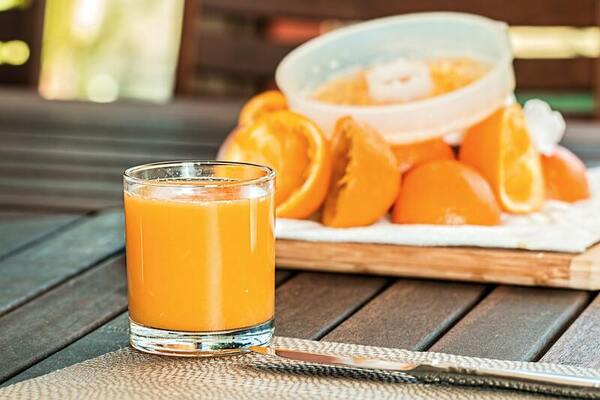
The goal of this project was to see if the addition of wild orange essential oil to freshly squeezed orange juice would help to slow down the decay of ascorbic acid when exposed to various temperatures, allowing vital nutrients to be maintained and providing a natural alternative to the chemical additives in use in industry today. The authors hypothesized that the addition of wild orange essential oil to freshly squeezed orange juice would slow down the rate of oxidation when exposed to various temperatures, reducing ascorbic acid decay. On average, wild orange EO slowed down ascorbic acid decay in freshly squeezed orange juice by 15% at the three highest temperatures tested.
Read More...Exploring the Wonders of the Early Universe: Green Pea Galaxies and Light Flux
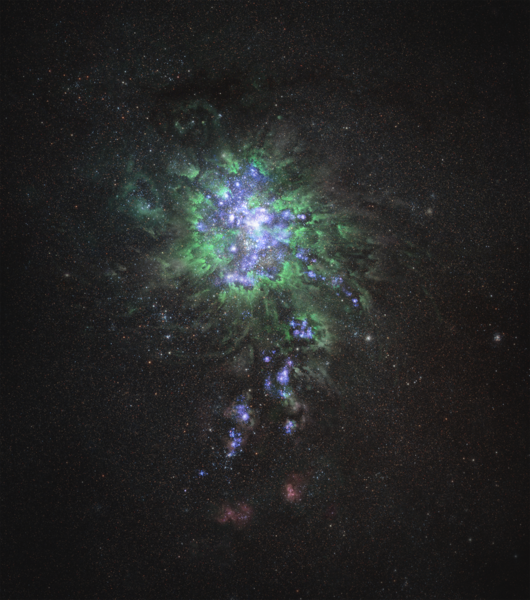
Studying other galaxies can help us understand the origins of the universe. Here, the authors study a type of galaxies known as Green Peas gaining insights that could help inform our understanding of Lyman alpha emitters, one of the first types of galaxies that existed in the early universe.
Read More...The impact of Red 40 artificial food dye on the heart rate of Daphnia magna
In this study, potential physiological effects of Red 40 food dye, found in many different food products, are tested using Daphnia magna, a small freshwater crustacean.
Read More...Computational Structure-Activity Relationship (SAR) of Berberine Analogs in Double-Stranded and G-Quadruplex DNA Binding Reveals Both Position and Target Dependence
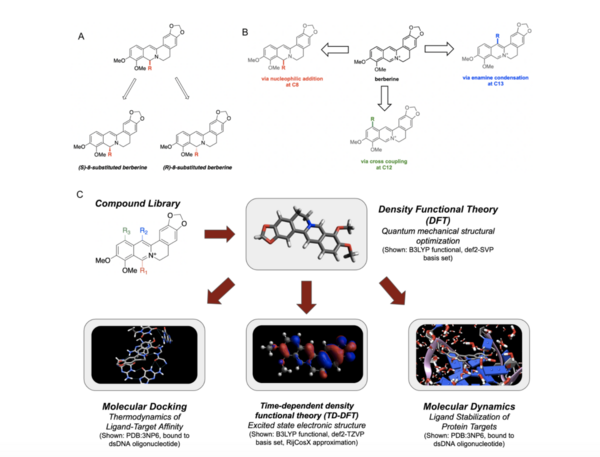
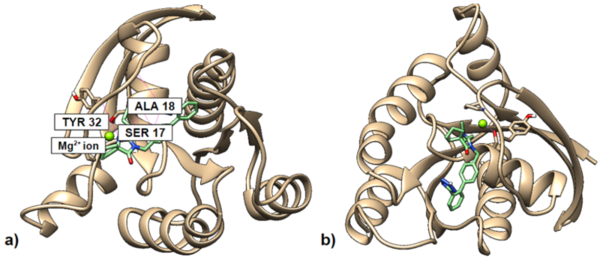
Berberine, a natural product alkaloid, and its analogs have a wide range of medicinal properties, including antibacterial and anticancer effects. Here, the authors explored a library of alkyl or aryl berberine analogs to probe binding to double-stranded and G-quadruplex DNA. They determined that the nature of the substituent, the position of the substituent, and the nucleic acid target affect the free energy of binding of berberine analogs to DNA and G-quadruplex DNA, however berberine analogs did not result in net stabilization of G-quadruplex DNA.
Read More...The effect of floating plant on water purification: Comparison of the water purification capability of Water Hyacinth, Duckweed, and Azolla
Clean water is a necessity for every household, yet water pollution is a serious problem in many parts of the world and plays a major role in compromising water security in the 21st century. In this paper, the authors address the utility of several plants as natural water purifiers. They estimate the effectiveness of duckweed, hyacinth, and azolla in improving the quality of water from the Mithi river in India by measuring several metrics. They conclude that all three plants are effective in improving water quality, suggesting that these plants as eco-friendly options for water treatment.
Read More...Strain-specific and photochemically-activated antimicrobial activity of berberine and two analogs
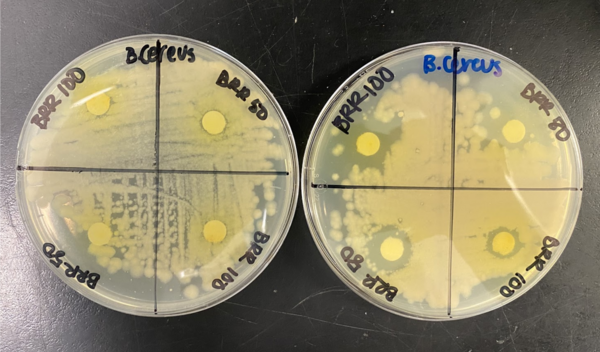
In this study, the authors investigate the antimicrobial effects of berberine and berberine analogs. Berberine is extracted from plants and is a naturally occurring alkaloid, and is also excited photochemically. Using three different assays, the authors tested whether these compounds would inhibit bacterial growth. They found that these compounds were antibacterial and even more so when used with photoirradiation. This study has important antibacterial implications.
Read More...The Effects of Barley Straw (Hordeum vulgare) Extract and Barley Straw Pellets on Algal Growth and Water Quality
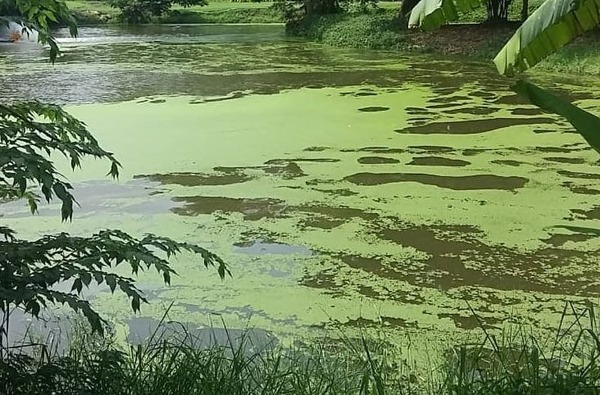
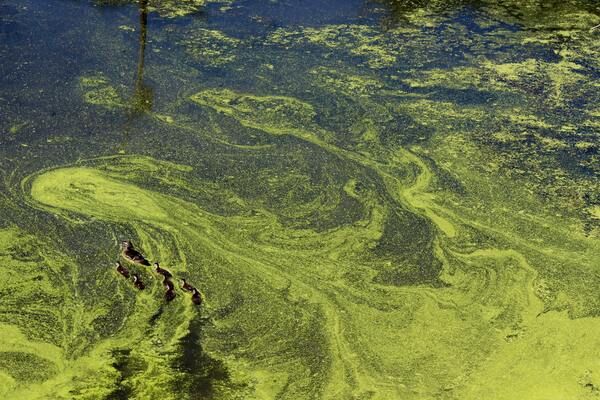
Algal overgrowth often threatens to clog irrigation pipes and drinking water lines when left unchecked, as well as releasing possible toxins that threaten plant and human health. It is thus important to find natural, non-harmful agents that can decrease algal growth without threatening the health of plants and humans. In this paper, the authors test the efficacy of barely extract in either liquid or pellet form in decreasing algal growth. While their results were inconclusive, the experimental set-up allows them to investigate a wider range of agents as anti-algal treatments that could potentially be adopted on a wider scale.
Read More...Effects of Ocean Acidification on the Photosynthetic Ability of Chaetoceros gracilis in the Monterey Bay
In this article, Harvell and Nicholson hypothesized that increased ocean acidity would decrease the photosynthetic ability of Chaetoceros gracilis, a diatom prolific in Monterey Bay, because of the usually corrosive effects of carbonic acid on both seashells and cells’ internal structures. They altered pH of algae environments and measured the photosynthetic ability of diatoms over four days by spectrophotometer. Overall, their findings indicate that C. gracilis may become more abundant in Monterey Bay as the pH of the ocean continues to drop, potentially contributing to harmful algal blooms.
Read More...