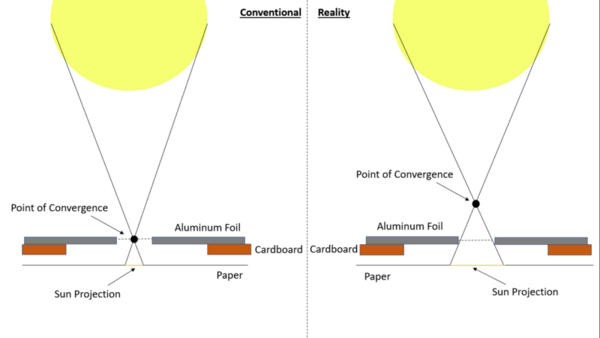
This study compares three methods regarding their accuracy in calculating the distance between the Earth and the Sun. The hypothesis presented was that the shadow method would have the greatest mean accuracy, followed by the tube pinhole method, and finally the plate pinhole method. The results validate the hypothesis; however, further investigation would be helpful in determining effective mitigation of each method’s limitations and the effectiveness of each method in determining the distance of other light-emitting objects distant from the Earth.
Read More...Browse Articles
AeroPurify: Autonomous air filtration UAV using real-time 3-D Monte Carlo gradient search
Here the authors present an autonomous drone air filtration system that uses a novel algorithm, the gradient ascent ML particle filter (GA/MLPF), to efficiently locate and mitigate outdoor air pollution. They demonstrate that their GA/MLPF algorithm is significantly more efficient than the conventional gradient ascent algorithm, reducing both the time and number of waypoints needed to find the source of pollution.
Read More...A study to determine the anti-cancer and pro-apoptotic properties of Amaranthus spinosus Linn. Extract, AS20
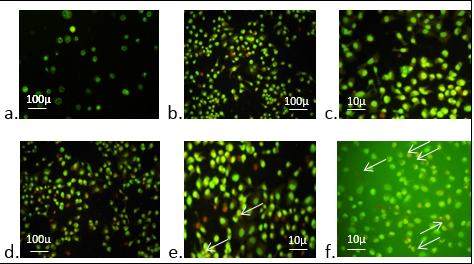
In this study, the authors investigate whether a new compound has anti-cancer properties. Using the crude extract from the Amaranthus spinosus plant, HeLa cancer cells were assessed for cell death. Findings reveal that the extract (AS20) has cytotoxic effects on HeLa cells. Their findings introduce a new compound to potentially pursue in the hunt for novel cancer treatments.
Read More...Comparative data analysis on the effect of socioeconomic factors on math proficiency
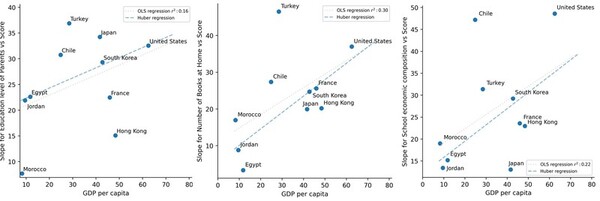
This study examines how socioeconomic status (SES) influences student mathematics achievement across countries by conducting multiple regression analyses to the Trends in International Mathematics and Science Study (TIMSS) 2019 dataset.
Read More...Temperature and Precipitation Responses to a Stratospheric Aerosol Geoengineering Experiment Using the Community Climate System Model 4
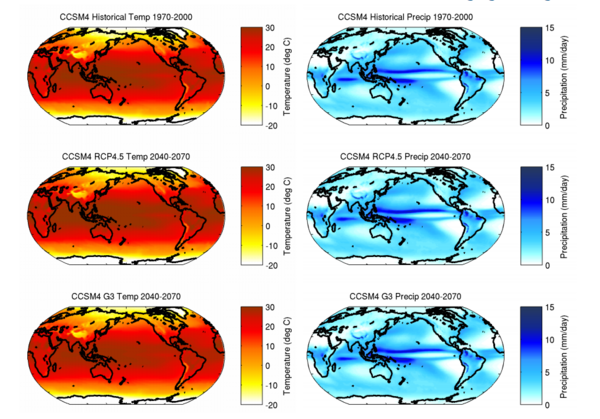
We are changing our environment with steadily increasing carbon dioxide emissions, but we might be able to help. The authors here use a computer program called Community Climate System Model 4 to predict the effects of spraying small particles into the atmosphere to reflect away some of the sun's rays. The software predicts that this could reduce the amount of energy the Earth's atmosphere absorbs and may limit but will not completely counteract our carbon dioxide production.
Read More...The effect of economic downturns on the frequency of mass shootings
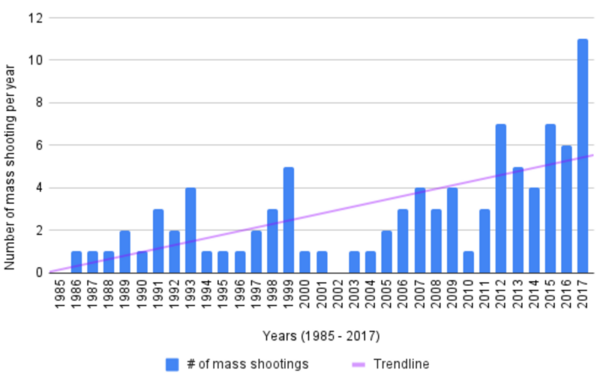
Researching gun violence and mass shootings in the U.S. is difficult due to the lack of consistent data collection. Some studies have linked mass shootings to personal financial stress, but little formal research exists on the impact of broader economic conditions. This study hypothesized an inverse relationship between mass shootings and economic performance, using the S&P 500 and unemployment rate as indicators.
Read More...Modeling and optimization of epidemiological control policies through reinforcement learning
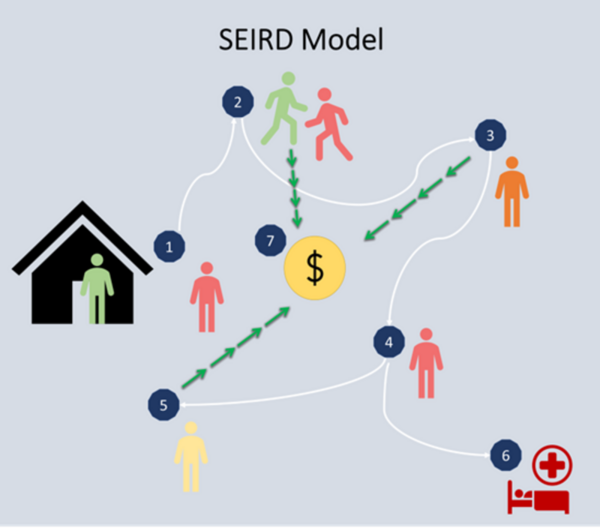
Pandemics involve the high transmission of a disease that impacts global and local health and economic patterns. Epidemiological models help propose pandemic control strategies based on non-pharmaceutical interventions such as social distancing, curfews, and lockdowns, reducing the economic impact of these restrictions. In this research, we utilized an epidemiological Susceptible, Exposed, Infected, Recovered, Deceased (SEIRD) model – a compartmental model for virtually simulating a pandemic day by day.
Read More...Unveiling bias in ChatGPT-3.5: Analyzing constitutional AI principles for politically biased responses
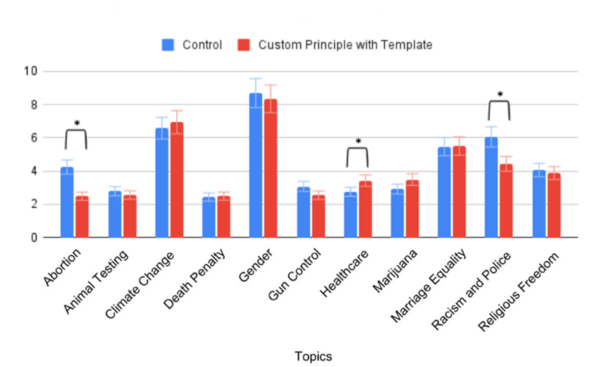
Various methods exist to mitigate bias in AI models, including "Constitutional AI," a technique which guides the AI to behave according to a list of rules and principles. Lo, Poosarla, Singhal, Li, Fu, and Mui investigate whether constitutional AI can reduce bias in AI outputs on political topics.
Read More...