Browse Articles

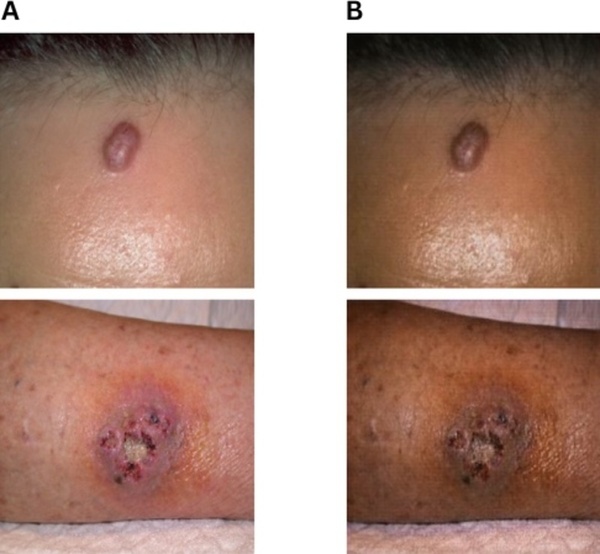
Mitigating skin color bias in dermatology AI using CycleGAN-based data augmentation

Kannan et al. | Jun 24, 2026

Mitigating skin color bias in dermatology AI using CycleGAN-based data augmentation
Image credit: Kannan and Ramasamy

This study investigates skin tone bias in artificial intelligence models used for dermatological disease classification and evaluates a CycleGAN-based data augmentation approach to improve diagnostic performance on darker skin types. We generated synthetic dark-skinned images to enhance dataset diversity and compared model performance before and after augmentation. The results demonstrate that augmentation with synthetic dermatological images can help reduce disparities in diagnostic performance across skin tones, highlighting a practical strategy for improving fairness in dermatology AI systems.

Read More...
Quantitative analysis and development of alopecia areata classification frameworks

Dubey et al. | Jun 03, 2024

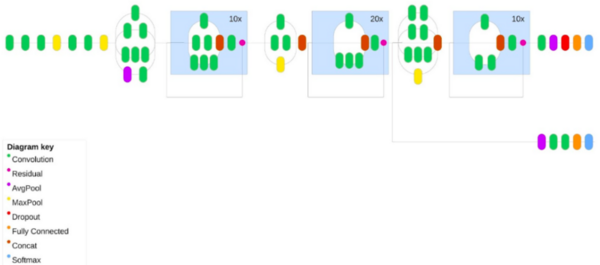
Quantitative analysis and development of alopecia areata classification frameworks

This article discusses Alopecia areata, an autoimmune disorder causing sudden hair loss due to the immune system mistakenly attacking hair follicles. The article introduces the use of deep learning (DL) techniques, particularly convolutional neural networks (CNN), for classifying images of healthy and alopecia-affected hair. The study presents a comparative analysis of newly optimized CNN models with existing ones, trained on datasets containing images of healthy and alopecia-affected hair. The Inception-Resnet-v2 model emerged as the most effective for classifying Alopecia Areata.

Read More...

Deep learning for pulsar detection: Investigating hyperparameter effects on TensorFlow classification accuracy

Upadhyay et al. | Jan 31, 2026

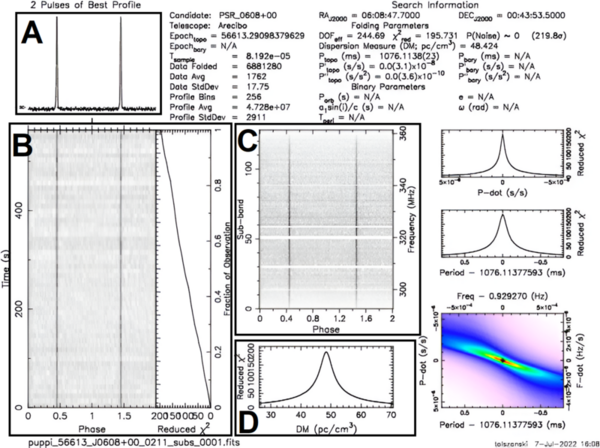
Deep learning for pulsar detection: Investigating hyperparameter effects on TensorFlow classification accuracy

This study investigates how the hyperparameters epochs and batch size affect the classification accuracy of a convolutional neural network (CNN) trained on pulsar candidate data. Our results reveal that accuracy improves with increasing number of epochs and smaller batch sizes, suggesting that with optimized hyperparameters, high accuracy may be achievable with minimal training. These findings offer insights that could help create more efficient machine learning classification models for pulsar signal detection, with the potential of accelerating pulsar discovery and advancing astrophysical research.

Read More...

Assessing Spanish interpretation in community healthcare: a study of patient satisfaction

Yon et al. | Jun 22, 2026

Assessing Spanish interpretation in community healthcare: a study of patient satisfaction
Image credit: Yon and Jones

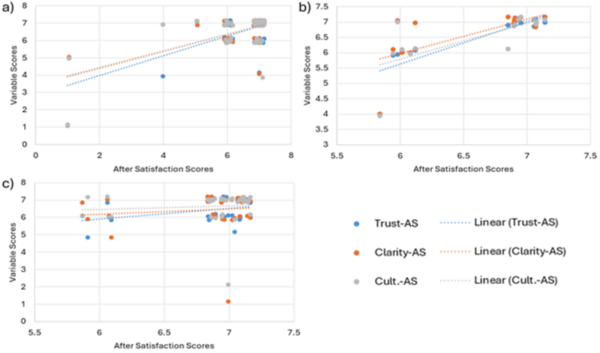
This manuscript explores the use of Spanish language translators in an outpatient clinic in New Jersey. The authors surveyed patients before and after in person, video, and telephone appointments to determine which modality was most acceptable to the patients. The authors found that the three modalities did not differ in patient satisfaction, but that patients were grateful for translations services and that patient trust may be expanded by the use of these services and by focuses of translator soft skills.

Read More...