Browse Articles

Sepia bandensis ink inhibits polymerase chain reactions

Novoselov et al. | Sep 21, 2020

<em>Sepia bandensis</em> ink inhibits polymerase chain reactions

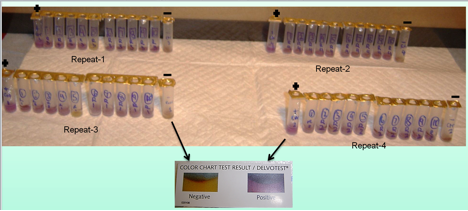
While cephalopods play significant roles in both ecosystems and medical research, there is currently no assembled genome. In an attempt to sequence the Sepia bandensis genome, it was found that there was inhibition from the organism during DNA extraction, resulting in PCR failure. In this study, researchers tested the hypothesis that S. bandensis ink inhibits PCR. They then assessed the impact of ink on multiple methods of DNA extraction

Read More...
Antibiotic Residues Detected in Commercial Cow’s Milk

Memili et al. | Mar 18, 2015

Antibiotic Residues Detected in Commercial Cow’s Milk

Antibiotics are oftentimes used to treat mastitis (infection of the mammary gland) in dairy cows. Regulations require that milk from these cows be discarded until the infection has cleared and antibiotic residues are no longer detectable in the cow's milk. These regulations are in place to protect consumers and to help prevent the rise of antibiotic resistant bacteria. In this study, the authors test milk samples from 10 milk suppliers in the Greensboro, NC to see if they contain detectable levels of antibiotic residues.

Read More...

The Prevalence of White Guilt Among American High School Students

Buadu et al. | Jun 03, 2014

The Prevalence of White Guilt Among American High School Students

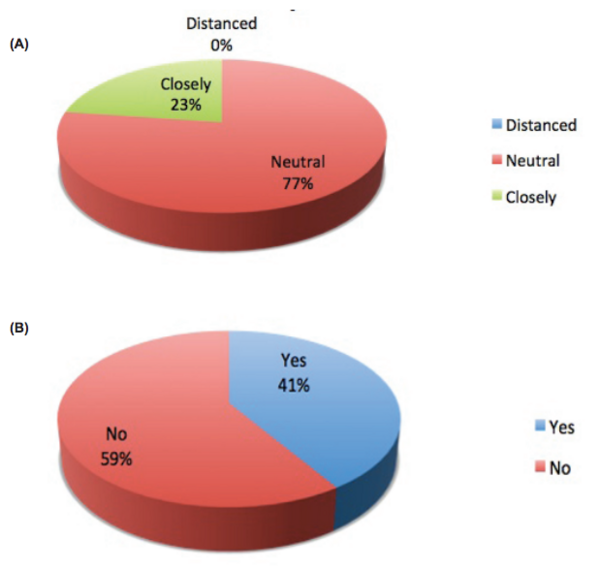
Racial inequality has been a major issue throughout the history of the United States. In recent years, however, especially with the election of America's first black president, many have claimed that we have made progress and are moving towards a post-racial society. The authors of this study sought to test that claim by evaluating whether high school age students still experience a phenomenon known as white guilt. White guilt is defined as remorse or shame felt by people of Caucasian descent about racial inequality.

Read More...

Evaluating the impact of prompting styles on LLM accuracy for AIME math questions

Ganesa et al. | Jul 26, 2026

Evaluating the impact of prompting styles on LLM accuracy for AIME math questions

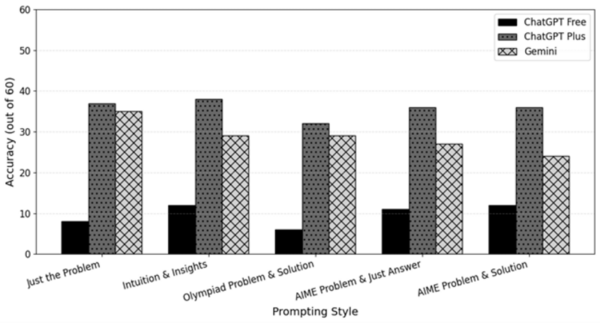
Large language models are increasingly used to solve math problems, but their ability to handle multi-step reasoning remains uncertain. In this study, students tested whether different prompting styles could improve LLM accuracy on challenging AIME math questions and found that detailed step-by-step solutions did not significantly outperform simpler prompts. These results suggest that improving LLM mathematical reasoning may require deeper model-level advances rather than changes in prompting style alone.

Read More...