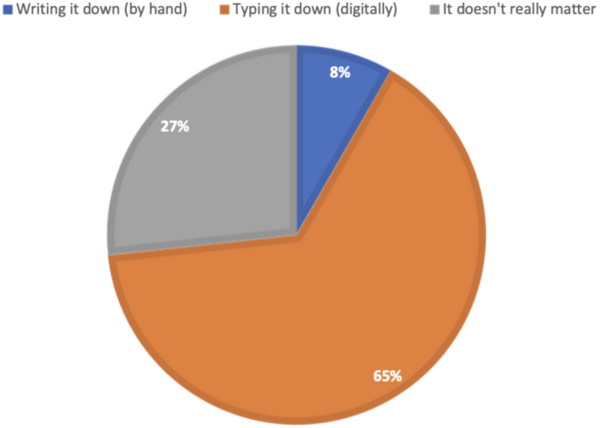
The authors survey high school students regarding preferences for taking notes by hand versus typing.
Read More...Student work preferences: Typing or handwriting in the digital era
The authors survey high school students regarding preferences for taking notes by hand versus typing.
Read More...Changing the surface properties of the backside of a silicon wafer to repel oil and prevent particle binding
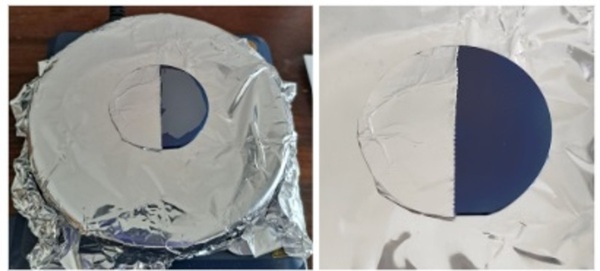
Wafers, essential in microchip production, can develop issues like leveling problems and wafer slip due to the formation of silanol bonds on their backside, which attract silica particles and oil. Authors tested addressing this issue with a coating of [acetoxy(polyethyleneoxy)propyl]triethoxysilane (APTS) applied to the wafer’s backside, preventing particle binding and oil adherence.
Read More...Quantifying kitchen appliances’ phantom loads using a shifted gamma distribution model

In this article the authors look at phantom loads of common kitchen appliances and found that the appliances looked at have a phantom load of 10.9%. Understanding phantom loads is important as it can reduce energy grid usage and energy bill costs for homeowners.
Read More...Willingness to visit the pediatric dentist during the COVID-19 pandemic
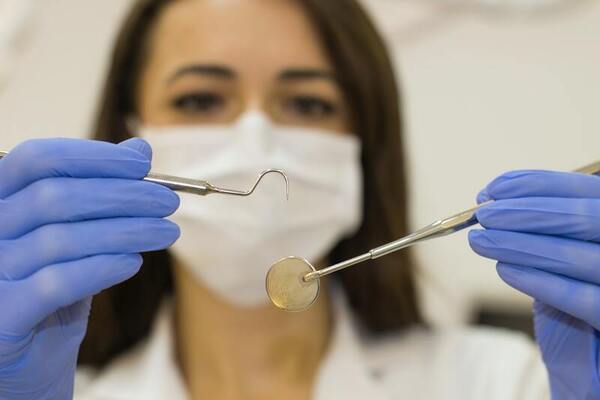
Because of the COVID-19 pandemic, people are missing important appointments because they are viewed as nonessential, possibly including children's pediatric dentist appointments. This study aims to determine how the COVID-19 pandemic has effected parents' willingness to allow children to visit pediatric dental practices and what safety measures would make them feel more comfortable visiting the dentist. The authors found a weak positive correlation between parents' unwillingness to allow their child to visit the dentist, however overall anxiety towards visiting the dentist during the pandemic was low.
Read More...Efficacy of Rotten and Fresh Fruit Extracts as the Photosensitive Dye for Dye-Sensitized Solar Cells
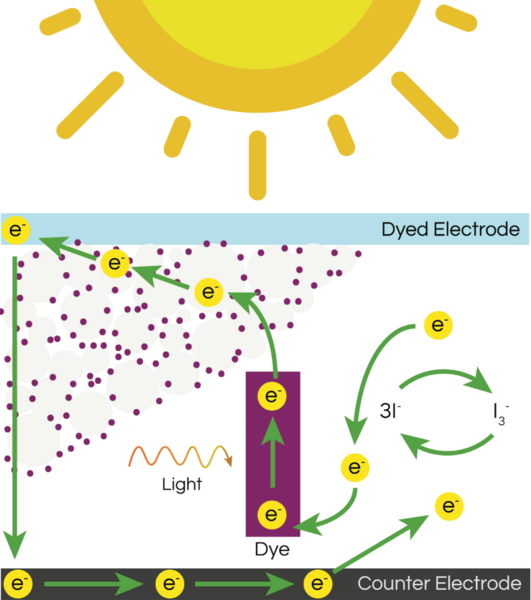
Dye-sensitized solar cells (DSSC) use dye as the photoactive material, which capture the incoming photon of light and use the energy to excite electrons. Research in DSSCs has centered around improving the efficacy of photosensitive dyes. A fruit's color is defined by a unique set of molecules, known as a pigment profile, which changes as a fruit progresses from ripe to rotten. This project investigates the use of fresh and rotten fruit extracts as the photoactive dye in a DSSC.
Read More...The Development and Maximization of a Novel Photosynthetic Microbial Fuel Cell Using Rhodospirillum rubrum
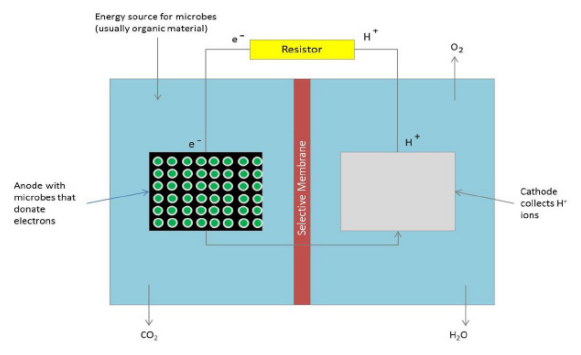
Microbial fuel cells (MFCs) are bio-electrochemical systems that utilize bacteria and are promising forms of alternative energy. Similar to chemical fuel cells, MFCs employ both an anode (accepts electrons) and a cathode (donates electrons), but in these devices the live bacteria donate the electrons necessary for current. In this study, the authors assess the functionality of a photosynthetic MFC that utilizes a purple non-sulfur bacterium. The MFC prototype they constructed was found to function over a range of environmental conditions, suggesting its potential use in industrial models.
Read More...Incorporating graphite from pencils as a component of lithium-ion batteries
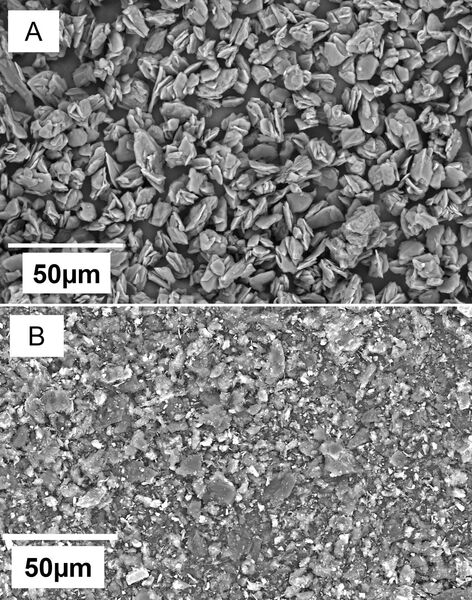
The authors looked at the ability to use graphite from pencils in anodes of lithium-anode batteries.
Read More...The Protective Antioxidant Effects of Sulforaphane on Germinating Radish Seeds Treated with Hydrogen Peroxide
Free radical chain reactions result when atoms containing unpaired electrons bind with biomolecules and alter their biological functions, contributing to the progression of diseases such as atherosclerosis, cancer, and diabetes. Antioxidants, such as vitamin E and sulforaphane, are effective neutralizers of free radicals and prevent cellular damage. This present study is conducted to determine the relative effectiveness of sulforaphane against free radicals generated by hydrogen peroxide (H2O2) compared with the known antioxidant vitamin E.
Read More...The Effects of Antioxidants on the Climbing Abilities of Drosophila melanogaster Exposed to Dental Resin
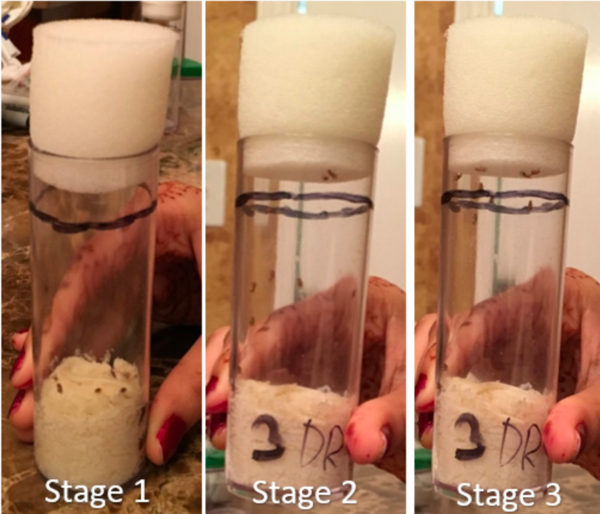
Dental resins can be a source of reactive oxygen species (ROS) which in unruly amounts can be toxic to cellular and overall health. In this report, the authors test whether the consumption of antioxidant rich foods like avocado and asparagus can protect against the effect of dental resin-derived ROS. However, rather than testing humans, they use fruit flies and their climbing abilities as an experimental readout.
Read More...Converting SiO2 wafers to hydrophobic using chlorotrimethylsilane

Semiconductors are the center of the fourth industrial revolution as they are key components for all electronics. Exposed wafers made of silicon (Si), which can easily oxidize, convert to silicon dioxide (SiO2). The surface of SiO2 wafers consists of many Si-OH bonds, allowing them to easily bond with water, resulting in a “wet” or hydrophilic condition. We sought to determine a way to modify the surface of SiO2 wafers to become hydrophobic to ensure safe wet cleaning.
Read More...