Browse Articles

The sweetened actualities of neural membrane proteins: A computational structural analysis

Chauhan et al. | Nov 03, 2022

The sweetened actualities of neural membrane proteins: A computational structural analysis

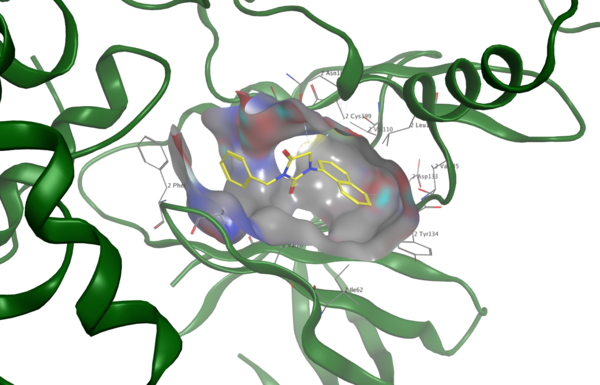
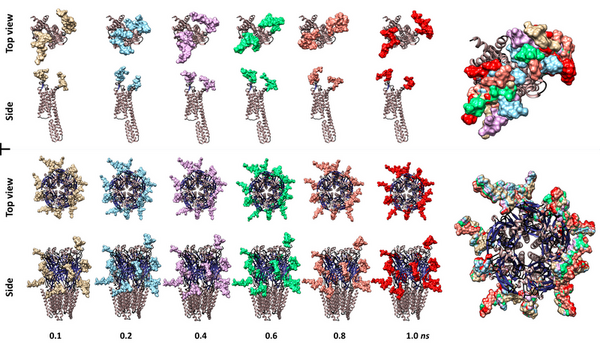
Here, seeking to better understand the roles of glycans in the receptors of active sites of neuronal cells, the authors used molecular dynamics simulations to to uncover the dynamic nature of N-glycans on membrane proteins. The authors suggest the study of theinteractions of these membrane poreins could provide future potential therapeutic targets to treat mental diseases.

Read More...
A comparative study of dynamic scoring formulas for capture-the-flag competitions

Ho et al. | Aug 30, 2024

A comparative study of dynamic scoring formulas for capture-the-flag competitions

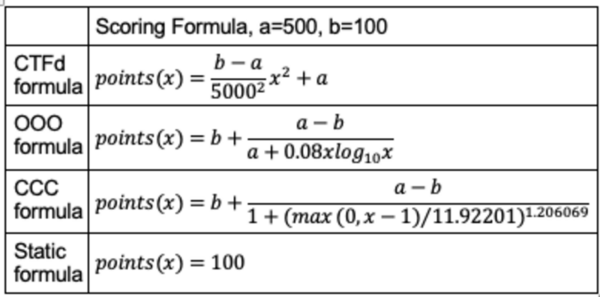
The use of gamification in cybersecurity education, particularly through capture-the-flag competitions, involves scoring challenges based on their difficulty and the number of teams that solve them. The study investigated how changing the scoring formulas affects competition outcomes, predicting that different formulas would alter score distributions.

Read More...

Comparative analysis of player ability, game size, and ideal starting positions in Nim games

Sinha et al. | Aug 02, 2026

Comparative analysis of player ability, game size, and ideal starting positions in Nim games
Image credit: Immo Wegmann

Here the authors investigated the impact of player ability versus starting positions in the game of Nim under imperfect play, hypothesizing that player skill becomes the primary determinant of outcomes as pile sizes grow. Through computational simulations and a mathematical model, they demonstrated that favorable starting positions lose their advantage over time and provide key insights to help improve reinforcement learning algorithms in abstract, complex decision-making environments.

Read More...

Error mitigation of quantum teleportation on IBM quantum computers

Chen et al. | May 15, 2023

Error mitigation of quantum teleportation on IBM quantum computers

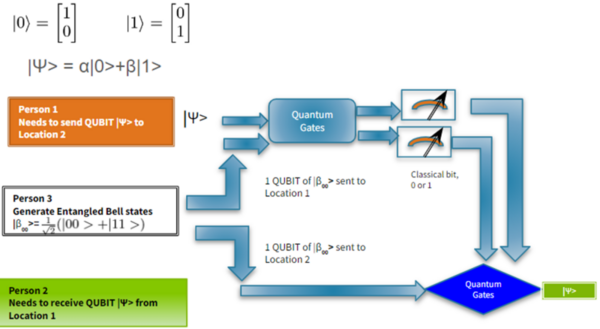
Quantum computers can perform computational tasks beyond the capability of classical computers, such as simulating quantum systems in materials science and chemistry. Quantum teleportation is the transfer of quantum information across distances, relying on entangled states generated by quantum computing. We sought to mitigate the error of quantum teleportation which was simulated on IBM cloud quantum computers.

Read More...

Prediction of molecular energy using Coulomb matrix and Graph Neural Network

Hazra et al. | Feb 01, 2022

Prediction of molecular energy using Coulomb matrix and Graph Neural Network

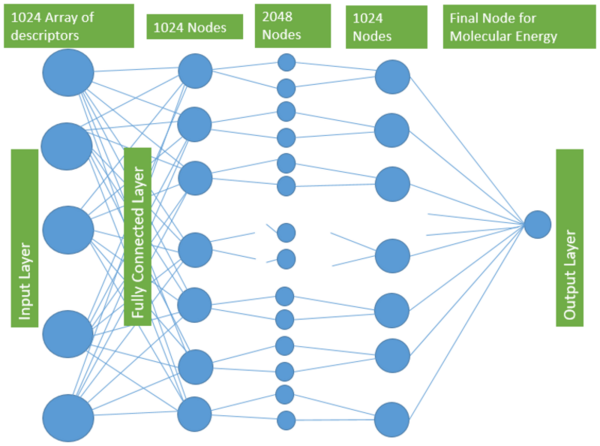
With molecular energy being an integral element to the study of molecules and molecular interactions, computational methods to determine molecular energy are used for the preservation of time and resources. However, these computational methods have high demand for computer resources, limiting their widespread feasibility. The authors of this study employed machine learning to address this disadvantage, utilizing neural networks trained on different representations of molecules to predict molecular properties without the requirement of computationally-intensive processing. In their findings, the authors determined the Feedforward Neural Network, trained by two separate models, as capable of predicting molecular energy with limited prediction error.

Read More...

Geographic Distribution of Scripps National Spelling Bee Spellers Resembles Geographic Distribution of Child Population in US States upon Implementation of the RSVBee “Wildcard” Program

Kannankeril et al. | Aug 17, 2020

Geographic Distribution of Scripps National Spelling Bee Spellers Resembles Geographic Distribution of Child Population in US States upon Implementation of the RSVBee “Wildcard” Program

The Scripps National Spelling Bee (SNSB) is an iconic academic competition for United States (US) schoolchildren, held annually since 1925. However, the sizes and geographic distributions of sponsored regions are uneven. One state may send more than twice as many spellers as another state, despite similar numbers in child population. In 2018, the SNSB introduced a wildcard program known as RSVBee, which allowed students to apply to compete as a national finalist, even if they did not win their regional spelling bee. In this study, the authors tested the hypothesis that the geographic distribution of SNSB national finalists more closely matched the child population of the US after RSVBee was implemented.

Read More...