Browse Articles

Simulating single versus cocktail antibiotic effects on the human gut microbiome

Patel et al. | Jul 19, 2026

Simulating single versus cocktail antibiotic effects on the human gut microbiome
Image credit: Volodymyr Hryshchenko

This study, uses SimulATe to model changes in microbial diversity and community structure upon administering a cocktail of antibiotics versus a single antibiotic. The authors hypothesized that antibiotic cocktails, particularly those combining broad-spectrum drugs like tetracyclines and trimethoprims, would cause a more significant reduction in gut microbial diversity compared to single-drug treatments. The findings confirmed a greater loss of microbial diversity with combinatorial treatments compared to single-drug treatments. While individual antibiotics dynamically reshaped the surviving species of the microbiome, antibiotic cocktails frequently cleared all species of the gut microbiome.

Read More...

The Inhibitory Effect of Probiotics on the Growth and Biofilm Formation of Salmonella Sp.

Lee et al. | Jan 26, 2019

The Inhibitory Effect of Probiotics on the Growth and Biofilm Formation of Salmonella Sp.

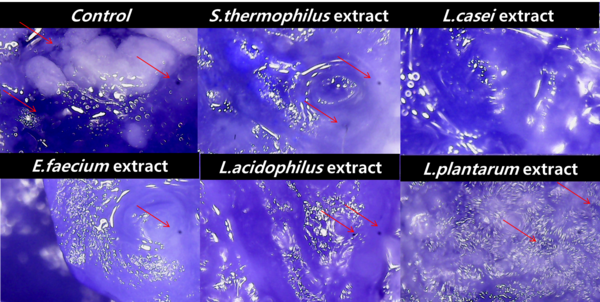
Salmonella is a genus of bacteria responsible for over 90 million cases of intestinal illnesses yearly. Like many bacteria, Salmonella can create a biofilm matrix, which confers stronger resistance against antibiotics. However, there has been relatively little research on the inhibition of Salmonella biofilm formation, which is a crucial factor in its widespread growth. In this study, Lee and Kim quantitatively measure the effectiveness of several common probiotics in inhibiting Salmonella bacterial growth. They found concentration-dependent antibacterial effects varied among the probiotics tested, indicating the possibility of probiotic species-specific mechanisms of Salmonella growth inhibition.

Read More...

Bacteria and Antibiotic Resistance in School Bathrooms

Ciarlet et al. | Aug 24, 2020

Bacteria and Antibiotic Resistance in School Bathrooms

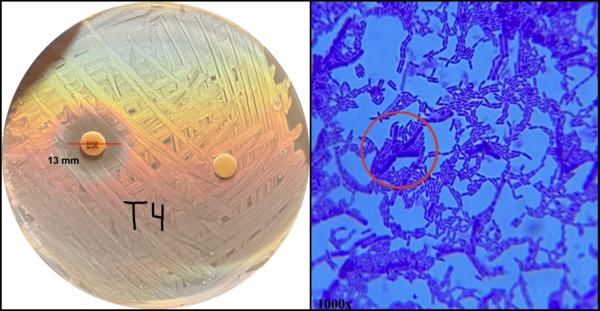
Since school bathrooms are widely suspected to be unsanitary, we wanted to compare the total amount of bacteria with the amount of bacteria that had ampicillin or streptomycin resistance across different school bathrooms in the Boston area. We hypothesized that because people interact with the faucet, outdoor handle, and indoor handle of the bathroom, based on whether or not they have washed their hands, there would be differences in the quantity of the bacteria presented on these surfaces. Therefore, we predicted certain surfaces of the bathroom would be less sanitary than others.

Read More...

An Exploration of a Honey-Ginger Supplement as an Antimicrobial Agent

Phillips et al. | Jul 10, 2016

An Exploration of a Honey-Ginger Supplement as an Antimicrobial Agent

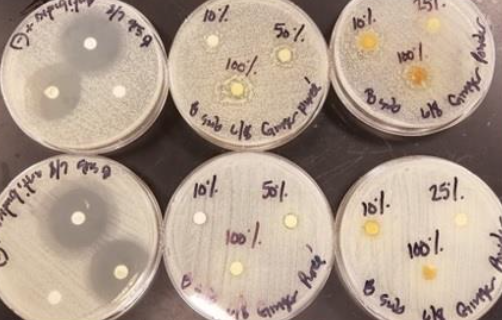
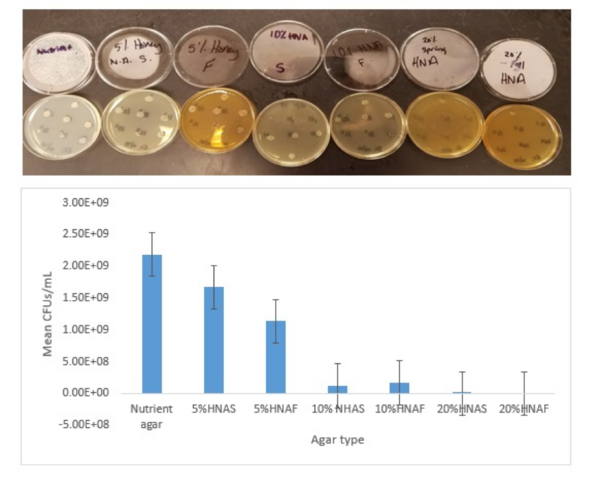
Due to the increase in antimicrobial resistance, alternative medicinal therapies are being explored. Studies have shown that honey and ginger alone have antimicrobial effects on the genera Staphylococcus and Escherichia, including S. epidermidis and E. coli. The authors of this study tested whether a honey-ginger supplement, Jengimielâ„¢, could be used as an antimicrobial agent against S. epidermidis and E. coli K-12.

Read More...