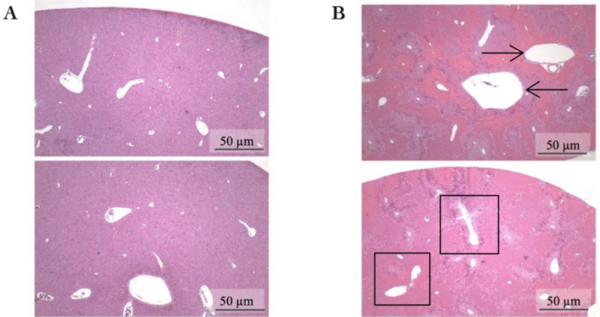
The authors looked at how acetaminophen may cause liver damage by looking at both serum level markers of liver damage as well as liver pathology.
Read More...Evaluation of hepatotoxicity from excessive acetaminophen: physiological and histological changes
The authors looked at how acetaminophen may cause liver damage by looking at both serum level markers of liver damage as well as liver pathology.
Read More...An assessment of controllable etiological factors involved in neonatal seizure using a Monte Carlo model
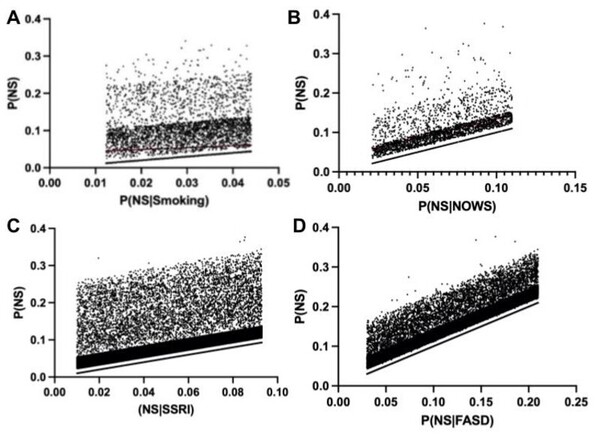
The authors used Monte Carlo simulations to assess the impacts of various factors on neonatal seizure risk.
Read More...Adults’ attitudes toward non-alcoholic beer purchases and consumption by children and adolescents
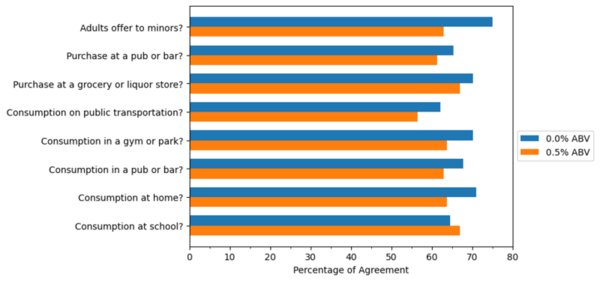
Consumption of non-alcoholic beverages, like non-alcoholic beer, is growing in popularity in the United States. These beverages raise important societal questions, such as whether minors should be allowed to purchase or consume non-alcoholic beer. An and An investigate this issue by surveying adults to see if they support minors purchasing and consuming non-alcoholic beer.
Read More...Use of yogurt bacteria as a model surrogate to compare household cleaning solutions
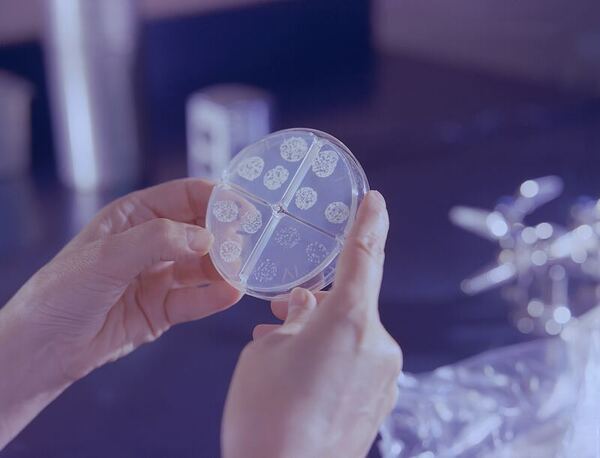
While resources on the safety of household cleaning products are plentiful, measures of efficacy of these cleaning chemicals against bacteria and viruses remain without standardization in the consumer market. The COVID pandemic has exasperated this knowledge gap, stoking the growth of misinformation and misuse surrounding household cleaning chemicals. Arriving at a time dire for sanitization standardization, the authors of this paper have created a quantifying framework for consumers by comparing a wide range of household cleaning products in their efficacy against bacteria generated by a safe and easily replicable yogurt model.
Read More...Spectrophotometric comparison of 4-Nitrophenyl carbonates & carbamates as base-labile protecting groups
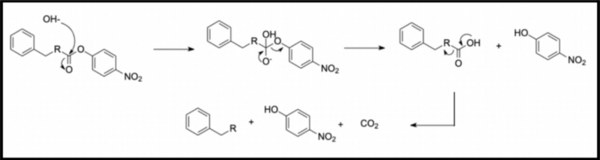
In organic synthesis, protecting groups are derivatives of reactive functionalities that play a key role in ensuring chemoselectivity of chemical transformations. To protect alcohols and amines, acid-labile tert-butyloxycarbonyl protecting groups are often employed but are avoided when the substrate is acid-sensitive. Thus, orthogonal base-labile protecting groups have been in demand to enable selective deprotection and to preserve the reactivity of acid-sensitive substrates. To meet this demand, we present 4-nitrophenyl carbonates and carbamates as orthogonal base-labile protecting group strategies.
Read More...The Potential of Fibroblast Growth Factors to Stimulate Hair Growth In Vitro
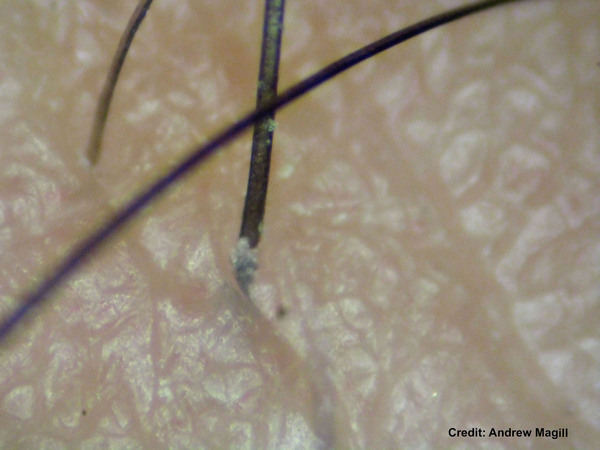
Identifying treatments that can stimulate hair growth use could help those struggling with undesirable hair loss. Here, the authors show that Fibroblast Growth Factors can stimulate the division of cells isolated from the mouse hair follicle. Their results suggest that this family of growth factors might be helpful in stimulating hair growth in living animals as well.
Read More...High school students show some reluctance to COVID-19 guidelines
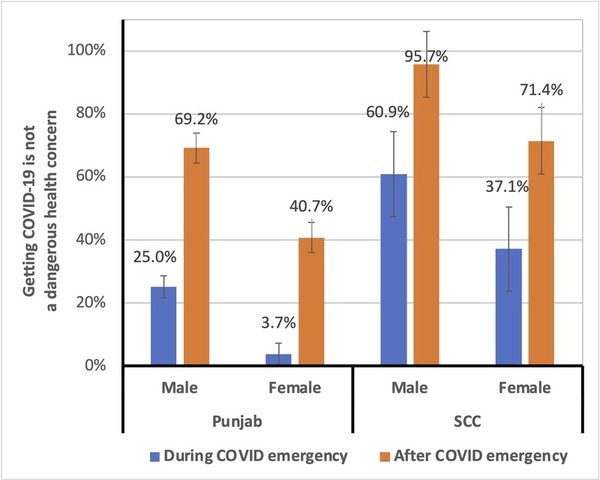
COVID-19 has officially been downgraded from the status of a global health emergency, but have COVID-19 safety practices become a new way of life for students? The authors collected survey data on COVID-19-related knowledge and behaviors of high-school students in Punjab, Pakistan and Santa Clara County, California, USA, so see where high-schoolers stand on pandemic safety today.
Read More...Do Attractants Bias the Results of Malaise Trap Research?

Malaise traps are commonly used to collect flying insects for a variety of research. In this study, researchers hypothesized the attractants used in these traps may create bias in insect studies that could lead to misinterpreted data. To test this hypothesis two different kinds of attractant were used in malaise traps, and insect diversity was assessed. Attractants were found to alter the dispersion of insects caught in traps. These findings can inform future malaise traps studies on insect diversity.
Read More...Determining the Effect of Chemical and Physical Pretreatments on the Yield and Energy Output of Cellulosic Ethanol from Panicum Virgatum
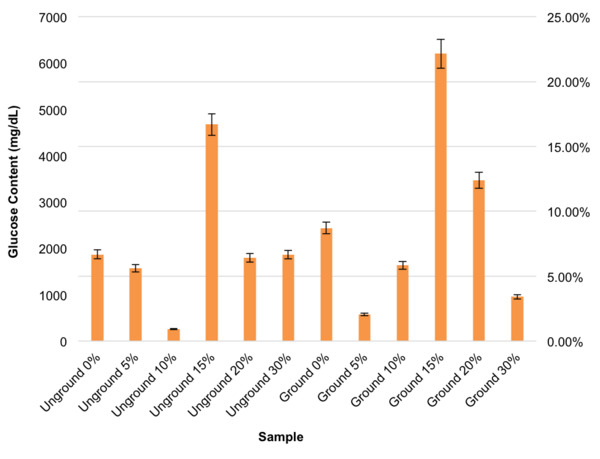
Fossil fuels are a limited resource; thus, it is important to explore new sources of energy. The authors examine the ability of switchgrass to produce ethanol and test the effects of pretreatment and grinding on ethanol yield.
Read More...Developing anticholinergic drugs for the treatment of asthma with improved efficacy
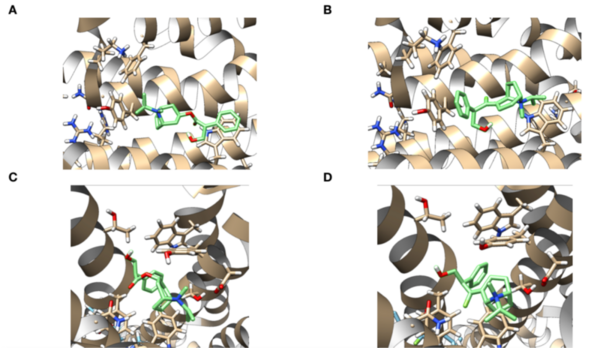
Anticholinergics are used in treating asthma, a chronic inflammation of the airways. These drugs block human M1 and M2 muscarinic acetylcholine receptors, inhibiting bronchoconstriction. However, studies have reported complications of anticholinergic usage, such as exacerbated eosinophil production and worsened urinary retention. Modification of known anticholinergics using bioisosteric replacements to increase efficacy could potentially minimize these complications. The present study focuses on identifying viable analogs of anticholinergics to improve binding energy to the receptors compared to current treatment options. Glycopyrrolate (G), ipratropium (IB), and tiotropium bromide (TB) were chosen as parent drugs of interest, due to the presence of common functional groups within the molecules, specifically esters and alcohols. Docking score analysis via AutoDock Vina was used to evaluate the binding energy between drug analogs and the muscarinic acetylcholine receptors. The final results suggest that G-A3, IB-A3, and TB-A1 are the most viable analogs, as binding energy was improved when compared to the parent drug. G-A4, IB-A4, IB-A5, TB-A3, and TB-A4 are also potential candidates, although there were slight regressions in binding energy to both muscarinic receptors for these analogs. By researching the effects of bioisosteric replacements of current anticholinergics, it is evident that there is a potential to provide asthmatics with more effective treatment options.
Read More...