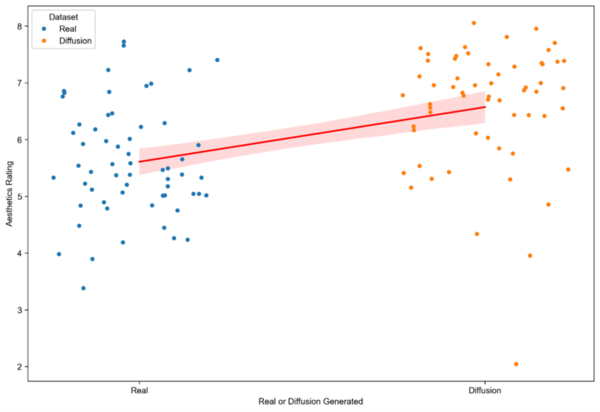
The authors develop a method for detecting fake AI-generated images from real images.
Read More...SpottingDiffusion: Using transfer learning to detect Latent Diffusion Model-synthesized images
Chemoreception in Aurelia aurita studied by AI-enhanced image analysis

The authors studied the chemoreception of moon jellyfish in response to food, and developed an AI tool to identify track and quantify the pulsation of swimming jellyfish.
Read More...Advancing pediatric cancer predictions through generative artificial intelligence and machine learning
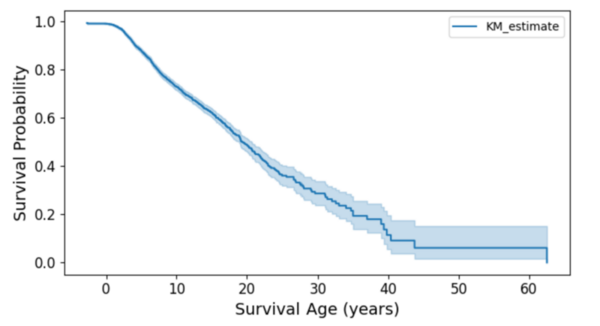
Pediatric cancers pose unique challenges due to their rarity and distinct biological factors, emphasizing the need for accurate survival prediction to guide treatment. This study integrated generative AI and machine learning, including synthetic data, to analyze 9,184 pediatric cancer patients, identifying age at diagnosis, cancer types, and anatomical sites as significant survival predictors. The findings highlight the potential of AI-driven approaches to improve survival prediction and inform personalized treatment strategies, with broader implications for innovative healthcare applications.
Read More...Optimizing AI image detection using a Convolutional Neural Network model with Fast Fourier Transform
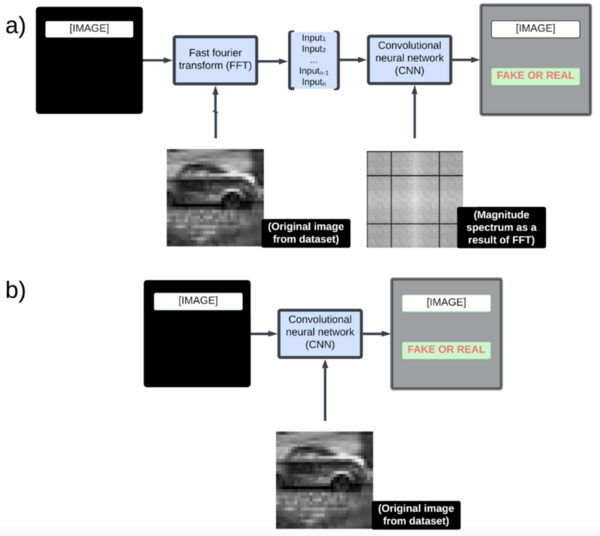
Recent advances in generative AI have made it increasingly hard to distinguish real images from AI-generated ones. Traditional detection models using CNNs or U-net architectures lack precision because they overlook key spatial and frequency domain details. This study introduced a hybrid model combining Convolutional Neural Networks (CNN) with Fast Fourier Transform (FFT) to better capture subtle edge and texture patterns.
Read More...Environmental contributors of asthma via explainable AI: Green spaces, climate, traffic & air quality
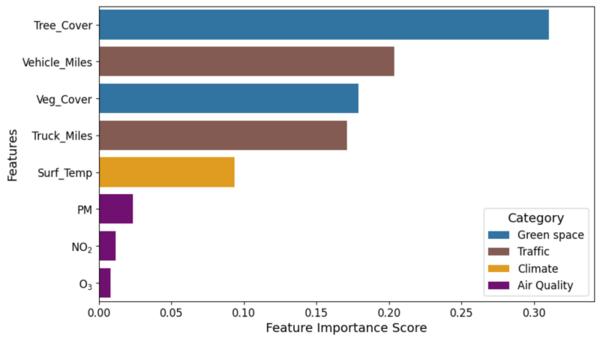
This study explored how green spaces, climate, traffic, and air quality (GCTA) collectively influence asthma-related emergency department visits in the U.S using machine learning models and explainable AI.
Read More...Deep sequential models versus statistical models for web traffic forecasting
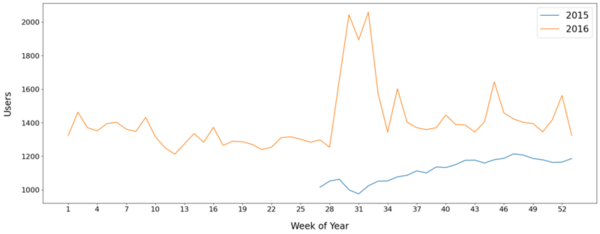
The authors looked at ways to provide better forecasting on website traffic. They found that deep learning models performed better than statistical models.
Read More...Depression detection in social media text: leveraging machine learning for effective screening
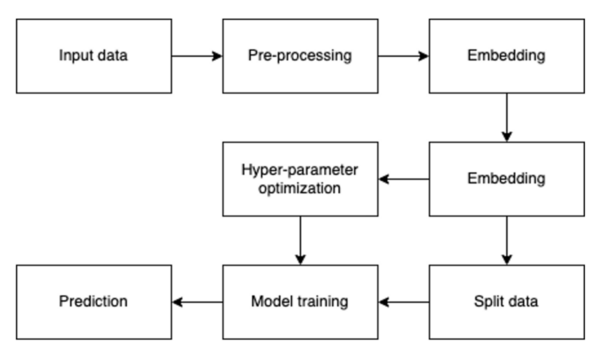
Depression affects millions globally, yet identifying symptoms remains challenging. This study explored detecting depression-related patterns in social media texts using natural language processing and machine learning algorithms, including decision trees and random forests. Our findings suggest that analyzing online text activity can serve as a viable method for screening mental disorders, potentially improving diagnosis accuracy by incorporating both physical and psychological indicators.
Read More...Exploring Political Discourse Among High School Journalists with Web Scraping and AI Technology
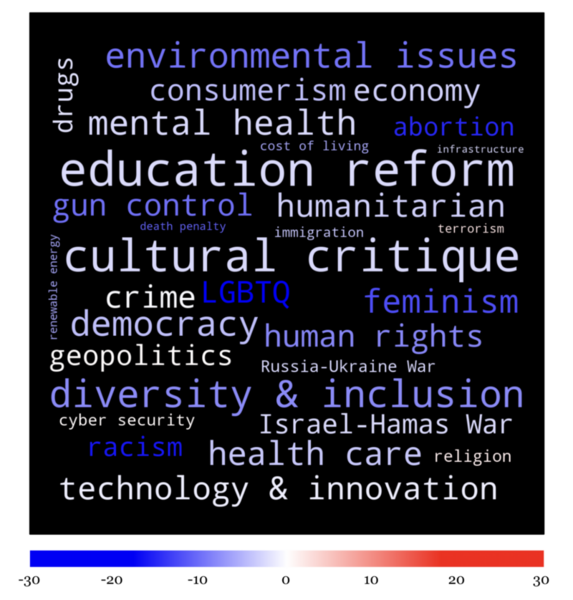
Here the authors provided greater coverage of adolescent stances by investigating the political perspectives and trends of high school journalists, utilizing web scraping methods and artificial intelligence (ChatGPT-4o) to analyze over 153,000 articles. They found that high school publications exhibit lower levels of political polarization compared to mainstream media and that journalists' views, while tending to lean moderately liberal, showed no significant correlation with local voting patterns.
Read More...Automated classification of nebulae using deep learning & machine learning for enhanced discovery
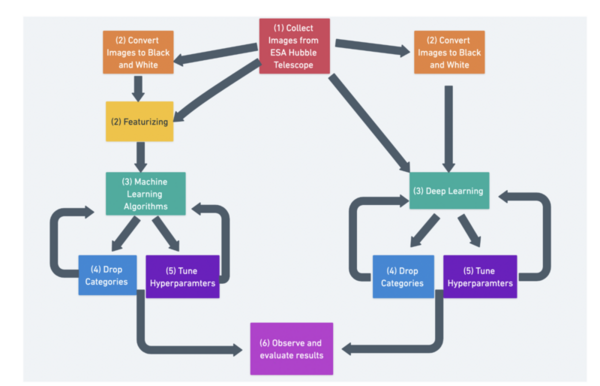
There are believed to be ~20,000 nebulae in the Milky Way Galaxy. However, humans have only cataloged ~1,800 of them even though we have gathered 1.3 million nebula images. Classification of nebulae is important as it helps scientists understand the chemical composition of a nebula which in turn helps them understand the material of the original star. Our research on nebulae classification aims to make the process of classifying new nebulae faster and more accurate using a hybrid of deep learning and machine learning techniques.
Read More...Evaluating need for adversarial training data given algorithmic defense methods against adversarial attacks
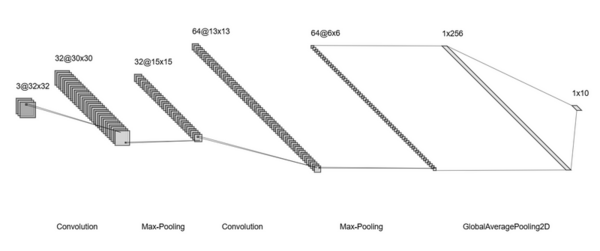
The purpose of this study was to determine the necessity of previous non-algorithmic attacks (Adversarial Training) in light of algorithmic defense methods (Gradient Masking and Defensive Distillation) against FGSM attacks. We found a significant increase in image classification accuracy from defense methods with the non-algorithmic defense method compared to ones without. By analyzing the significance with a McNemar test, we determined that the inclusion of non-algorithmic defense methods is still necessary in light of new algorithmic defense methods.
Read More...