Browse Articles

A machine learning approach for abstraction and reasoning problems without large amounts of data

Isik et al. | Jun 25, 2022

A machine learning approach for abstraction and reasoning problems without large amounts of data

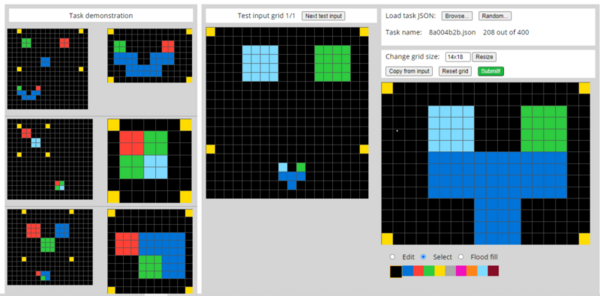
While remarkable in its ability to mirror human cognition, machine learning and its associated algorithms often require extensive data to prove effective in completing tasks. However, data is not always plentiful, with unpredictable events occurring throughout our daily lives that require flexibility by artificial intelligence utilized in technology such as personal assistants and self-driving vehicles. Driven by the need for AI to complete tasks without extensive training, the researchers in this article use fluid intelligence assessments to develop an algorithm capable of generalization and abstraction. By forgoing prioritization on skill-based training, this article demonstrates the potential of focusing on a more generalized cognitive ability for artificial intelligence, proving more flexible and thus human-like in solving unique tasks than skill-focused algorithms.

Read More...

Propagation of representation bias in machine learning

Dass-Vattam et al. | Jun 10, 2021

Propagation of representation bias in machine learning

Using facial recognition as a use-case scenario, we attempt to identify sources of bias in a model developed using transfer learning. To achieve this task, we developed a model based on a pre-trained facial recognition model, and scrutinized the accuracy of the model’s image classification against factors such as age, gender, and race to observe whether or not the model performed better on some demographic groups than others. By identifying the bias and finding potential sources of bias, his work contributes a unique technical perspective from the view of a small scale developer to emerging discussions of accountability and transparency in AI.

Read More...

Using Artificial Intelligence to Forecast Continuous Glucose Monitor(CGM) readings for Type One Diabetes

Jalla et al. | Aug 07, 2024

Using Artificial Intelligence to Forecast Continuous Glucose Monitor(CGM) readings for Type One Diabetes
Image credit: The authors

People with Type One diabetes often rely on Continuous Blood Glucose Monitors (CGMs) to track their blood glucose and manage their condition. Researchers are now working to help people with Type One diabetes more easily monitor their health by developing models that will future blood glucose levels based on CGM readings. Jalla and Ghanta tackle this issue by exploring the use of AI models to forecast blood glucose levels with CGM data.

Read More...