Browse Articles

Effects of plant-derived smoke water on germination and growth in stressed plants

Ge et al. | Apr 08, 2026

Effects of plant-derived smoke water on germination and growth in stressed plants

Here the authors investigated the potential of plant-derived smoke water to mitigate the negative impacts of abiotic stressors, such as heat, salinity, and water fluctuations, on the germination and growth of various agricultural crops. Their findings suggest that smoke water, specifically from buckwheat, pea, and radish, significantly improves plant resilience against drought and excessive water stress, offering a viable strategy to bolster food security in the face of climate change.

Read More...

Can Children Acquire Their Parents’ History of Fracture?

Boulis et al. | Sep 24, 2018

Can Children Acquire Their Parents’ History of Fracture?

While the genetic basis of hip fracture risk has been studied extensively in adults, it is not known whether parental history of bone fractures affects their children's fracture risk. In this article, the authors investigated whether a parental history of bone fractures influences the rate of fractures in their children. They found that adolescent children whose parents had a more extensive history of fractures were more likely to have a history of fractures themselves, suggesting that parents' medical histories may be an important consideration in future pediatric health research.

Read More...

AeroPurify: Autonomous air filtration UAV using real-time 3-D Monte Carlo gradient search

Kadakia et al. | Sep 01, 2025

AeroPurify: Autonomous air filtration UAV using real-time 3-D Monte Carlo gradient search
Image credit: Ian Usher

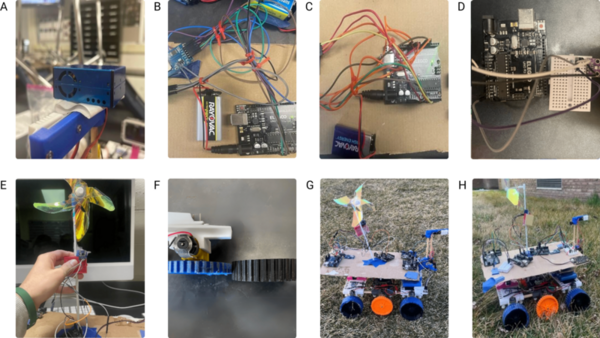
Here the authors present an autonomous drone air filtration system that uses a novel algorithm, the gradient ascent ML particle filter (GA/MLPF), to efficiently locate and mitigate outdoor air pollution. They demonstrate that their GA/MLPF algorithm is significantly more efficient than the conventional gradient ascent algorithm, reducing both the time and number of waypoints needed to find the source of pollution.

Read More...

Mask wearing and oxyhemoglobin saturation effects during exercise

Foss et al. | Jul 15, 2022

Mask wearing and oxyhemoglobin saturation effects during exercise

Wearing face masks has become a common occurrence in everyday life and during athletics due to the spread of diseases. This study tested if masks would affect blood percent saturation of hemoglobin (SpO2) during treadmill exercise. The data analysis showed that mask type, time, and the interaction of mask type and time were significant results, regardless of physical ability. These results may assist athletes in understanding the differences between training and competing with and without a mask.

Read More...

How has California’s Shelter-in-Place Order due to COVID-19 and the Resulting Reduction in Human Activity Affected Air and Water Quality?

Everitt et al. | Feb 15, 2021

How has California’s Shelter-in-Place Order due to COVID-19 and the Resulting Reduction in Human Activity Affected Air and Water Quality?

As the world struggled to grapple with the emerging COVID-19 pandemic in 2020, many countries instated policies to help minimize the spread of the virus among residents. This inadvertently led to a decrease in travel, and in some cases, industrial output, two major sources of pollutants in today's world. Here, the authors investigate whether California's shelter-in-place policy was associated with a measurable decrease in water and air pollution in that state between June and July of 2020, compared to the preceeding five years. Their findings suggest that, by some metrics, air quality improved within certain areas while water quality was relatively unchanged. Overall, these findings suggest that changing human behavior can, indeed, help reduce the level of air pollutants that compromise air quality.

Read More...

Exploring Unconventional Growing Methods to Promote Healthy Growth in Common Household Plants: Tagetes patula L. and Lepidium sativum

Nguyen et al. | Feb 25, 2021

Exploring Unconventional Growing Methods to Promote Healthy Growth in Common Household Plants: <i>Tagetes patula</i> L. and <i>Lepidium sativum</i>

This study focused on finding more sustainable growing methods that reduce chemical fertilizer or water usage and can be used at the household level for garden plants. Metrics for healthy plant growth were height at first bloom, growing time, and survival rate. The Deep Water Culture (DWC) treatment for garden cress plants significantly increased the height at first bloom compared to the control group. For rates of surviving plants, the treatments had little effect on garden cress, but the Eggshell Grounds, Wick System, and DWC system groups outperformed the control group for marigolds.

Read More...