Browse Articles

A comparative analysis of machine learning approaches for prediction of breast cancer

Nag et al. | May 11, 2021

A comparative analysis of machine learning approaches for prediction of breast cancer

Machine learning and deep learning techniques can be used to predict the early onset of breast cancer. The main objective of this analysis was to determine whether machine learning algorithms can be used to predict the onset of breast cancer with more than 90% accuracy. Based on research with supervised machine learning algorithms, Gaussian Naïve Bayes, K Nearest Algorithm, Random Forest, and Logistic Regression were considered because they offer a wide variety of classification methods and also provide high accuracy and performance. We hypothesized that all these algorithms would provide accurate results, and Random Forest and Logistic Regression would provide better accuracy and performance than Naïve Bayes and K Nearest Neighbor.

Read More...

Impact of daf-25 and daf-11 Mutations on Olfactory Function in C. elegans

Gardner et al. | Feb 02, 2019

Impact of daf-25 and daf-11 Mutations on Olfactory Function in C. elegans

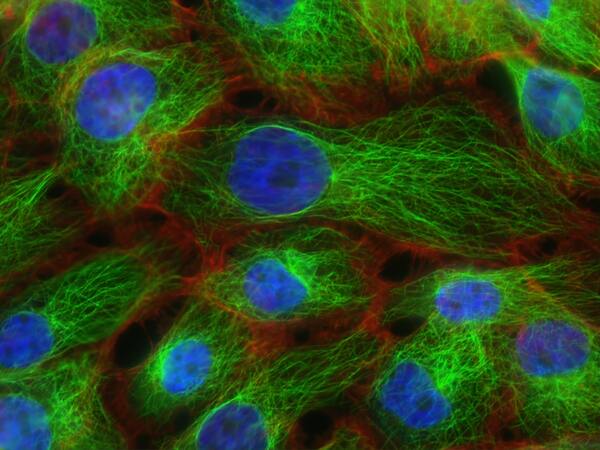
Cilia are little hair-like protrusions on many cells in the human body, including those lining the trachea where they play a role in clearing our respiratory tract of mucous and other irritants. Genetic mutations that impair ciliary function have serious consequences on our well-being making it important to understand how ciliary function is regulated. By using a simple organism, such as the worm C. elegans that use cilia to move, the authors explore the effect of certain genetic mutations on the cilia of the worms by measuring their ability to move towards or away from certain odorants.

Read More...

Socio-economic and awareness correlates of physical activity of government school children in India

Nandivada et al. | Dec 11, 2022

Socio-economic and awareness correlates of physical activity of government school children in India

Here, based on the identified importance of physical activity in the development of young children, the authors investigated the effects of socioeconomic factors on the amount of physical activity of government-school children in India. They found significant differences between boys and girls, rural and urban, and children who were encouraged to exercise and those who were not. Overall, they suggest that their findings point to the important role of schools and communities in promoting healthy active lifestyles for developing children.

Read More...