The authors looked at the ability to detect heart disease before the onset of severe clinical symptoms.
Read More...Study of neural network parameters in detecting heart disease
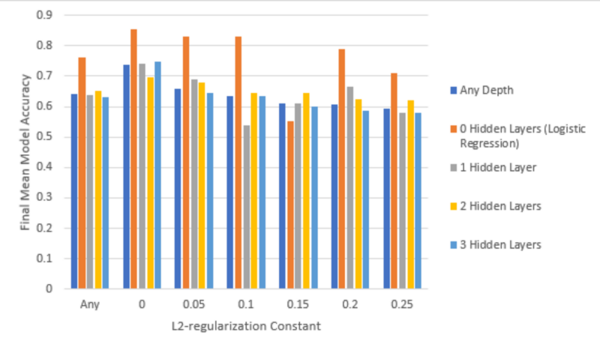
The authors looked at the ability to detect heart disease before the onset of severe clinical symptoms.
Read More...Hybrid Quantum-Classical Generative Adversarial Network for synthesizing chemically feasible molecules
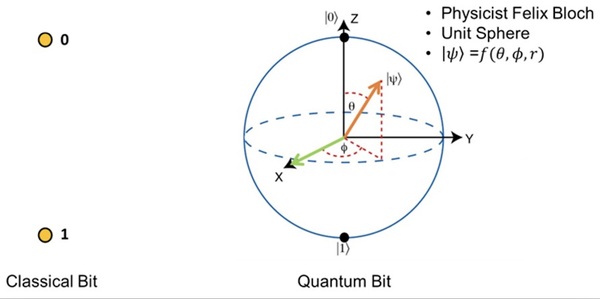
Current drug discovery processes can cost billions of dollars and usually take five to ten years. People have been researching and implementing various computational approaches to search for molecules and compounds from the chemical space, which can be on the order of 1060 molecules. One solution involves deep generative models, which are artificial intelligence models that learn from nonlinear data by modeling the probability distribution of chemical structures and creating similar data points from the trends it identifies. Aiming for faster runtime and greater robustness when analyzing high-dimensional data, we designed and implemented a Hybrid Quantum-Classical Generative Adversarial Network (QGAN) to synthesize molecules.
Read More...Artificial intelligence face-tracking for a semi-virtual reality gaming experience
The authors studied the impact of AI face-tracking technology on the immersiveness of videogames as an alternative to virtual reality gaming.
Read More...Part of speech distributions for Grimm versus artificially generated fairy tales
Here, the authors wanted to explore mathematical paradoxes in which there are multiple contradictory interpretations or analyses for a problem. They used ChatGPT to generate a novel dataset of fairy tales. They found statistical differences between the artificially generated text and human produced text based on the distribution of parts of speech elements.
Read More...Unlocking robotic potential through modern organ segmentation
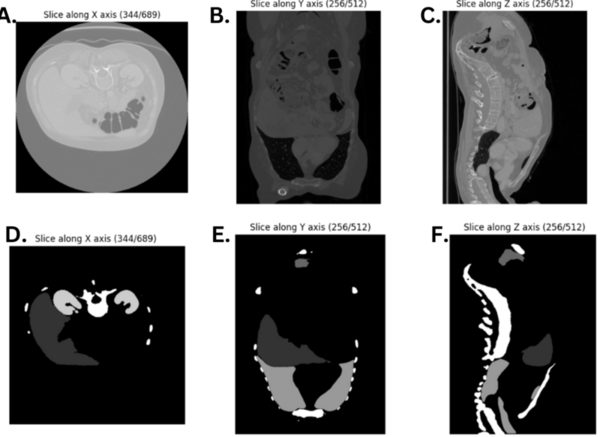
The authors looked at different models of semantic segmentation to determine which may be best used in the future for segmentation of CT scans to help diagnose certain conditions.
Read More...Training neural networks on text data to model human emotional understanding
The authors train a neural network to detect text-based emotions including joy, sadness, anger, fear, love, and surprise.
Read More...Can the attributes of an app predict its rating?
In this article the authors looked at different attributes of apps within the Google Play store to determine how those may impact the overall app rating out of five stars. They found that review count, amount of storage needed and when the app was last updated to be the most influential factors on an app's rating.
Read More...Evaluating TensorFlow image classification in classifying proton collision images for particle colliders
In this study the authors looked at developing a more efficient particle collision classification method with the goal of being able to more efficiently analyze particle trajectories from large-scale particle collisions without loss of accuracy.
Read More...Feature extraction from peak detection algorithms for enhanced EMG-based hand gesture recognition models
This manuscript evaluates peak detection algorithms for feature extraction in EMG-based hand gesture recognition using a random forest classifier. The study demonstrates that wavelet-based peak detection features achieve the highest classification accuracy (96.5%), outperforming other methods. The results highlight the potential of peak features to improve EMG-based prosthetic control systems.
Read More...A cost-effective IoT-based intelligent indoor air quality monitoring
Poor air quality is associated with negative effects on human health but can be difficult to measure in an accurate and cost-effective manner. The authors design and test a monitor for measuring indoor air quality using low-cost components.
Read More...