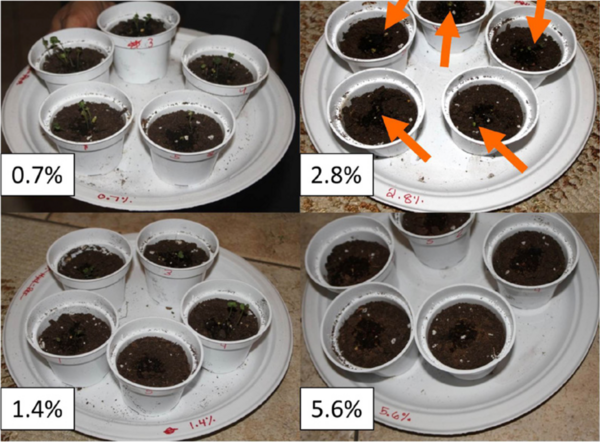
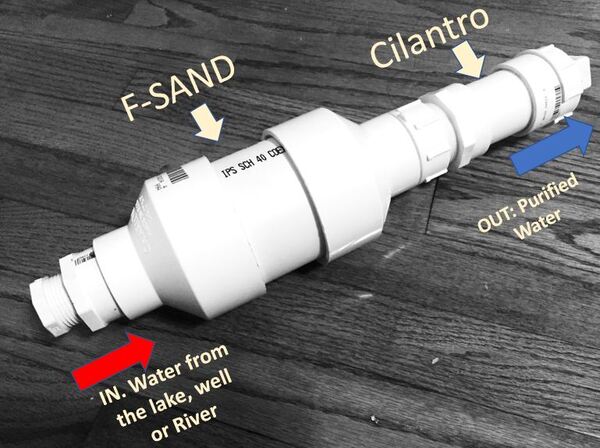
In this study, the authors investigate whether Moringa Oleifera seeds can serve as material to aid in purifying water. M. oleifera seeds have coagulating properties and the authors hypothesized that including it in a water filtration system would reduce particles, specifically bacteria, in water. Their results show that this system removed the largest percent of bacteria. When used in combination with cilantro, it was actually more efficient than the other techniques! These findings have important implications for creating better and more economical water purification systems.
Read More...Browse Articles
A model for angle evolution in conical piles formed using the fixed funnel method
When granular materials are poured onto a surface, they form conical piles whose slopes increase before reaching a stable angle of repose. We found that this angle evolution follows a previously unrecognized two-phase exponential growth pattern that is conserved across granular materials with diverse particle properties. The parameters of this model correlate with particle friction and are influenced by deposition conditions, providing a quantitative framework for describing pile formation.
Read More...Distributional effects of residential energy tax credits: A machine learning approach
Tax incentives for sustainable technology are a key part of the push for a greener future. However, these incentives may not reach all income strata equally. Using a machine learning approach, this study analyzed the distributional effects of residential energy tax credits across different income levels in the United States.
Read More...Mapping equity in California K-12 school solar adoption using computer vision
The authors investigated adoption rates of solar photovoltaic power at K-12 schools in California.
Read More...Using satellite surface temperature data to monitor urban heat island
This manuscript investigates the urban heat island (UHI) effect by utilizing two satellite datasets: Landsat (high spatial resolution, lower temporal resolution) and MODIS (lower spatial resolution, high temporal resolution). The authors hypothesized that Landsat would provide better spatial detail, while MODIS would better capture temporal variations. Their analysis in the Washington D.C.–Baltimore region supports these hypotheses, demonstrating that Landsat offers finer spatial details, whereas MODIS provides more consistent seasonal patterns and better detects heatwave frequencies.
Read More...Locating carcinogenic per- and poly-fluoroalkyl substances in Santa Clarita groundwater
This study investigates PFAS contamination in Santa Clarita groundwater, focusing on potential sources. The study employs statistical analysis to assess data quality and trends which allowed them to identified domestic waste, fire extinguisher materials, and food packaging as the most likely sources of contamination.
Read More...The effect of nanosilver particles on the lifespan of Daphnia magna in pond water
The authors looked at how nanosilver particles may negatively impact the pond water environment. They used D. magna as an indicator species to look at the impact of different concentrations of nanosilver particles.
Read More...Drought prediction in the Midwestern United States using deep learning
The authors studied the ability of deep learning models to predict droughts in the midwestern United States.
Read More...Fire detection using subterranean soil sensors
The authors looked at how soil temperature changes with fire to develop a sensor system that could aid in earlier detection of fires.
Read More...Observing food and density effects on the reproductive strategies of Heterandria formosa
The authors looked at the impact of different harvest and feeding treatments on Heterandria formosa over three generations as a model for changes in marine ecosystems.
Read More...