Browse Articles

Analysis of electrodialysis as a method of producing potable water

Shen et al. | May 03, 2024

Analysis of electrodialysis as a method of producing potable water

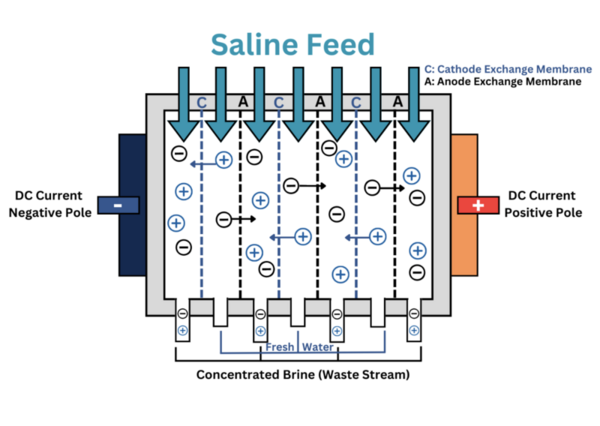
Here, seeking a way to convert the vast quantity of seawater to drinking water, the authors investigated the purification of seawater to drinking water through electrodialysis. Using total dissolved solids (TDS) as their measure, they found that electrodialysis was able to produce deionized water with TDS values under the acceptable range for consumable water.

Read More...

Automated classification of nebulae using deep learning & machine learning for enhanced discovery

Nair et al. | Feb 01, 2024

Automated classification of nebulae using deep learning & machine learning for enhanced discovery

There are believed to be ~20,000 nebulae in the Milky Way Galaxy. However, humans have only cataloged ~1,800 of them even though we have gathered 1.3 million nebula images. Classification of nebulae is important as it helps scientists understand the chemical composition of a nebula which in turn helps them understand the material of the original star. Our research on nebulae classification aims to make the process of classifying new nebulae faster and more accurate using a hybrid of deep learning and machine learning techniques.

Read More...

Determining degree of dissociation through conductivity

Dunn et al. | Jan 26, 2024

Determining degree of dissociation through conductivity

The authors looked at how molarity impacts the degree to which ionic compounds dissociate in solution. They found that lower molarities led to decreased conductivity of solutions in a manner that did not follow the theoretical predictions.

Read More...

Blue light blocking glasses: do they do what they promise?

Lee et al. | Dec 13, 2023

Blue light blocking glasses: do they do what they promise?
Image credit: nacer eddine

With increased screen time and exposure to blue light, an increasing number of people have sleep deprivation. Blue light suppresses the release of melatonin and hinders sleep at night. We hypothesized that people could get a greater amount of sleep by controlling the blue light exposure from screen time before bedtime. BBG’s effect on reducing time to fall asleep was significant within the teenage group, but not significant in the adult group. This indicated that BBG could improve the time taken to sleep for young teenagers post screen time in the evening.

Read More...

Therapy dogs effectively reduce stress in college preparatory students

Ikeda et al. | Nov 27, 2023

Therapy dogs effectively reduce stress in college preparatory students
Image credit: Ryan Stone

In this article the authors looked at the effect of spending time with a therapy dog before and after stressful events. They found that interacting with a therapy before a stressful event showed more significant reduction in signs of stress compared to interacting with a therapy dog after stressful events have already occurred.

Read More...

Floating aquatic plants form groups faster through current

May et al. | Oct 16, 2023

Floating aquatic plants form groups faster through current
Image credit: N Band

Here, the authors sought to investigate the effects of water current on the growth of colonies of duckweed, a floating plant that forms colonies in silent ponds, marshes, lakes , and streams in North America. They found that current flow mediates the formation of colonies, disrupting and recreating the colonies which provides the opportunity for reorganizations that were identified as beneficial.

Read More...

The effects of algaecides on Spirulina major and non-target organism Daphnia magna

Halepete et al. | Oct 09, 2023

The effects of algaecides on <i>Spirulina major</i> and non-target organism <i>Daphnia magna</i>
Image credit: The authors

Algal blooms pose a threat to ecosystems, but the methods used to combat these blooms might harm more than just the algae. Halepete, Graham, and Lowe-Schmahl demonstrate negative effects of anti-algae treatments on a cyanobacterium (Spirulina major), and the water fleas (Daphnia magna) that live alongside these cyanobacteria.

Read More...