Browse Articles

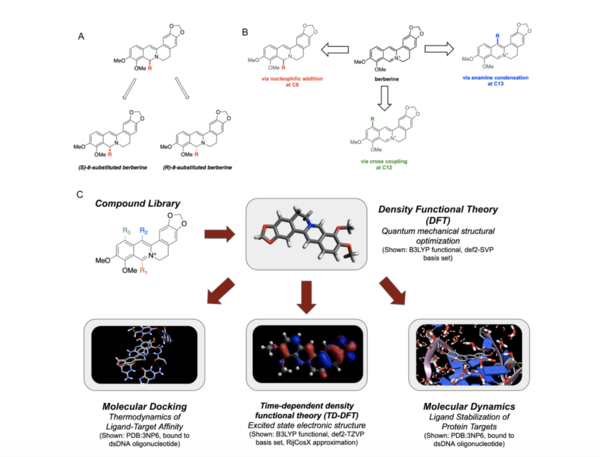
Computational Structure-Activity Relationship (SAR) of Berberine Analogs in Double-Stranded and G-Quadruplex DNA Binding Reveals Both Position and Target Dependence

Sun et al. | Dec 18, 2020

Computational Structure-Activity Relationship (SAR) of Berberine Analogs in Double-Stranded and G-Quadruplex DNA Binding Reveals Both Position and Target Dependence

Berberine, a natural product alkaloid, and its analogs have a wide range of medicinal properties, including antibacterial and anticancer effects. Here, the authors explored a library of alkyl or aryl berberine analogs to probe binding to double-stranded and G-quadruplex DNA. They determined that the nature of the substituent, the position of the substituent, and the nucleic acid target affect the free energy of binding of berberine analogs to DNA and G-quadruplex DNA, however berberine analogs did not result in net stabilization of G-quadruplex DNA.

Read More...
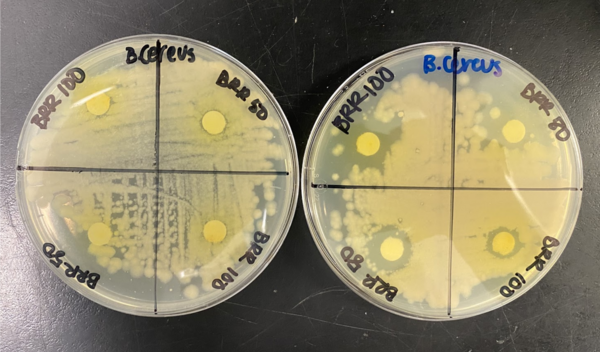

Strain-specific and photochemically-activated antimicrobial activity of berberine and two analogs

Sun et al. | Nov 17, 2020

Strain-specific and photochemically-activated antimicrobial activity of berberine and two analogs

In this study, the authors investigate the antimicrobial effects of berberine and berberine analogs. Berberine is extracted from plants and is a naturally occurring alkaloid, and is also excited photochemically. Using three different assays, the authors tested whether these compounds would inhibit bacterial growth. They found that these compounds were antibacterial and even more so when used with photoirradiation. This study has important antibacterial implications.

Read More...

Comparison of shower filters for reducing total residual chlorine under household flow conditions

Lee et al. | Sep 19, 2026

Comparison of shower filters for reducing total residual chlorine under household flow conditions
Image credit: Micheile Henderson

This study compared two commercial shower filters and three individual filtration media to evaluate their ability to reduce total residual chlorine under household flow conditions. By identifying which materials most effectively reduce chlorine during regular shower use, this research provides practical information for consumers and offers guidance for designing more affordable and reusable shower filtration systems.

Read More...

Heat impact to food’s shelf life - An example of milk

Xu et al. | Dec 13, 2022

Heat impact to food’s shelf life - An example of milk

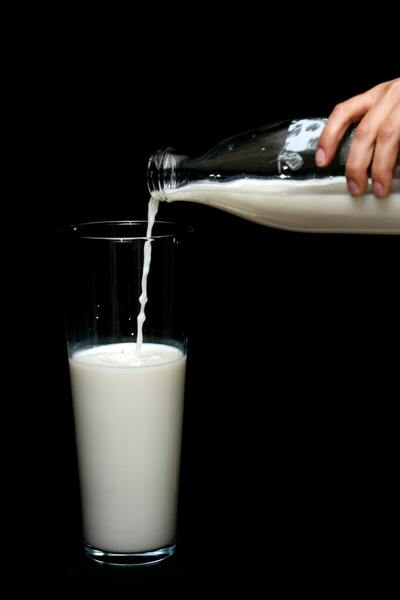
Food spoilage happens when food is not kept in a good storage condition. Qualitatively estimating the shortened shelf life of food could reduce food waste. In this study, we tested the impact of heat on milk shelf life. Our results showed that an exposure at room temperature (25°C) for 3.2 hours will decrease the shelf life of milk by one day.

Read More...

The Inhibitory Effect of Probiotics on the Growth and Biofilm Formation of Salmonella Sp.

Lee et al. | Jan 26, 2019

The Inhibitory Effect of Probiotics on the Growth and Biofilm Formation of Salmonella Sp.

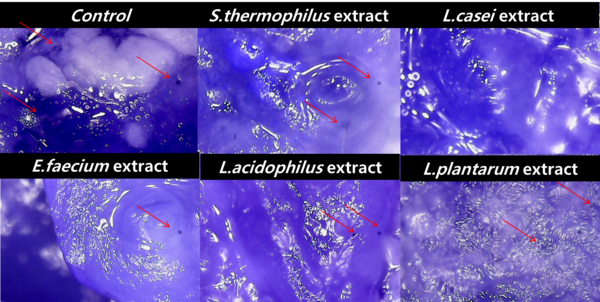
Salmonella is a genus of bacteria responsible for over 90 million cases of intestinal illnesses yearly. Like many bacteria, Salmonella can create a biofilm matrix, which confers stronger resistance against antibiotics. However, there has been relatively little research on the inhibition of Salmonella biofilm formation, which is a crucial factor in its widespread growth. In this study, Lee and Kim quantitatively measure the effectiveness of several common probiotics in inhibiting Salmonella bacterial growth. They found concentration-dependent antibacterial effects varied among the probiotics tested, indicating the possibility of probiotic species-specific mechanisms of Salmonella growth inhibition.

Read More...

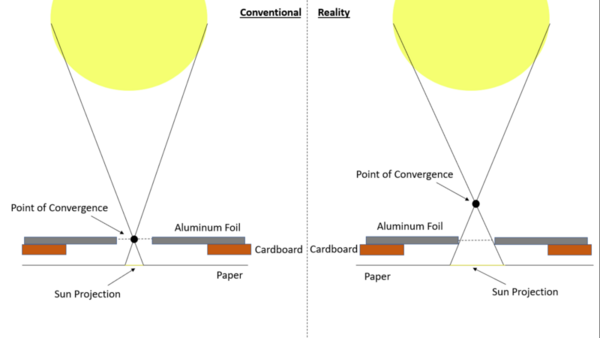
Comparing Measurements of Sun-Earth Distance: Shadow Method and Two Pinhole Method Variations

Rajakumar et al. | Feb 21, 2022

Comparing Measurements of Sun-Earth Distance: Shadow Method and Two Pinhole Method Variations

This study compares three methods regarding their accuracy in calculating the distance between the Earth and the Sun. The hypothesis presented was that the shadow method would have the greatest mean accuracy, followed by the tube pinhole method, and finally the plate pinhole method. The results validate the hypothesis; however, further investigation would be helpful in determining effective mitigation of each method’s limitations and the effectiveness of each method in determining the distance of other light-emitting objects distant from the Earth.

Read More...

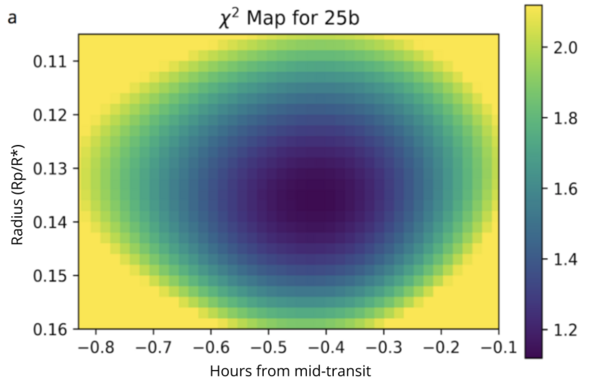
Measuring Exoplanetary Radii Using Transit Photometry

Tang et al. | May 07, 2019

Measuring Exoplanetary Radii Using Transit Photometry

Studying exoplanets, or planets that orbit a star other than the Sun, is critical to a greater understanding the formation of planets and how Earth's solar system differs from others. In this study the authors analyze the transit light curves of three hot Jupiter exoplanets to ultimately determine if and how these planets have changed since their discovery.

Read More...