Browse Articles

Ribosome distribution affects stalling in amino-acid starved cancer cells

Deng et al. | Jan 07, 2022

Ribosome distribution affects stalling in amino-acid starved cancer cells

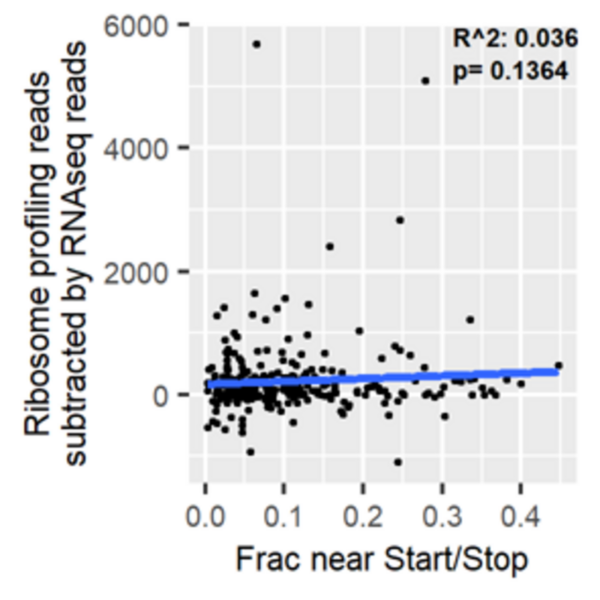
In this article, the authors analyzed ribosome profiling data from amino acid-starved pancreatic cancer cells to explore whether the pattern of ribosome distribution along transcripts under normal conditions can predict the degree of ribosome stalling under stress. The authors found that ribosomes in amino acid-deprived cells stalled more along elongation-limited transcripts. By contrast, they observed no relationship between read density near start and stop and disparities between mRNA sequencing reads and ribosome profiling reads. This research identifies an important relationship between read distribution and propensity for ribosomes to stall, although more work is needed to fully understand the patterns of ribosome distribution along transcripts in ribosome profiling data.

Read More...

Investigating the effects of glucose reintroduction on acutely starved HeLa cells

Puduru et al. | Jul 05, 2026

Investigating the effects of glucose reintroduction on acutely starved HeLa cells

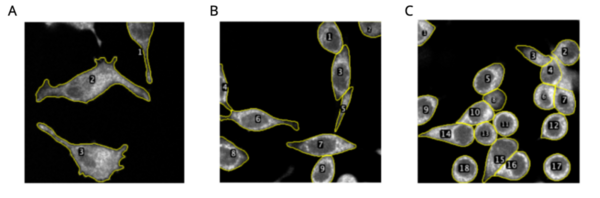
Cancer cells rely heavily on glycolysis, but how they respond when glucose is reintroduced after acute starvation is not well understood. Using fluorescence lifetime imaging microscopy, students tracked metabolic changes in HeLa cells and found a rapid shift toward glycolysis within 20 minutes of glucose reintroduction, followed by heterogeneous recovery toward oxidative phosphorylation. These results highlight metabolic flexibility and variability in cancer cells, offering insights relevant to treatment resistance and therapeutic design.

Read More...

Defying chemical tagging: inhomogeneities in the wide binary system HIP 34407/HIP 34426

Còdol et al. | Oct 05, 2023

Defying chemical tagging: inhomogeneities in the wide binary system HIP 34407/HIP 34426
Image credit: Pixabay

This assessed the hypothesis that stars in wide binary systems are chemically homogeneous because of their shared origin. Abundances of the HIP 34407/HIP 34426 binary were obtained by analyzing high-resolution spectra of the system. Discrepancies found in the system’s elemental abundances might be an indicator of the presence of rocky planets around this star. Thus, the differences found in chemical composition might demonstrate limitations in the assumptions of chemical tagging.

Read More...

Maximizing anaerobic biogas production using temperature variance

Verma et al. | Aug 03, 2023

Maximizing anaerobic biogas production using temperature variance

We conducted this research as our start-up's research that addresses the problem of biogas production in cow-dense regions like India. We hypothesized that the thermophilic temperature (45-60oC) would increase biogas production. The production process is much faster and more abundant at temperatures around 55-60oC.

Read More...

Analysis of the Exoplanet HD 189733b to Confirm its Existence

Babaria et al. | Sep 21, 2020

Analysis of the Exoplanet HD 189733b to Confirm its Existence

In this study, the authors study features of exoplanet 189733 b. This exoplanet, or planets that orbit stars other than the Sun, is found in the HD star system. Using a DSLR camera, they constructed a high caliber exoplanet transit detection tracker to study the orbital periods, radial velocity, and photometry of 189733 b. They then compared results from their system to data collected by other high precision studies. What they found was that their system produced results supporting previously published studies. These results are exciting results from the solar system demonstrating the importance of validating radial velocity and photometry data using high-precision studies.

Read More...

A Taste of Sweetness in Bioplastics

Tsai et al. | Apr 05, 2019

A Taste of Sweetness in Bioplastics

Sweet potatoes are one of the most common starches in Taiwan, and sweet potato peels hold significant potential to make biodegradable plastics which can alleviate the environmental impact of conventional petroleum-based plastics. In this paper, Tsai et al created starch-based bioplastics derived from sweet potato peels and manipulated the amount of added glycerol to alter the plastic’s strength and flexibility properties. Their results indicated that higher concentrations of glycerol yield more malleable plastics, providing insights into how recycled agricultural waste material might be used to slow down the rate of pollution caused by widespread production of conventional plastics.

Read More...