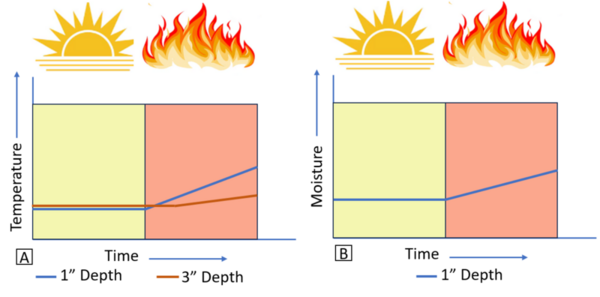
The authors looked at how soil temperature changes with fire to develop a sensor system that could aid in earlier detection of fires.
Read More...Fire detection using subterranean soil sensors
The authors looked at how soil temperature changes with fire to develop a sensor system that could aid in earlier detection of fires.
Read More...Detection method of black goji berry anthocyanin content based on colorimetry
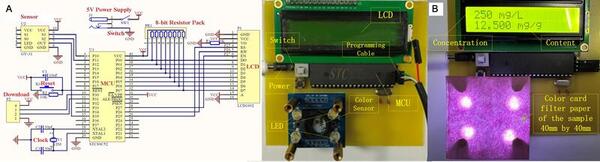
Black goji berries have attracted interest for their high levels of anthocyanin pigment, which believed to have health-boosting effects. Yu and Zhu research a method for measuring goji berry quality by detecting anthocyanin content under different conditions.
Read More...Spectrophotometric comparison of 4-Nitrophenyl carbonates & carbamates as base-labile protecting groups
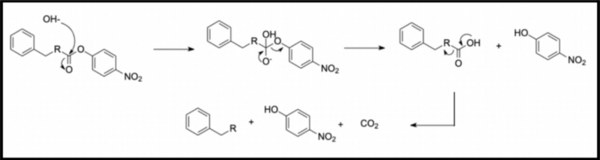
In organic synthesis, protecting groups are derivatives of reactive functionalities that play a key role in ensuring chemoselectivity of chemical transformations. To protect alcohols and amines, acid-labile tert-butyloxycarbonyl protecting groups are often employed but are avoided when the substrate is acid-sensitive. Thus, orthogonal base-labile protecting groups have been in demand to enable selective deprotection and to preserve the reactivity of acid-sensitive substrates. To meet this demand, we present 4-nitrophenyl carbonates and carbamates as orthogonal base-labile protecting group strategies.
Read More...A low-cost, Arduino-based system for real-time abiotic monitoring of a local watershed
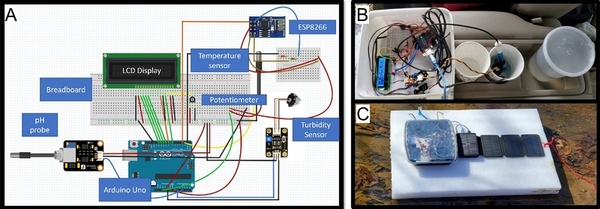
The authors monitored water quality over time looking for influences from construction and deforestation.
Read More...Electrocatalytic oxidation of furfural on Co3O4/nickel foam catalyst: performance and mechanistic study
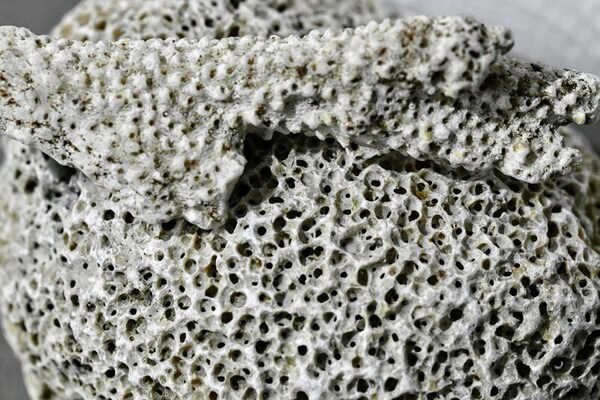
In this study, the authors hypothesized that the unique redox properties of cobalt oxide (Co3O4), combined with the conductive nature of the nickel foam (NF) substrate, synergistically enhances the catalytic performance for furfural oxidation. The study showed successful synthesis of Co3O4 nanoflowers directly grown on NF and tested their capacity to serve as a highly efficient electrocatalyst for furfural oxidation. Beyond furfural oxidation, this study also offers broader implications for sustainable chemistry by establishing design principles for efficient nucleophilic oxidation reaction catalysts, demonstrating an energy-saving alternative to conventional oxygen evolution reaction-coupled processes, and showcasing how biomass conversion can be integrated with renewable energy systems.
Read More...In silico design of novel acetylcholinesterase inhibitors as potential therapeutics for Alzheimer's disease
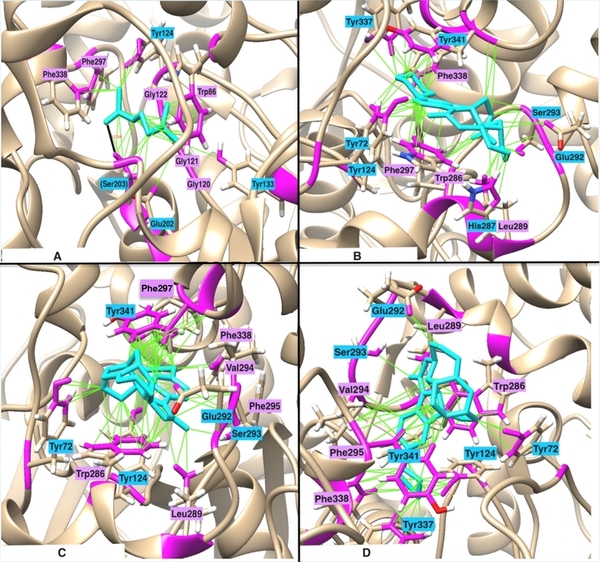
Elevated acetylcholinesterase (AChE) activity contributes to cognitive decline and neurodegenerative diseases such as Alzheimer’s, motivating the search for more effective inhibitors with better bioavailability. This study used computational methods to design novel, non-toxic AChE inhibitors.
Read More...Initiating astrocyte to neuron transdifferentiation via miR-124a: implications in neurodegenerative disease
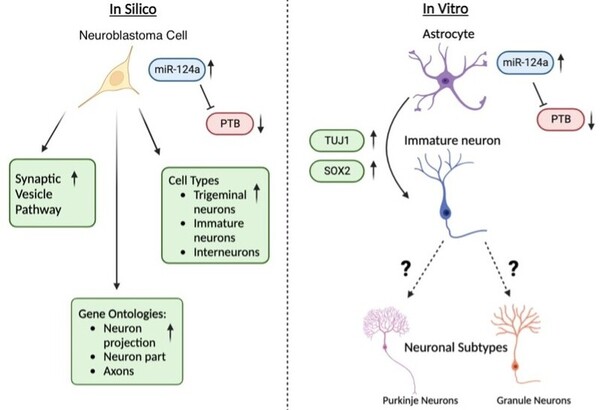
The authors looked at whether they could induce the formation of new neurons from astrocytes via the upregulation of a microRNA (miR-124a). They found that upregulation of miR-124a started transdifferentiation of neurons, but was not enough to lead to full conversion of astrocytes to neurons.
Read More...Advancements in glioma segmentation: comparing the U-Net and DeconvNet models
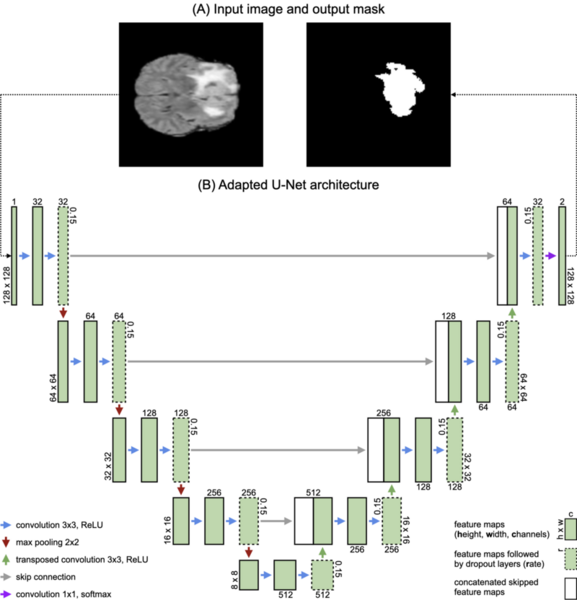
This study compares the performance of two deep learning models, U-Net and DeconvNet, for segmenting gliomas from MRI scans.
Read More...Exploring the possibilities for reactions between SiW and alkaline solutions to be renewable energy sources
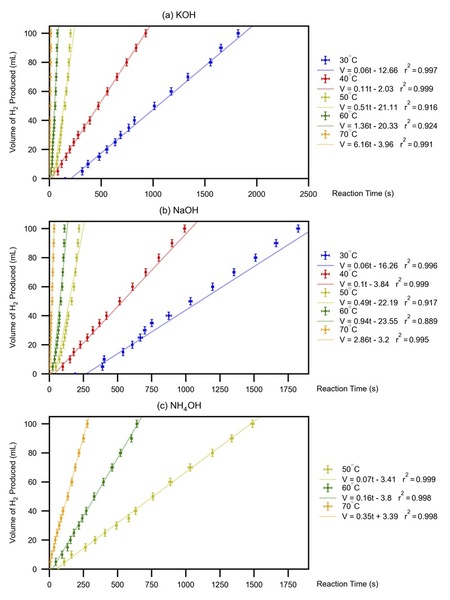
The authors looked at hydrogen gas production and how reaction temperature, concentration and alkaline solution used impacted the overall reaction with silicon. They found that all alkaline solutions tested would be viable options for using silicon waste to produce hydrogen gas to be used a renewable energy source.
Read More...The juxtaposition of anatomy and physics in the eye
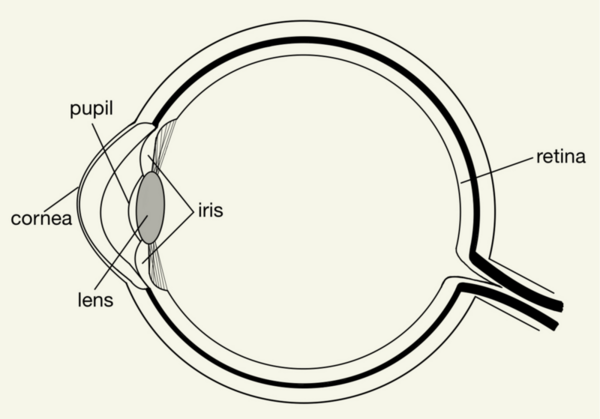
People are quick to accept the assumption that a light will appear dimmer the farther away they are, citing the inverse square relationship that illuminance obeys as rationale. However, repeated observations of light sources maintaining their brightness over large distances prompted us to explore how the brightness, or perceived illuminance of a light varies with the viewing distance from the object. We hypothesized that since both the illuminance of the light source and image size decrease at the same rate, then the concentration, or intensity of the image remains unchanged, and subsequently the perceived illuminance.
Read More...