Browse Articles

PID and fuzzy logic optimization of the pitch control of wind turbines

Zhou et al. | Jan 28, 2025

PID and fuzzy logic optimization of the pitch control of wind turbines
Image credit: The authors

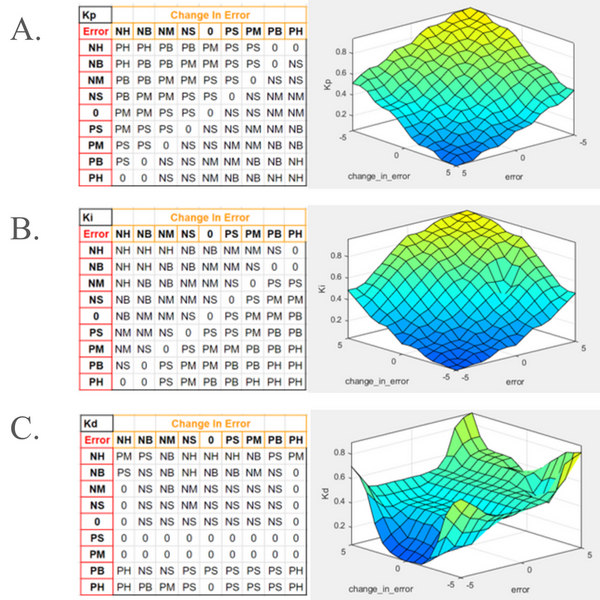
Wind turbines are a valuable source of renewable energy, but face challenges related to unpredictable wind speed. The turbine must be able to control its angle to catch enough wind to generate electricity, while avoiding excess wind that may damage the turbine. Zhou and Wang explore different types of smart turbine controllers to see which appears optimal for electricity generation.

Read More...

Electrocatalytic oxidation of furfural on Co3O4/nickel foam catalyst: performance and mechanistic study

Song et al. | Jul 19, 2026

Electrocatalytic oxidation of furfural on Co<sub>3</sub>O<sub>4</sub>/nickel foam catalyst: performance and mechanistic study
Image credit: Shraga kopstein

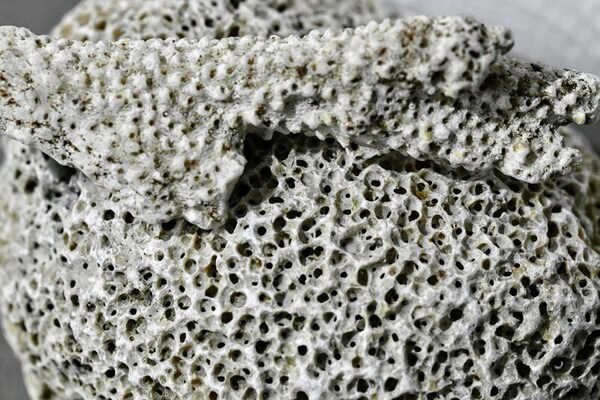
In this study, the authors hypothesized that the unique redox properties of cobalt oxide (Co3O4), combined with the conductive nature of the nickel foam (NF) substrate, synergistically enhances the catalytic performance for furfural oxidation. The study showed successful synthesis of Co3O4 nanoflowers directly grown on NF and tested their capacity to serve as a highly efficient electrocatalyst for furfural oxidation. Beyond furfural oxidation, this study also offers broader implications for sustainable chemistry by establishing design principles for efficient nucleophilic oxidation reaction catalysts, demonstrating an energy-saving alternative to conventional oxygen evolution reaction-coupled processes, and showcasing how biomass conversion can be integrated with renewable energy systems.

Read More...
Leveraging E-Waste to Enhance Water Condensation by Effective Use of Solid-state Thermoelectric Cooling

Joshi et al. | Dec 02, 2020

Leveraging E-Waste to Enhance Water Condensation by Effective Use of Solid-state Thermoelectric Cooling

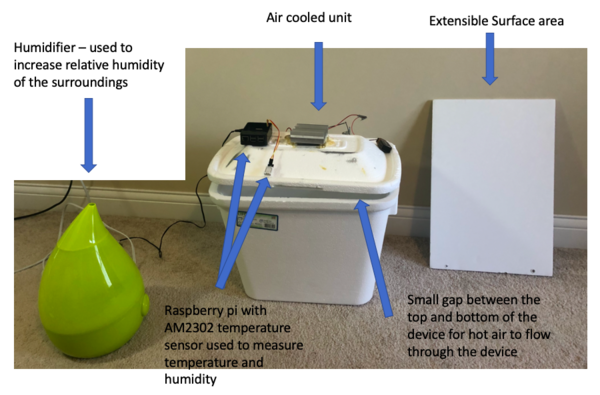
Water scarcity affects upwards of a billion people worldwide today. This project leverages the potential of capturing humidity to build a high-efficiency water condensation device that can generate water and be used for personal and commercial purposes. This compact environment-friendly device would have low power requirements, which would potentially allow it to utilize renewable energy sources and collect water at the most needed location.

Read More...

Enhancing the quantum efficiency of a silicon solar cell using one dimensional thin film interferometry

Ahuja et al. | May 03, 2024

Enhancing the quantum efficiency of a silicon solar cell using one dimensional thin film interferometry
Image credit: American Public Power Association

Here, recognizing the need to improve the efficiency of the conversion of solar energy to electrical energy, the authors used MATLAB to mathematically simulate a multi-layered thin film with an without an antireflective coating. They found that the use of alternating ZnO-SiO2 multilayers enhanced the transmission of light into the solar cell, increasing its efficiency and reducing the reflectivity of the Si-Air interface.

Read More...

Efficacy of Rotten and Fresh Fruit Extracts as the Photosensitive Dye for Dye-Sensitized Solar Cells

Jayasankar et al. | Jan 16, 2019

Efficacy of Rotten and Fresh Fruit Extracts as the Photosensitive Dye for Dye-Sensitized Solar Cells

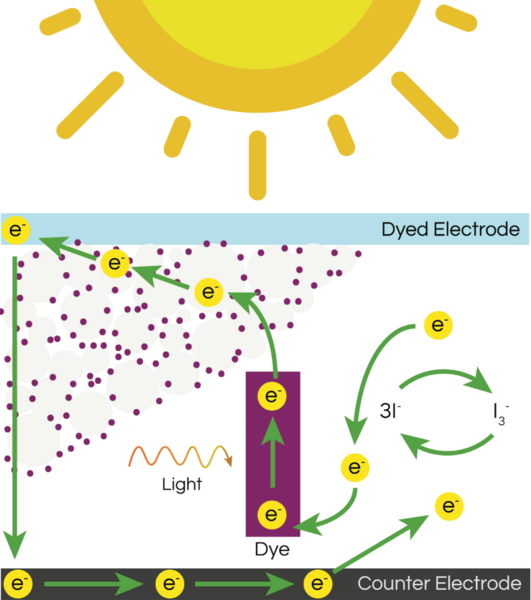
Dye-sensitized solar cells (DSSC) use dye as the photoactive material, which capture the incoming photon of light and use the energy to excite electrons. Research in DSSCs has centered around improving the efficacy of photosensitive dyes. A fruit's color is defined by a unique set of molecules, known as a pigment profile, which changes as a fruit progresses from ripe to rotten. This project investigates the use of fresh and rotten fruit extracts as the photoactive dye in a DSSC.

Read More...

Utilizing a Wastewater-Based Medium for Engineered Saccharomyces cerevisiae for the Biological Production of Fatty Alcohols and Carboxylic Acids to Replace Petrochemicals

Ramesh et al. | Oct 02, 2019

Utilizing a Wastewater-Based Medium for Engineered <em>Saccharomyces cerevisiae</em> for the Biological Production of Fatty Alcohols and Carboxylic Acids to Replace Petrochemicals

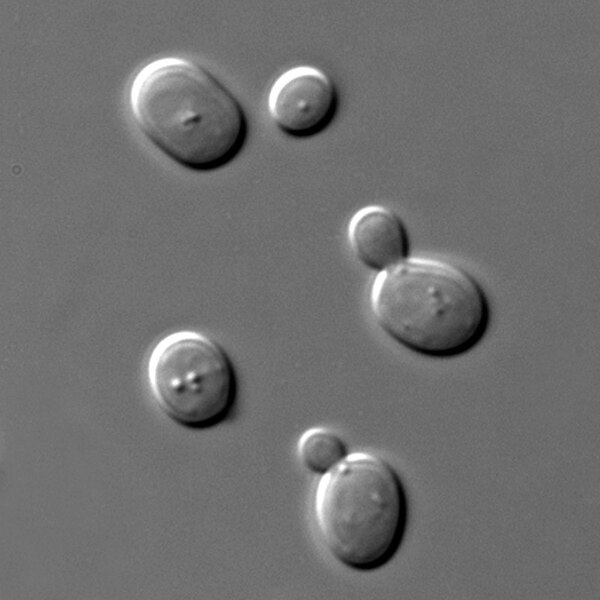
Saccharomyces cerevisiae yeast is used to produce bioethanol, an alternative to fossil fuels. In this study, authors take advantage of this well studied yeast by genetically engineering them to increase fatty acid biosynthesis and culturing in a cost-effective wastewater based medium; potentially providing a sustainable alternative to petrochemicals.

Read More...

Impact of light intensity and electrolyte volume on performance of photo-electrochemical (PEC) solar cell

Patel et al. | Mar 14, 2022

Impact of light intensity and electrolyte volume on performance of photo-electrochemical (PEC) solar cell

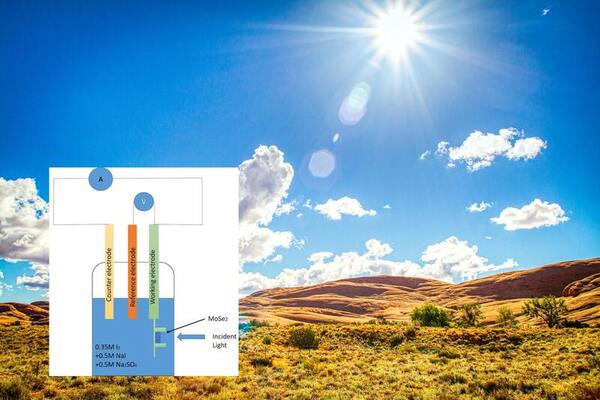
Here, seeking to develop more efficient solar cells, the authors investigated photo-electrochemical (PEC) solar cells, specifically molybdenum diselenide (MoSe2) based on its high resistance to corrosion. They found that the percentage efficiency of these PEC solar cells was proportional to light intensity–0.9 and that performance was positively influenced by increasing the electrolyte volume. They suggest that studies such as these can lead to new insight into reaction-based solar cells.

Read More...