Browse Articles

Early detection of student burnout using data science: a study of behavioral and psychological indicators

Baber et al. | Jul 13, 2026

Early detection of student burnout using data science: a study of behavioral and psychological indicators

This study examined behavioral and psychological predictors of burnout among high school and university students in Pakistan using survey data and machine-learning models. Shorter sleep and greater mental fatigue—especially fatigue—were associated with higher burnout risk, while a Random Forest model successfully identified students at risk of burnout.

Read More...
Survival analysis in cardiovascular epidemiology: nexus between heart disease and mortality

Lachwani et al. | Oct 23, 2024

Survival analysis in cardiovascular epidemiology: nexus between heart disease and mortality

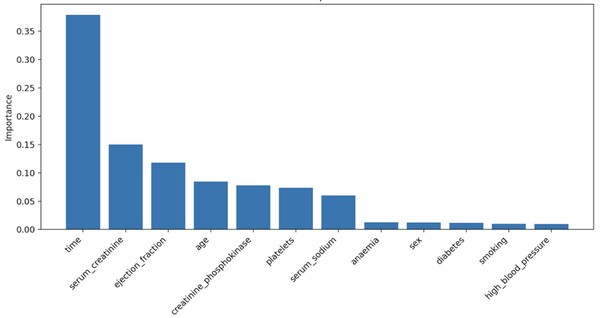
In 2021, over 20 million people died from cardiovascular diseases, highlighting the need for a deeper understanding of factors influencing heart failure outcomes. This study examined multiple variables affecting mortality after heart failure, using random forest models to identify time, serum creatinine, and ejection fraction as key predictors. These findings could contribute to personalized medicine, improving survival rates by tailoring treatment strategies for heart failure patients.

Read More...

Effects on Learning and Memory of a Mutation in Dα7: A D. melanogaster Homolog of Alzheimer's Related Gene for nAChR α7

Sanyal et al. | Oct 01, 2019

Effects on Learning and Memory of a Mutation in Dα7: A <em>D. melanogaster</em> Homolog of Alzheimer's Related Gene for nAChR α7

Alzheimer's disease (AD) involves the reduction of cholinergic activity due to a decrease in neuronal levels of nAChR α7. In this work, Sanyal and Cuellar-Ortiz explore the role of the nAChR α7 in learning and memory retention, using Drosophila melanogaster as a model organism. The performance of mutant flies (PΔEY6) was analyzed in locomotive and olfactory-memory retention tests in comparison to wild type (WT) flies and an Alzheimer's disease model Arc-42 (Aβ-42). Their results suggest that the lack of the D. melanogaster-nAChR causes learning, memory, and locomotion impairments, similar to those observed in Alzheimer's models Arc-42.

Read More...

Assessing machine learning model efficacy for brain tumor MRI classification: a multi-model approach

Dhingra et al. | Mar 14, 2026

Assessing machine learning model efficacy for brain tumor MRI classification: a multi-model approach
Image credit: Dhingra and Dhingra

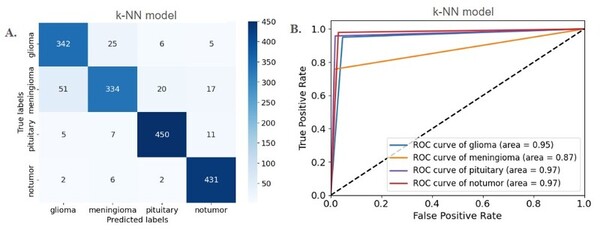
This manuscript explores the performance of five different machine learning models in classifying brain tumors from a dataset of MRI scans. The authors find that several of the models showed >90% accuracy. Thus, the authors suggest that machine learning models demonstrate potential for effective implementation in clinical settings, including as a diagnostic tool that can be used to complement the expertise of neuroradiologists.

Read More...

Deep learning for pulsar detection: Investigating hyperparameter effects on TensorFlow classification accuracy

Upadhyay et al. | Jan 31, 2026

Deep learning for pulsar detection: Investigating hyperparameter effects on TensorFlow classification accuracy

This study investigates how the hyperparameters epochs and batch size affect the classification accuracy of a convolutional neural network (CNN) trained on pulsar candidate data. Our results reveal that accuracy improves with increasing number of epochs and smaller batch sizes, suggesting that with optimized hyperparameters, high accuracy may be achievable with minimal training. These findings offer insights that could help create more efficient machine learning classification models for pulsar signal detection, with the potential of accelerating pulsar discovery and advancing astrophysical research.

Read More...