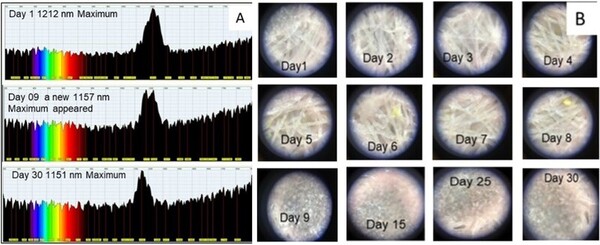
The authors combine chemical, enzymatic, and microbial-based methods to optimize degradation of plastics within a surgical facemask.
Read More...Optimized biochemical depolymerization of plastics from surgical face masks
The authors combine chemical, enzymatic, and microbial-based methods to optimize degradation of plastics within a surgical facemask.
Read More...Study of PINN sensor layout in evaluating WSS with application to patient-specific carotid flow
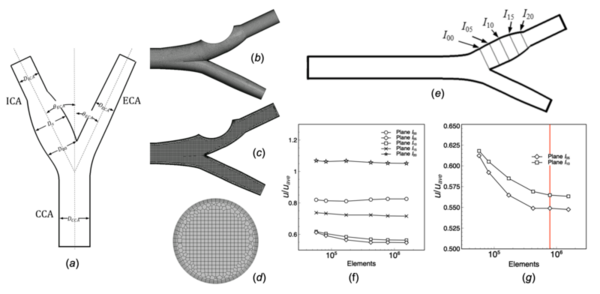
Physics‑Informed Neural Networks (PINNs) offer a promising way to estimate blood‑flow behavior in arteries, especially near the vessel wall where traditional methods struggle. In this study, students tested how sensor density and placement affect PINN accuracy in modeling carotid artery flow and found that accuracy improves up to a moderate sensor density and depends strongly on how close sensors are placed to the arterial wall. Applying the optimized configuration to a patient‑specific carotid model produced velocity predictions closely matching computational fluid dynamics results, highlighting PINNs’ potential for future personalized cardiovascular assessment.
Read More...Quantum-inspired neural networks enhance stock prediction accuracy

The authors developed a quantum inspired model for stock market fluctuations.
Read More...Lung cancer AI-based diagnosis through multi-modal integration of clinical and imaging data
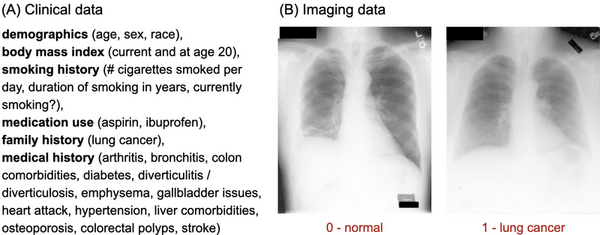
Lung cancer is highly fatal, largely due to late diagnoses, but early detection can greatly improve survival. This study developed three models to enhance early diagnosis: an MLP for clinical data, a CNN for imaging data, and a hybrid model combining both.
Read More...Integrating microbial fuel cell with sedum green roof for stormwater retention and renewable energy generation
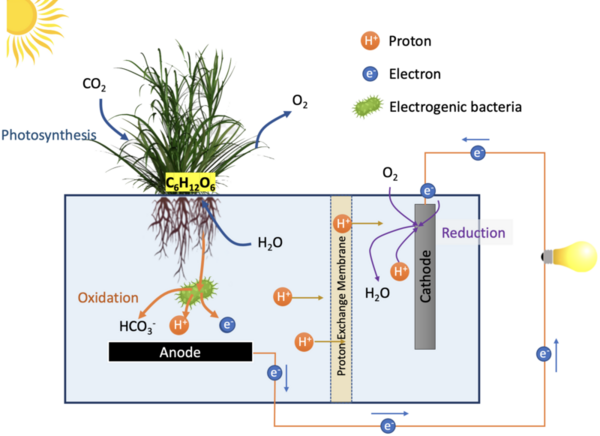
The authors looked at renewable energy generators and the ability to utilize green roofs as a solution to climate change.
Read More...Uncovering mirror neurons’ molecular identity by single cell transcriptomics and microarray analysis
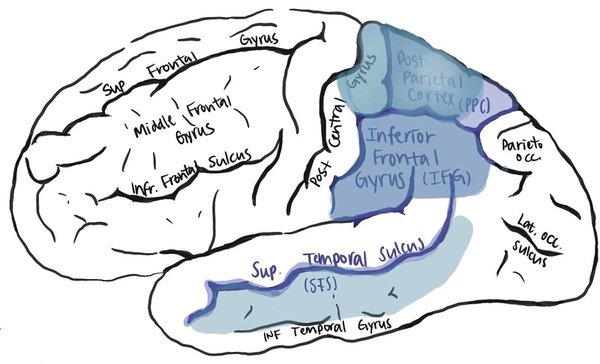
In this study, the authors use bioinformatic approaches to characterize the mirror neurons, which are active when performing and seeing certain actions. They also investigated whether mirror neuron impairment was connected to neural degenerative diseases and psychiatric disorders.
Read More...Identifying Neural Networks that Implement a Simple Spatial Concept
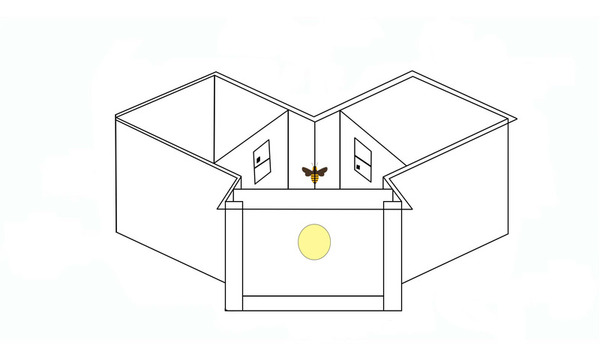
Modern artificial neural networks have been remarkably successful in various applications, from speech recognition to computer vision. However, it remains less clear whether they can implement abstract concepts, which are essential to generalization and understanding. To address this problem, the authors investigated the above vs. below task, a simple concept-based task that honeybees can solve, using a conventional neural network. They found that networks achieved 100% test accuracy when a visual target was presented below a black bar, however only 50% test accuracy when a visual target was presented below a reference shape.
Read More...A novel approach for early detection of Alzheimer’s disease using deep neural networks with magnetic resonance imaging
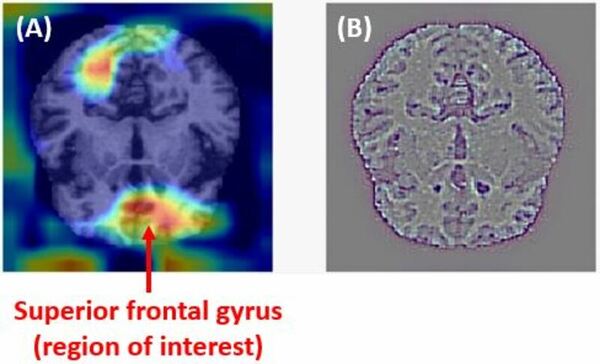
In the battle against Alzheimer's disease, early detection is critical to mitigating symptoms in patients. Here, the authors use a collection of MRI scans, layering with deep learning computer modeling, to investigate early stages of AD which can be hard to catch by human eye. Their model is successful, able to outperform previous models, and detected regions of interest in the brain for further consideration.
Read More...Testing Different Polymers and Boron Nitride Nanotube Properties in Fabrication of Ion-selective Membranes
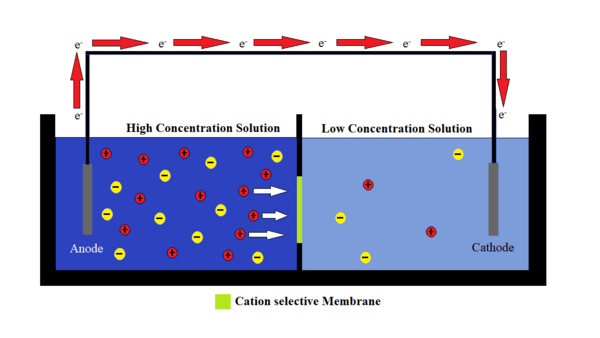
One largely untapped source of clean energy is the use of osmotic gradients where freshwater and saltwater are mixed, for example at estuaries. To harness such energy, charge-selective membranes are needed to separate the anions and cations in saltwater, establishing an electric potential like a battery. The objective of this study was twofold: to investigate the creation of the polymer matrix and test the properties of boron nitride nanotubes, as both are essential in the creation of an ion-selective membrane. Out of three polymer samples tested in this study, the mixture known as Soltech 704 showed the best resistance to etching, as well as the highest UV cure rate.
Read More...Efficacy of Rotten and Fresh Fruit Extracts as the Photosensitive Dye for Dye-Sensitized Solar Cells
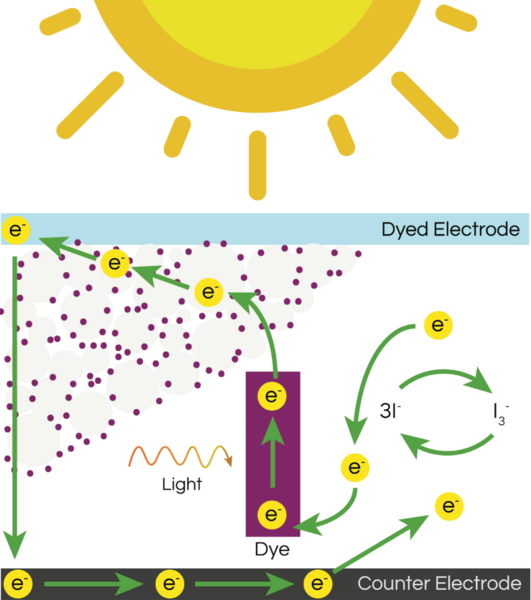
Dye-sensitized solar cells (DSSC) use dye as the photoactive material, which capture the incoming photon of light and use the energy to excite electrons. Research in DSSCs has centered around improving the efficacy of photosensitive dyes. A fruit's color is defined by a unique set of molecules, known as a pigment profile, which changes as a fruit progresses from ripe to rotten. This project investigates the use of fresh and rotten fruit extracts as the photoactive dye in a DSSC.
Read More...