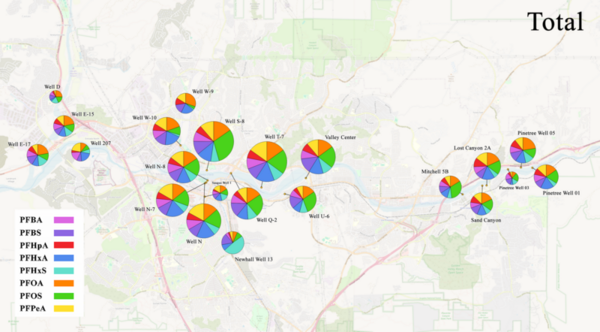
This study investigates PFAS contamination in Santa Clarita groundwater, focusing on potential sources. The study employs statistical analysis to assess data quality and trends which allowed them to identified domestic waste, fire extinguisher materials, and food packaging as the most likely sources of contamination.
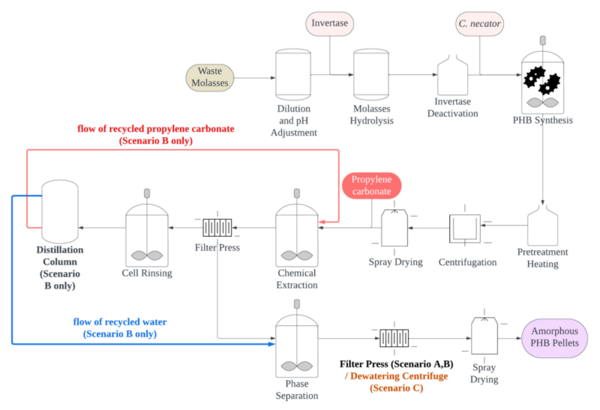
The authors looked at alternative production processes for PHB plastic in an effort to reduce environmental impact. They found that no alternative process was able to significantly decrease the environmental impact of PHB production, but that optimizing dewatering steps during production could lead to the largest improvement on environmental impact.
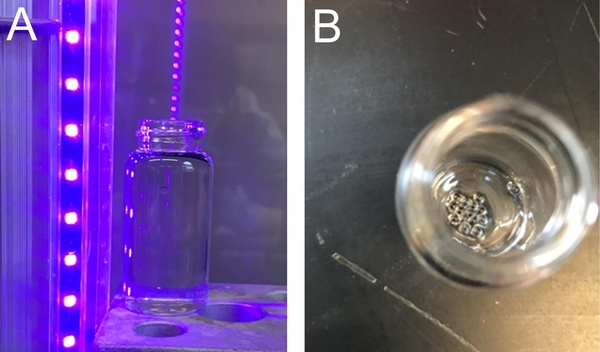
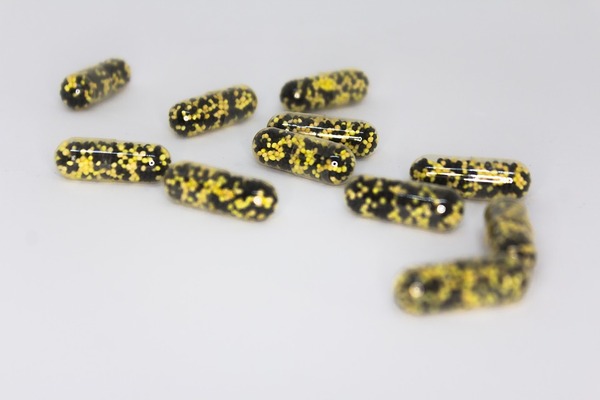
Superabsorbent beads are remarkable, used throughout our daily lives for various practical applications. These beads, as suggested by their name, possess a unique ability to absorb and retain large quantities of liquids. This characteristic of absorbency makes them essential throughout the medical field, agriculture, and other critical industries as well as in everyday products. To create these beads, the process of photopolymerization is fast growing in favor with distinct advantages of cost efficiency, speed, energy efficiency, and mindfulness towards the environment. In this article, researchers explore the pairing of cheap monomers with accessible equipment for creation of superabsorbent beads via the photopolymerization process. This research substantially demonstrates the successful application of photopolymerization in producing highly absorbent beads in a low-cost context, thereby expanding the accessibility of this process for creating superabsorbent beads in both research and practical applications.
In this study, the authors determine optimal pH levels for maximizing isopropanol degradation in water. This has important applications for cleaning up polluted wastewater in the environment.
Industrial process are designed to optimize speed, energy use and quality. Some steps involve the translation of product-filled barrels, how far and fast this happens depends on the properties of the product within. This article investigates such properties on a mini-scale, where the roll of bead size, texture and material on the distance travelled by a cylindrical capsule is investigated.
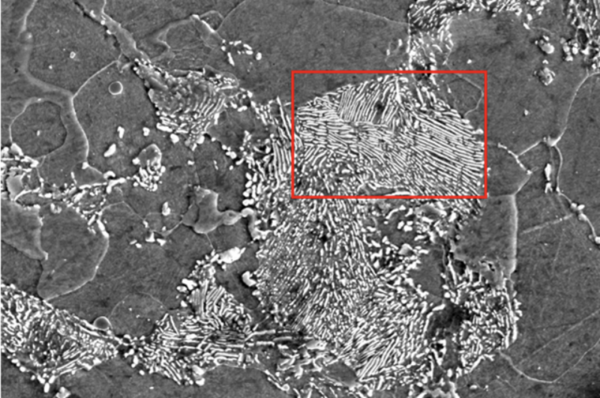
This article investigates whether induction heating can speed up static recrystallization in AISI 4130 steel compared with traditional radiant heating. It was found that induction-heated samples recrystallized faster, softened more quickly, and showed earlier microstructural changes like grain nucleation and pearlite spheroidization, suggesting induction heating could be a more efficient alternative for industrial metal heat treatments.
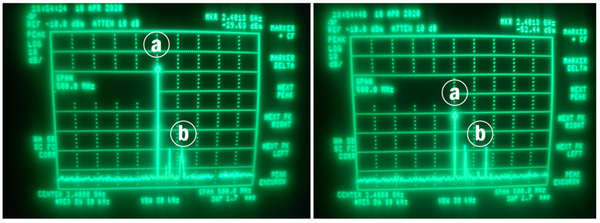
In our modern age, the burgeoning use of radios and radars has resulted in competition for electromagnetic spectrum resources. With recent research highlighting solutions to radio and radar mutual interference, there is a desperate need for a cost-effective configuration that permits a radar-radio joint system. In this study, the authors have set out to determine the feasibility of using single-tone continuous-wave radars in a radar-joint system. With this system, they aim to facilitate cost-effective near-field target detection by way of the popularized 2.4-GHz industrial, scientific, and medical (ISM) band.
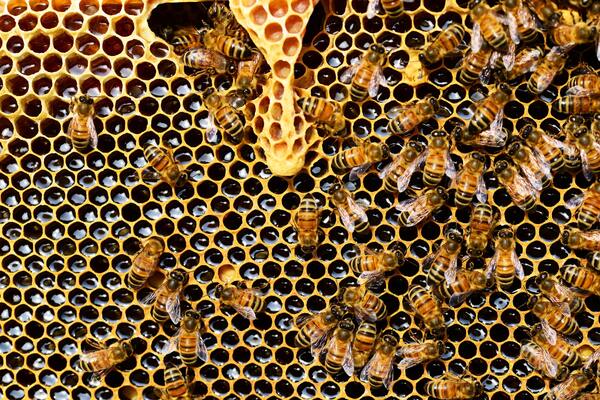
In this study, Donnellan and colleagues investigated how environmental pollution may be affecting honey samples from Chicago apiaries. They found no significant correlation between heavy metal concentration in honey to distance from local industries, suggesting a minimal effect of proximity to industrial pollution on honey contamination.
This study used hand-collected Greenhouse gas (GHG) emissions data from the Environmental Protection Agency (EPA) and aimed to understand the determinants and incentives of GHG emissions reduction. It explored how companies’ financials, Chief Executive Officer (CEO) compensation, and corporate governance affected GHG emissions. Results showed that companies reporting GHG emissions were wide-spread among the 48 industries represented by two-digit Standard Industrial Classification (SIC) codes.