Browse Articles

Expression of Anti-Neurodegeneration Genes in Mutant Caenorhabditis elegans Using CRISPR-Cas9 Improves Behavior Associated With Alzheimer’s Disease

Mishra et al. | Sep 14, 2019

Expression of Anti-Neurodegeneration Genes in Mutant <em>Caenorhabditis elegans</em> Using CRISPR-Cas9 Improves Behavior Associated With Alzheimer’s Disease

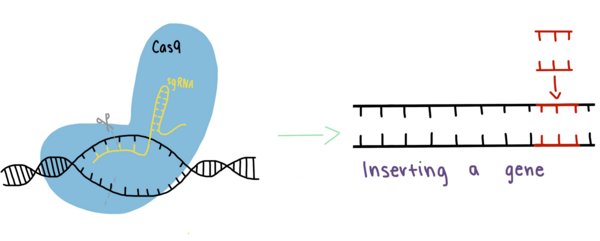
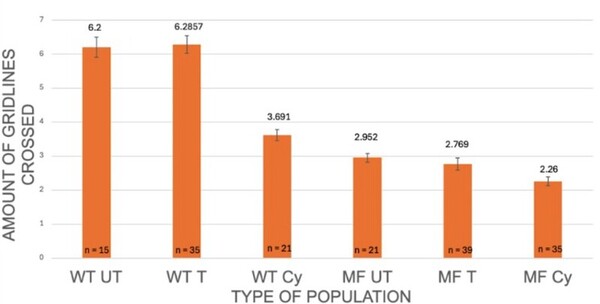
Alzheimer's disease is one of the leading causes of death in the United States and is characterized by neurodegeneration. Mishra et al. wanted to understand the role of two transport proteins, LRP1 and AQP4, in the neurodegeneration of Alzheimer's disease. They used a model organism for Alzheimer's disease, the nematode C. elegans, and genetic engineering to look at whether they would see a decrease in neurodegeneration if they increased the amount of these two transport proteins. They found that the best improvements were caused by increased expression of both transport proteins, with smaller improvements when just one of the proteins is overly expressed. Their work has important implications for how we understand neurodegeneration in Alzheimer's disease and what we can do to slow or prevent the progression of the disease.

Read More...

Reinforcement learning in 2-D space with varying gravitational fields

Rousseau et al. | Jun 07, 2025

Reinforcement learning in 2-D space with varying gravitational fields
Image credit: NASA

In this study the authors looked at the ability to navigate planes in space between randomly placed planets. They used machine and reinforcement learning to run simulations and found that they were able to identify optimal paths for travel. In the future these techniques may allow for safer travel in unknown spaces.

Read More...

Validating DTAPs with large language models: A novel approach to drug repurposing

Curtis et al. | Mar 02, 2025

Validating DTAPs with large language models: A novel approach to drug repurposing
Image credit: Growtika

Here, the authors investigated the integration of large language models (LLMs) with drug target affinity predictors (DTAPs) to improve drug repurposing, demonstrating a significant increase in prediction accuracy, particularly with GPT-4, for psychotropic drugs and the sigma-1 receptor. This novel approach offers to potentially accelerate and reduce the cost of drug discovery by efficiently identifying new therapeutic uses for existing drugs.

Read More...

Large Language Models are Good Translators

Zeng et al. | Oct 16, 2024

Large Language Models are Good Translators

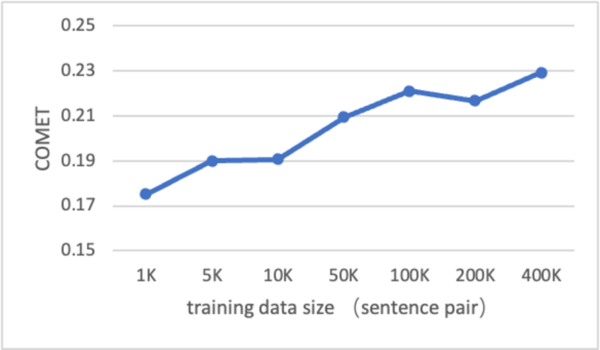
Machine translation remains a challenging area in artificial intelligence, with neural machine translation (NMT) making significant strides over the past decade but still facing hurdles, particularly in translation quality due to the reliance on expensive bilingual training data. This study explores whether large language models (LLMs), like GPT-4, can be effectively adapted for translation tasks and outperform traditional NMT systems.

Read More...

An analysis of junior rower performance and how it is affected by rower's features

Biller et al. | Jan 07, 2022

An analysis of junior rower performance and how it is affected by rower's features

In this study, with consideration for the increasing participation of high school students in indoor rowing, the authors analyzed World Indoor Rowing Championship data. Statistical analysis revealed two key features that can determine the performance of a rower as well as increasing competitiveness in nearly all categories considered. They conclude by offering a 2000-meter ergometer time distribution that can help junior rowers assess their current performance relative to the world competition.

Read More...