Browse Articles

Transfer learning and data augmentation in osteosarcoma cancer detection

Chu et al. | Jun 03, 2023

Transfer learning and data augmentation in osteosarcoma cancer detection
Image credit: Chu and Khan 2023

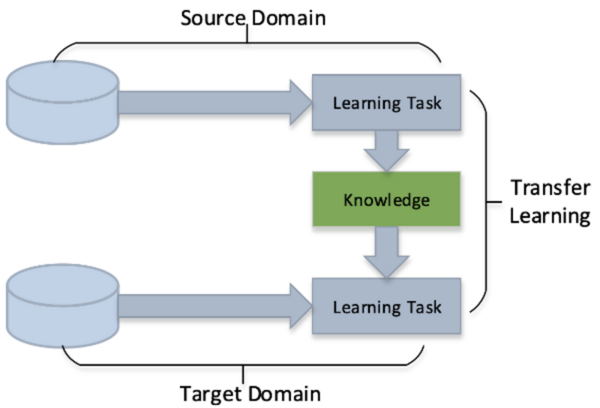
Osteosarcoma is a type of bone cancer that affects young adults and children. Early diagnosis of osteosarcoma is crucial to successful treatment. The current methods of diagnosis, which include imaging tests and biopsy, are time consuming and prone to human error. Hence, we used deep learning to extract patterns and detect osteosarcoma from histological images. We hypothesized that the combination of two different technologies (transfer learning and data augmentation) would improve the efficacy of osteosarcoma detection in histological images. The dataset used for the study consisted of histological images for osteosarcoma and was quite imbalanced as it contained very few images with tumors. Since transfer learning uses existing knowledge for the purpose of classification and detection, we hypothesized it would be proficient on such an imbalanced dataset. To further improve our learning, we used data augmentation to include variations in the dataset. We further evaluated the efficacy of different convolutional neural network models on this task. We obtained an accuracy of 91.18% using the transfer learning model MobileNetV2 as the base model with various geometric transformations, outperforming the state-of-the-art convolutional neural network based approach.

Read More...

Motion tracking and analysis of spray water droplets studied by high-speed photography using an iPhone X

Geng et al. | Sep 11, 2021

Motion tracking and analysis of spray water droplets  studied by high-speed photography using an iPhone X

Smartphones are not only becoming an inseparable part of our daily lives, but also a low-cost, powerful optical imaging tool for more and more scientific research applications. In this work, smartphones were used as a low-cost, high-speed, photographic alternative to expensive equipment, such as those typically found in scientific research labs, to accurately perform motion tracking and analysis of fast-moving objects. By analyzing consecutive images, the speed and flight trajectory of water droplets in the air were obtained, thereby enabling us to estimate the area of the water droplets landing on the ground.

Read More...
Determining viability of image processing models for forensic analysis of hair for related individuals

Wang et al. | Feb 04, 2025

Determining viability of image processing models for forensic analysis of hair for related individuals
Image credit: Taylor Smith

Here, the authors used machine learning to analyze microscopic images of hair, quantifying various features to distinguish individuals, even within families where traditional DNA analysis is limited. The Discriminant Analysis (DA) model achieved the highest accuracy (88.89%) in identifying individuals, demonstrating its potential to improve the reliability of hair evidence in forensic investigations.

Read More...

Impact of gadodiamide (Omniscan) on a beef liver catalase ex vivo model

Hirsch et al. | Mar 10, 2023

Impact of gadodiamide (Omniscan) on a beef liver catalase <em>ex vivo</em> model
Image credit: Marcelo Leal

Here, seeking to better understand the effects of gadolinium-based contrast agents, dyes typically used for MRI scans, the authors evaluated the activity of catalase found in beef liver both with and without gadodiamide when exposed to hydrogen peroxide. They found that gadioamide did not significantly inhibit catalase's activity, attributing this lack of effects to the chelating agent found in gadodiamide.

Read More...