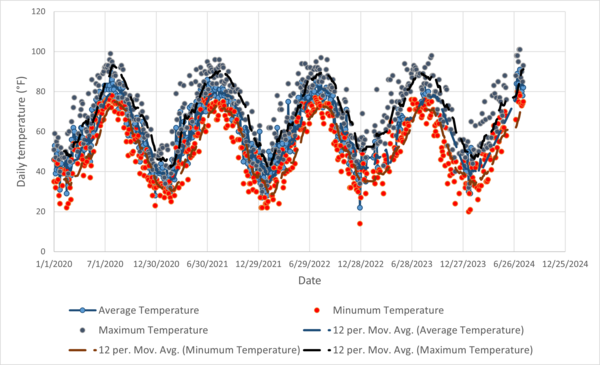
The authors studied the relationship between air quality and weather conditions (wind speed, precipitation, and temperature) in the Washington D.C. area.
Read More...The relationship between meteorological factors and air quality in Washington D.C. metropolitan area
The authors studied the relationship between air quality and weather conditions (wind speed, precipitation, and temperature) in the Washington D.C. area.
Read More...Integration of iron oxide nanoparticles into high-density polyethylene for sustainable cup coatings
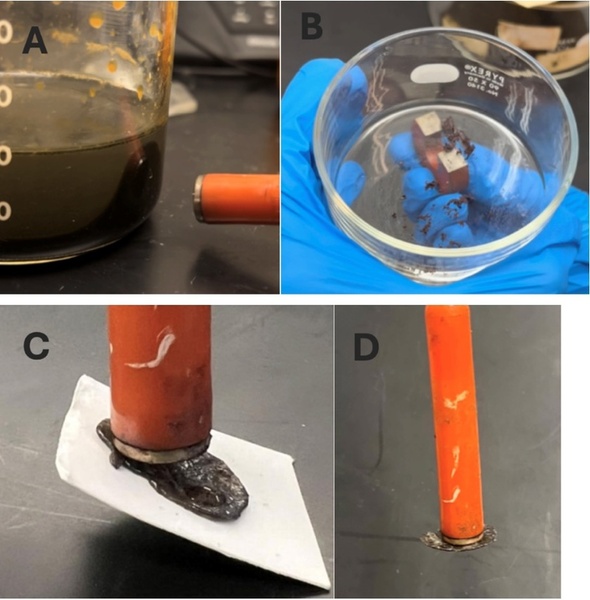
Here the authors propose integrating magnetic iron (II) oxide nanoparticles into the high-density polyethylene linings of disposable paper cups to create a waterproof, magnetically responsive composite liner. Their findings demonstrate that these nanoparticles successfully bond with the plastic layer without disrupting its structural integrity, offering a viable method to improve plastic recovery through magnetic recycling and mitigate global microplastic pollution.
Read More...Estimating the Carcinogenic Risks of Major Pollutants Released into the Environment
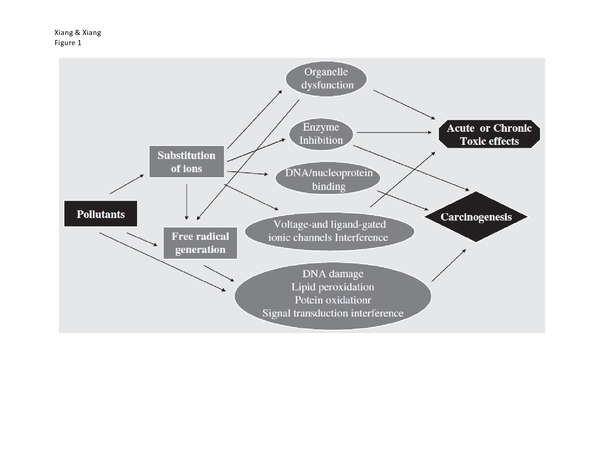
Each year, large amounts of carcinogenic pollutants are released into the environment, which negatively affects human health. This study ranks the major carcinogenic pollutants that are released into the air, water, and land by both the total released amounts and the potential carcinogenic risks.
Read More...Rethinking the electric vehicle tax policy: prioritizing affordable solutions for environmental impact
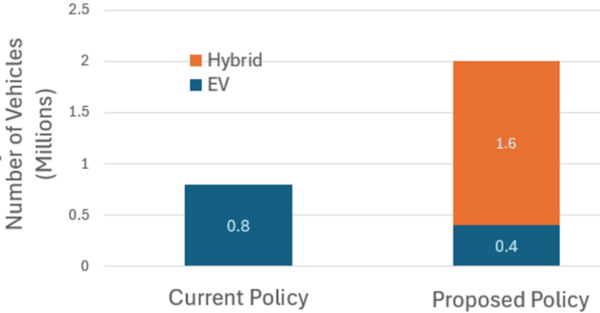
Car emissions harm both the environment and human health, and current U.S. EV tax credits mainly benefit high-income households because EVs are expensive. This study evaluates U.S. vehicle emissions policies by analyzing 2022 national vehicle data to compare the fuel economy and greenhouse gas impacts of the current EV tax credit with a proposed policy that incentivizes hybrid vehicle purchases.
Read More...A cost-effective IoT-based intelligent indoor air quality monitoring
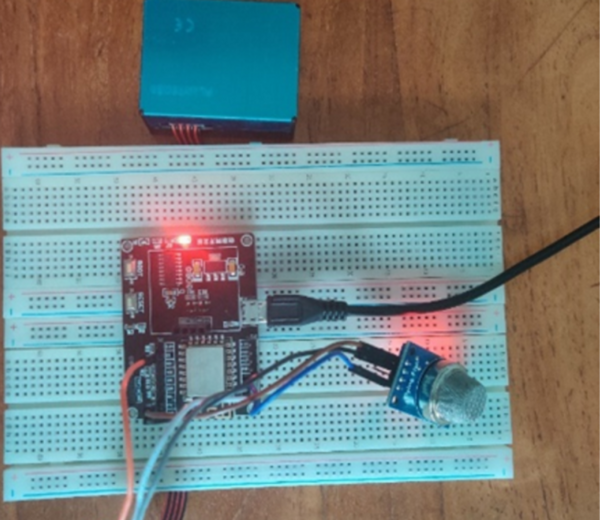
Poor air quality is associated with negative effects on human health but can be difficult to measure in an accurate and cost-effective manner. The authors design and test a monitor for measuring indoor air quality using low-cost components.
Read More...Percentages are a better format for conveying medical risk than frequencies
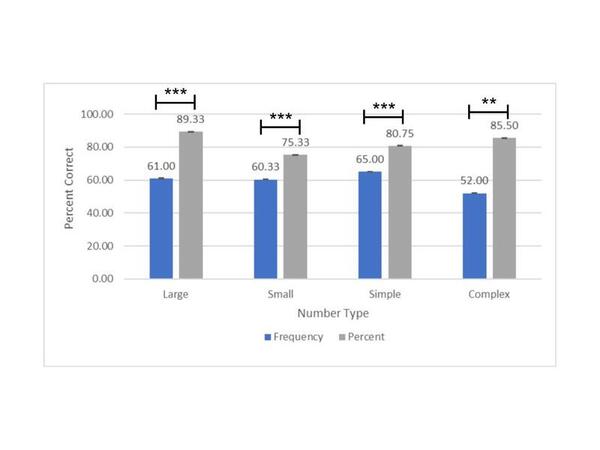
It can be challenging for the general public to understand data on medical risk. Weseley-Jones and Mordechai tackle this issue by conducting a survey to assess people's skill and comfort with understanding medical risk information in percentage and frequency formats.
Read More...Predicting clogs in water pipelines using sound sensors and machine learning linear regression
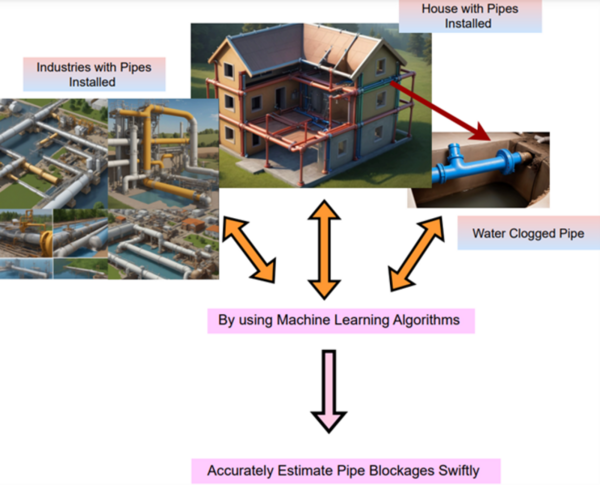
The authors looked the ability of sound sensors to predict clogged pipes when the sound intensity data is run through a machine learning algorithm.
Read More...Characterizing the evolution of antibiotic resistance in commercial Lactobacillus strains
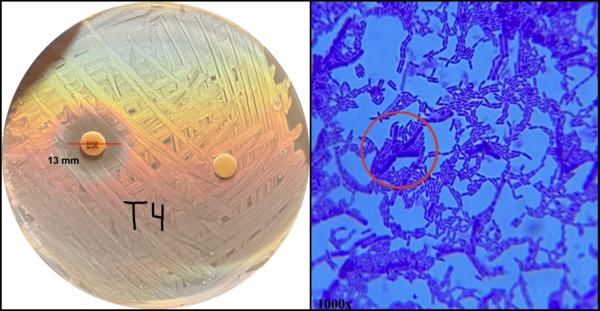
In this study, the authors studied the ability for bacteria to develop antibiotic resistance over successive generations and modeled the trajectory to predict how antibiotic resistance is developed.
Read More...Quantifying right atrial dilation relative to atrial septal defect size using an experimental model
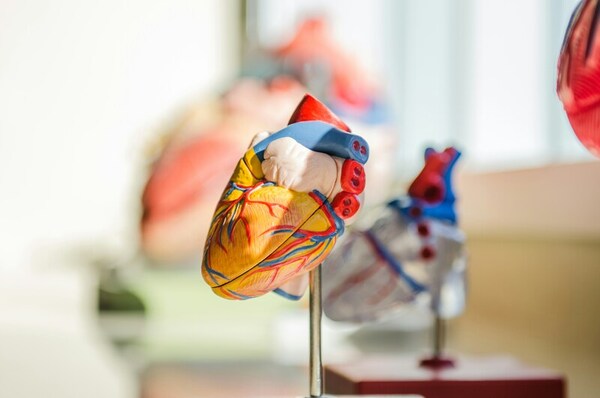
To address the limitations in predicting the severity of Atrial Septal Defect (ASD), here the authors utilized a fluid-filled chamber model to quantify the relationship between defect size and right atrial fluid output. The findings confirmed that larger ASD diameters result in a linear increase in fluid output, validating a cost-effective model that can improve clinical prognosis and treatment planning for heart failure risks.
Read More...The effect of adverse childhood experiences on e-cigarette usage in people aged 18–30 in the US

Recently, e-cigarette usage has been increasing rapidly. Previous research has found that adverse
childhood experiences (ACEs) are correlated to cigarette usage. However, there is limited data exploring if ACEs affect vaping. Therefore, in this work, we investigated the effects of ACEs on e-cigarette usage and hypothesize that witnessing vaping in the house and facing ACEs would increase e-cigarette usage while education on the dangers of vaping would decrease e-cigarette usage. We found that different types of ACEs had different correlations with e-cigarette usage and that education on the dangers of vaping had no effect on e-cigarette usage.