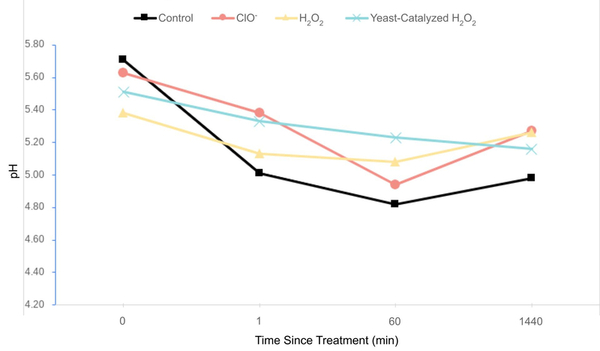
The authors looked at different treatments to clean up rainwater collected at home. They found that chlorine treatment and treatment with hydrogen peroxide catalyzed by yeast showed similar potential for cleaning up contaminated rainwater, but that further studies are needed to better assess impact on specific contaminant levels still present.
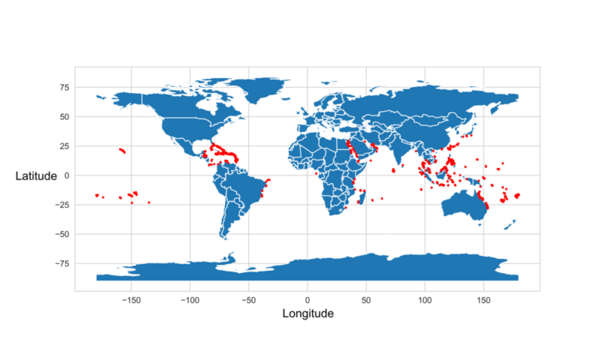
Coral bleaching is a fatal process that reduces coral diversity, leads to habitat loss for marine organisms, and is a symptom of climate change. This process occurs when corals expel their symbiotic dinoflagellates, algae that photosynthesize within coral tissue providing corals with glucose. Restoration efforts have attempted to repair damaged reefs; however, there are over 360,000 square miles of coral reefs worldwide, making it challenging to target conservation efforts. Thus, predicting the likelihood of bleaching in a certain region would make it easier to allocate resources for conservation efforts. We developed a machine learning model to predict global locations at risk for coral bleaching. Data obtained from the Biological and Chemical Oceanography Data Management Office consisted of various coral bleaching events and the parameters under which the bleaching occurred. Sea surface temperature, sea surface temperature anomalies, longitude, latitude, and coral depth below the surface were the features found to be most correlated to coral bleaching. Thirty-nine machine learning models were tested to determine which one most accurately used the parameters of interest to predict the percentage of corals that would be bleached. A random forest regressor model with an R-squared value of 0.25 and a root mean squared error value of 7.91 was determined to be the best model for predicting coral bleaching. In the end, the random model had a 96% accuracy in predicting the percentage of corals that would be bleached. This prediction system can make it easier for researchers and conservationists to identify coral bleaching hotspots and properly allocate resources to prevent or mitigate bleaching events.
Irrespective of the final application of a molecule, synthetic accessibility is the rate-determining step in discovering and developing novel entities. However, synthetic complexity is challenging to quantify as a single metric, since it is a composite of several measurable metrics, some of which include cost, safety, and availability. Moreover, defining a single synthetic accessibility metric for both natural products and non-natural products poses yet another challenge given the structural distinctions between these two classes of compounds. Here, we propose a model for synthetic accessibility of all chemical compounds, inspired by the Central Limit Theorem, and devise a novel synthetic accessibility metric assessing the overall feasibility of making chemical compounds that has been fitted to a Gaussian distribution.
In this study the author undertakes a careful characterization of a special type of chemical reaction, called an oscillating Belousov-Zhabotinsky (or B-Z) reaction, which has a number of existing applications in biomedical engineering as well as the potential to be useful in future developments in other fields of science and engineering. Specifically, she uses experimental measurements in combination with computational analysis to investigate whether the reaction is cohesive – that is, whether the oscillations between chemical states will remain consistent or change over time as the reaction progresses. Her results indicate that the reaction is not cohesive, providing an important foundation for the development of future technologies using B-Z reactions.
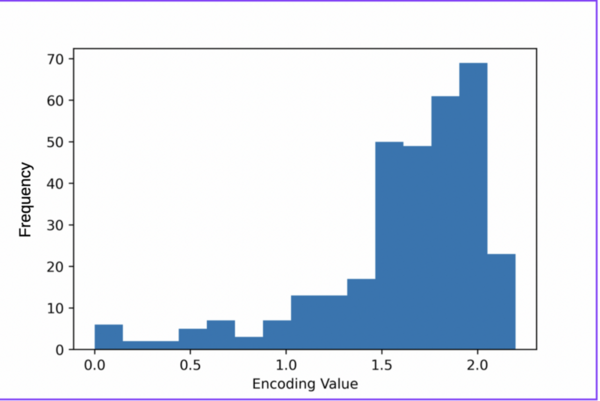
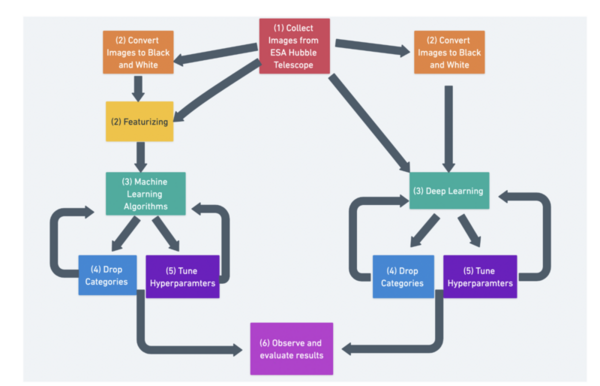
There are believed to be ~20,000 nebulae in the Milky Way Galaxy. However, humans have only cataloged ~1,800 of them even though we have gathered 1.3 million nebula images. Classification of nebulae is important as it helps scientists understand the chemical composition of a nebula which in turn helps them understand the material of the original star. Our research on nebulae classification aims to make the process of classifying new nebulae faster and more accurate using a hybrid of deep learning and machine learning techniques.
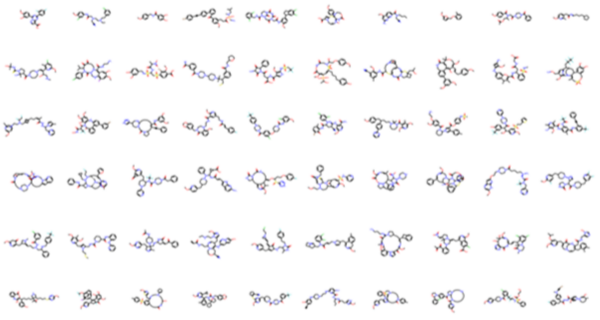
The authors investigate the ability of machine learning models to developing new drug-like molecules by learning desired chemical properties versus simply generating molecules that similar to those in the training set.
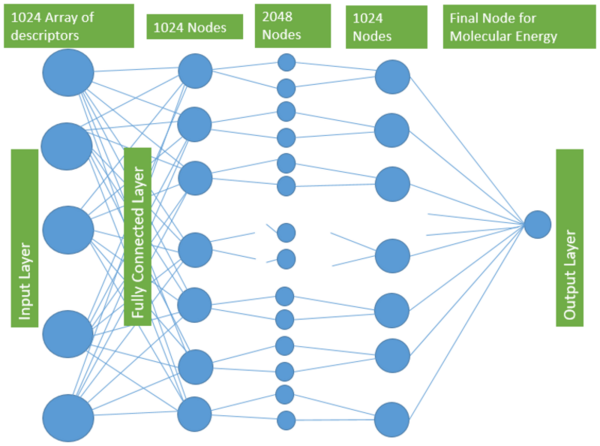
With molecular energy being an integral element to the study of molecules and molecular interactions, computational methods to determine molecular energy are used for the preservation of time and resources. However, these computational methods have high demand for computer resources, limiting their widespread feasibility. The authors of this study employed machine learning to address this disadvantage, utilizing neural networks trained on different representations of molecules to predict molecular properties without the requirement of computationally-intensive processing. In their findings, the authors determined the Feedforward Neural Network, trained by two separate models, as capable of predicting molecular energy with limited prediction error.
With monitoring of climate change and the evolving properties of the atmosphere more critical than ever, the authors of this study take sea salt aerosols into consideration. These sea salt aerosols, sourced from the bubbles found at the surface of the sea, serve as cloud condensation nuclei (CCN) and are effective for the formation of clouds, light scattering in the atmosphere, and cooling of the climate. With amines being involved in the process of CCN formation, the authors explore the effects of alkylamines on the properties of sea salt aerosols and their potential relevance to climate change.
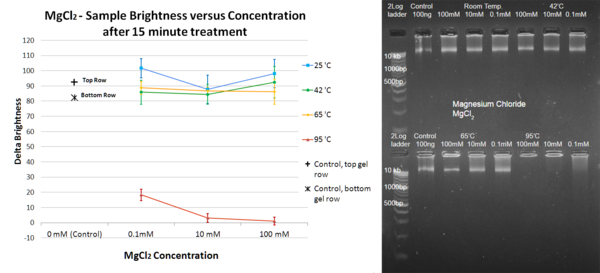
Heating of DNA-containing solutions is a part of many experiment protocols, but it can also cause damage and degradation of the DNA molecules, potentially leading to error in the experimental results. The authors of this paper investigate whether the presence of certain cations during heating can stabilize the DNA polymer and aid the preservation of the molecule.
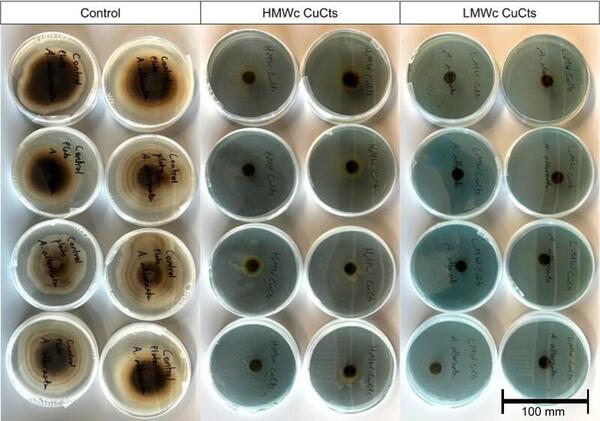
Pathogenic fungi such as Alternaria alternata (A. alternata) can decimate crop yields and severely limit food supplies when left untreated. Copper chitosan (CuCts) is a promising alternative fungicide for developing agricultural areas due to being inexpensive and nontoxic. We hypothesized that LMWc CuCts would exhibit greater fungal inhibition due to the beneficial properties of LMWc.