Browse Articles

Cathodal Galvanotaxis: The Effect of Voltage on the distribution of Tetrahymena pyriformis

Zheng et al. | Jun 10, 2019

Cathodal Galvanotaxis: The Effect of Voltage on the distribution of <em>Tetrahymena pyriformis</em>

The surface of the unicellular eukaryote, Tetrahymena pyriformis, is covered with thousands of hair-like cilia. These cilia are very similar to cilia of the human olfactory and respiratory tracts making them model organisms for studying cilia function and pathology. The authors of this study investigated the effect of voltage on T. pyriformis galvanotaxis, the movement towards an electrical stimulus. They observed galvanotaxis towards the cathode at voltages over 4V which plateau, indicating opening of voltage gated-ion channels to trigger movement.

Read More...

Astragalus membranaceus Root Concentration and Exposure Time: Role in Heat Stress Diminution in C. elegans

Chen et al. | Oct 17, 2018

Astragalus membranaceus Root Concentration and Exposure Time: Role in Heat Stress Diminution in <em>C. elegans</em>

In this study, the authors investigated the biological mechanism underlying the actions of a traditional medicinal plant, Astragalus membranaceus. Using C. elegans as an experimental model, they tested the effects of AM root on heat stress responses. Their results suggest that AM root extract may enhance the activity of endogenous pathways that mediate cellular responses to heat stress.

Read More...

Study of PINN sensor layout in evaluating WSS with application to patient-specific carotid flow

Nie et al. | Sep 04, 2026

Study of PINN sensor layout in evaluating WSS with application to patient-specific carotid flow

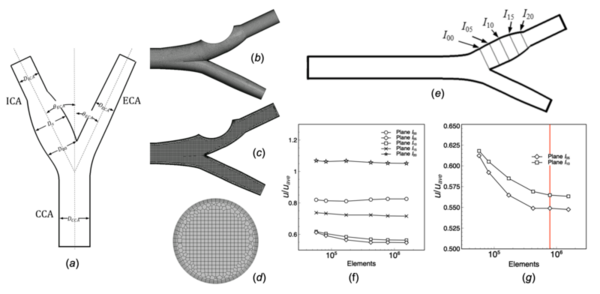
Physics‑Informed Neural Networks (PINNs) offer a promising way to estimate blood‑flow behavior in arteries, especially near the vessel wall where traditional methods struggle. In this study, students tested how sensor density and placement affect PINN accuracy in modeling carotid artery flow and found that accuracy improves up to a moderate sensor density and depends strongly on how close sensors are placed to the arterial wall. Applying the optimized configuration to a patient‑specific carotid model produced velocity predictions closely matching computational fluid dynamics results, highlighting PINNs’ potential for future personalized cardiovascular assessment.

Read More...

Evaluating the impact of prompting styles on LLM accuracy for AIME math questions

Ganesa et al. | Jul 26, 2026

Evaluating the impact of prompting styles on LLM accuracy for AIME math questions

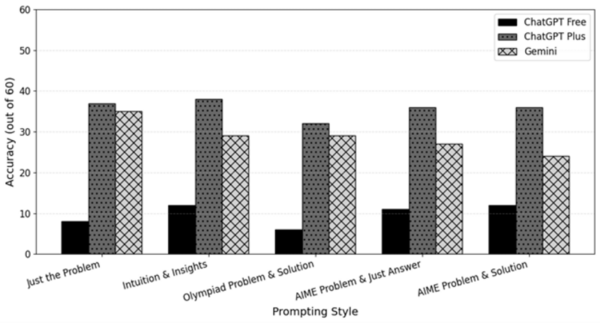
Large language models are increasingly used to solve math problems, but their ability to handle multi-step reasoning remains uncertain. In this study, students tested whether different prompting styles could improve LLM accuracy on challenging AIME math questions and found that detailed step-by-step solutions did not significantly outperform simpler prompts. These results suggest that improving LLM mathematical reasoning may require deeper model-level advances rather than changes in prompting style alone.

Read More...

Innovative fake health news detection: Integrating emotional features into graph neural networks

Wang et al. | Jul 03, 2026

Innovative fake health news detection: Integrating emotional features into graph neural networks
Image credit: Wang and Wang

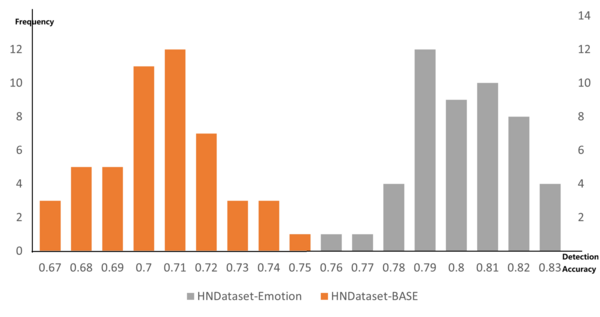
This manuscript tackles a major social issue in the health news sector, with social media being one of the primary sources of information and a prime spot to propagate fake news. The author proposes X-HND , which is a unique architecture that combines emotional and contextual analysis in a Graph Neural Network to accurately detect fake news. This was a multi-step process which involved the creation of a custom health news dataset (HNDataset), and an emotional variant that uses RoBERTa to extract emotion. These dataset were then used to prove the hypothesis that accuracy increases when the custom dataset is used to train the model and that with the integration of emotion capture, the detection accuracy increases further.

Read More...

Relationship between p62 and learning behavior in male and female mice deficient in hippocampal folliculin

Guvenir et al. | Jun 10, 2025

Relationship between p62 and learning behavior in male and female mice deficient in hippocampal folliculin
Image credit: Robina Weermeijer

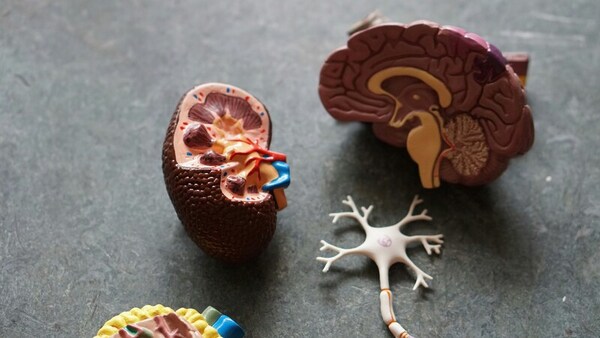
Here the authors hypothesized that reducing folliculin (FLCN) might affect p62 protein levels in the dorsal hippocampus of mice, given their potential functional connection and p62's role in neurodegenerative diseases. Their study, using western blots and a two-way ANOVA on young wild-type mice, found that p62 levels correlated with FLCN expression, but ultimately concluded there's no evidence of a functional connection between FLCN and p62 in this specific model.

Read More...

Machine learning predictions of additively manufactured alloy crack susceptibilities

Gowda et al. | Nov 12, 2024

Machine learning predictions of additively manufactured alloy crack susceptibilities

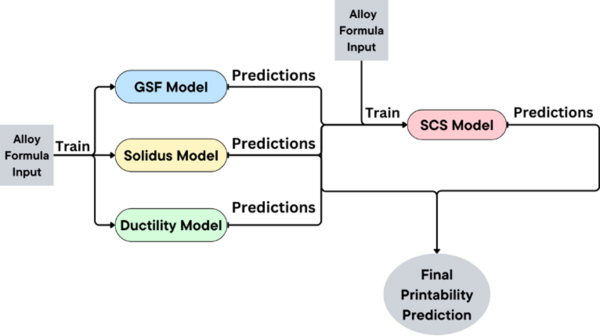
Additive manufacturing (AM) is transforming the production of complex metal parts, but challenges like internal cracking can arise, particularly in critical sectors such as aerospace and automotive. Traditional methods to assess cracking susceptibility are costly and time-consuming, prompting the use of machine learning (ML) for more efficient predictions. This study developed a multi-model ML pipeline that predicts solidification cracking susceptibility (SCS) more accurately by considering secondary alloy properties alongside composition, with Random Forest models showing the best performance, highlighting a promising direction for future research into SCS quantification.

Read More...

Machine learning for retinopathy prediction: Unveiling the importance of age and HbA1c with XGBoost

Ramachandran et al. | Sep 05, 2024

Machine learning for retinopathy prediction: Unveiling the importance of age and HbA1c with XGBoost

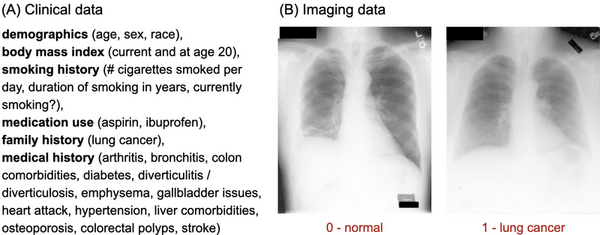
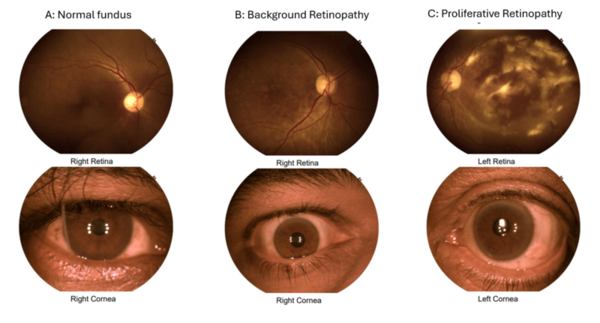
The purpose of our study was to examine the correlation of glycosylated hemoglobin (HbA1c), blood pressure (BP) readings, and lipid levels with retinopathy. Our main hypothesis was that poor glycemic control, as evident by high HbA1c levels, high blood pressure, and abnormal lipid levels, causes an increased risk of retinopathy. We identified the top two features that were most important to the model as age and HbA1c. This indicates that older patients with poor glycemic control are more likely to show presence of retinopathy.

Read More...