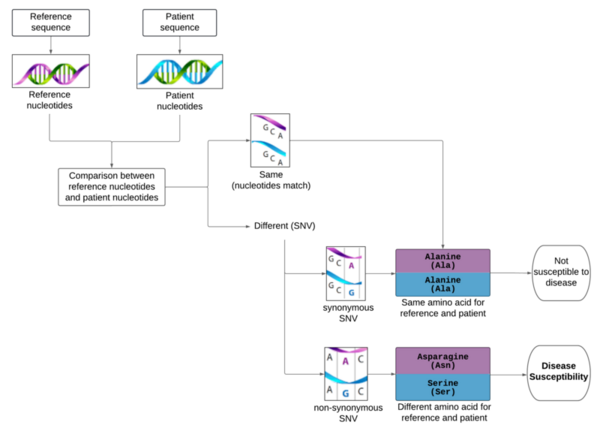
Although the 5-year survival rate for colorectal cancer is below 10%, it increases to greater than 90% if it is diagnosed early. We hypothesized from our research that analyzing non-synonymous single nucleotide variants (SNVs) in a patient's exome sequence would be an indicator for high genetic risk of developing colorectal cancer.
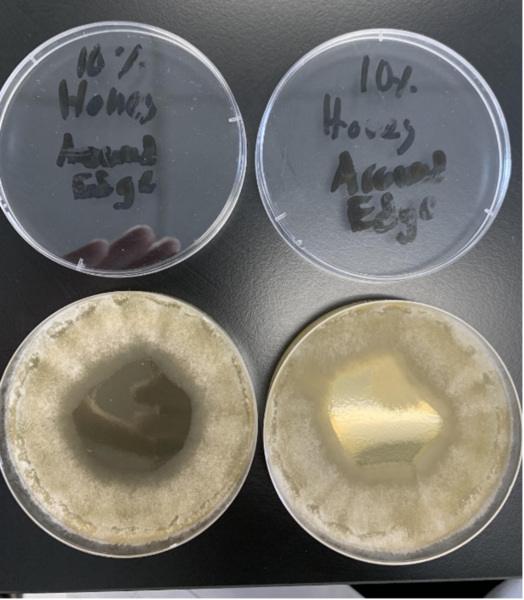
Rhizopus stolonifer is a mold commonly found growing on bread that can cause many negative health effects when consumed. Preservatives are the well-known answer to this problem; however, many preservatives are not naturally found in food, and some have negative health effects of their own. We focused on honey as a possible solution because of its natural origin and self-preservation ability. We hypothesized that honey would decrease the growth rate of R. stolonifer . We evaluated the honey with a zone of inhibition (ZOI) test on agar plates. Sabouraud dextrose agar was mixed with differing volumes of honey to generate concentrations between 10.0% and 30.0%. These plates were then inoculated with a solution of spores collected from the mold. The ZOI was measured to determine antifungal effectiveness. A statistically significant difference was found between the means of all concentrations except for 20.0% and 22.5%. Our findings support the hypothesis as we showed a positive correlation between the honey concentration and growth rate of mold. By using this data, progress could be made on an all-natural, honey-based preservative.
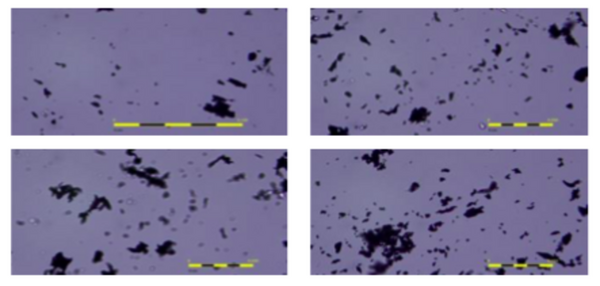
Sequence accessibility is an important factor affecting gene expression. Sequence accessibility or openness impacts the likelihood that a gene is transcribed and translated into a protein and performs functions and manifests traits. There are many potential factors that affect the accessibility of a gene. In this study, our hypothesis was that the content of nucleotides in a genetic sequence predicts its accessibility. Using a machine learning linear regression model, we studied the relationship between nucleotide content and accessibility.
Here, the authors sought to better understand how and why people experience beauty in music. They explored this fundamental aesthetic response by considering numerous emotional responses of participants to diverse musical excerpts using a 42-item Aesthetic Emotions Scale assessment. They found that the highly nuanced emotional experience of beauty in music includes positive, negative, and knowledge-related feelings.
Ashley Moulton & Joseph Rasmus investigate 9 controversial categories of intelligence as predicted by Multiple Intelligence Theory, originally proposed in the mid-1980s. By collecting data from 56 participants, they record that there may not actually be a correlation between these categorical types when it comes to workplace atmosphere and project efficiency.
In this article, the authors propose an effective, environmentally-friendly method of producing conductive ink using expired waste oil, polystyrene, and graphene.
Machine learning algorithms are becoming increasingly popular for data crunching across a vast area of scientific disciplines. Here, the authors compare two machine learning algorithms with respect to accuracy and user-friendliness and find that random forest algorithms outperform logistic regression when applied to the same dataset.
In this study, the authors utilize an infrared camera to visualize and investigate the exothermic reaction of polyurethane foam, which has many everyday uses including automotive seats, bedding, and insulation.