Browse Articles

The association between hunting and the feeding and vigilance times of American bison in North Dakota and Montana

McCandless et al. | Mar 30, 2022

The association between hunting and the feeding and vigilance times of American bison in North Dakota and Montana

This study hypothesized that feeding times of bison in the hunted populations would be significantly shorter than that of bison in the nonhunted population and vigilance times would be significantly longer than that of bison in the nonhunted population. Notably, the results found significant differences in feeding and vigilance times of bison in the hunted and non-hunted populations. However, these differences did not support the original hypothesis; bison in hunted populations spent more time feeding and less time vigilant than bison in the non-hunted population. Future studies investigating the association between hunting and bison behaviors could use populations of bison that are hunted more frequently, which may provide different results.

Read More...

Antibacterial effectiveness of turmeric against gram-positive Staphylococcus epidermidis

Cox et al. | Jan 10, 2022

Antibacterial effectiveness of turmeric against gram-positive <i>Staphylococcus epidermidis</i>

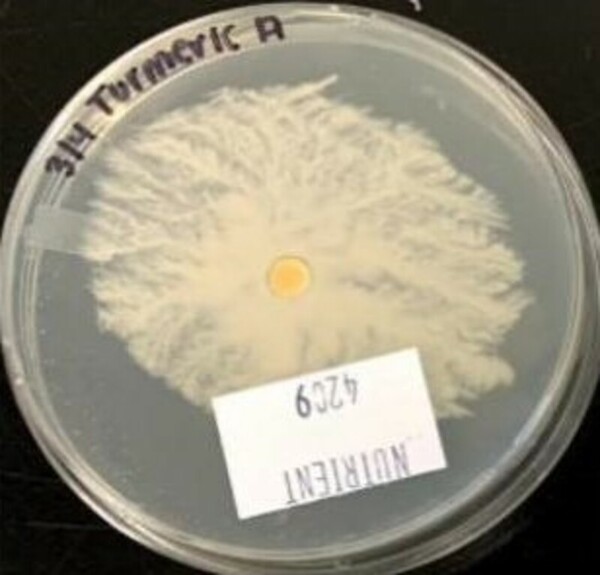
Infections caused by antibiotic resistance are a leading issue faced by the medical field. The authors studied the antibacterial effectiveness of turmeric against gram-positive Staphylococcus epidermidis using antibiotic sensitivity disks. They infused blank antibiotic sensitivity disks with a 5% concentrated solution of turmeric and placed them on agar plates inoculated with bacteria. Overall, there was no measurable ZOI surrounding the turmeric disk so the measurements for all trials were 0 cm, suggesting that turmeric at a 5% concentration is not an effective antibacterial against S. epidermidis.

Read More...

Beeing sustainable: Honey as a bioindicator for pollution

Donnellan et al. | Oct 06, 2021

Beeing sustainable: Honey as a bioindicator for pollution

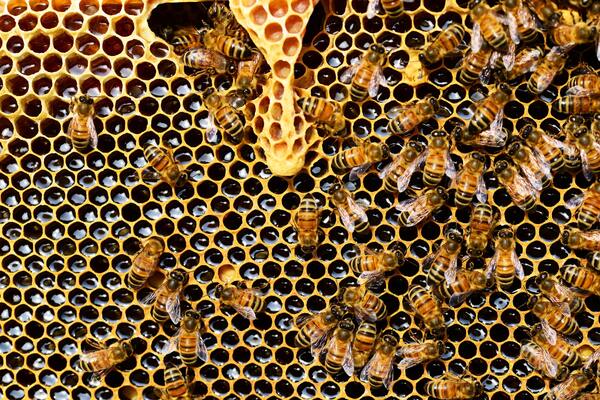
In this study, Donnellan and colleagues investigated how environmental pollution may be affecting honey samples from Chicago apiaries. They found no significant correlation between heavy metal concentration in honey to distance from local industries, suggesting a minimal effect of proximity to industrial pollution on honey contamination.

Read More...

What Can You See in the Dark? The Effects of Contrast, Light, and Age on Contrast Sensitivity in Low Light

Virostek et al. | Apr 25, 2014

What Can You See in the Dark? The Effects of Contrast, Light, and Age on Contrast Sensitivity in Low Light

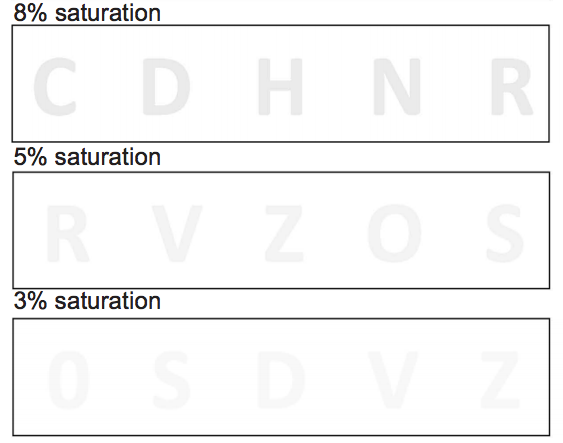
Many of us take our vision for granted, but rarely do we measure how well we can see. In this study, the authors investigate the ability of people of different ages to read progressively fainter letters in dark light. They find that the ability to see in dim light drops drastically after age 30. The ability to read fainter letters worsens after age 30 as well. These findings should help inform lighting decisions everywhere from restaurants to road signs.

Read More...

Implications of various pure tones on Phaseolus vulgaris and Gaultheria shallon

Judit et al. | Jul 13, 2026

Implications of various pure tones on <i>Phaseolus vulgaris</i> and <i>Gaultheria shallon<i>

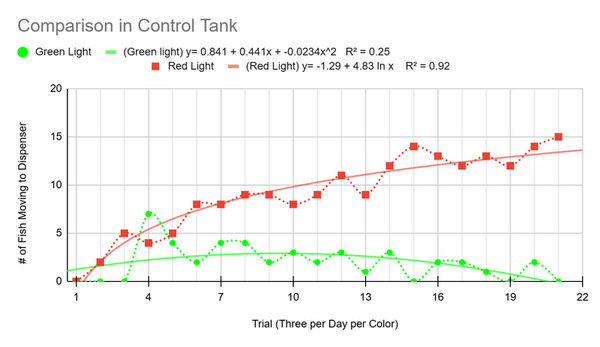
This study investigated how different sound frequencies (0, 1,000, 5,000, and 15,000 Hz) affect the growth of Phaseolus vulgaris and the transpiration rates of Gaultheria shallon. Although some differences in plant growth were observed, the authors found no consistent evidence that sound frequency enhanced overall growth or transpiration, highlighting the need for further research.

Read More...

Leveraging transfer learning with convolutional neural networks for cardiovascular disease detection

Chen et al. | May 25, 2026

Leveraging transfer learning with convolutional neural networks for cardiovascular disease detection
Image credit: Stephen Andrews

This study shows the efficacy of leveraging transfer learning, specifically from residual networks, to detect CVDs and possible signs of CVDs. The findings indicate that leveraging transfer learning from residual networks alongside medical professionals is a highly promising approach for CVD detection and diagnosis, warranting further investigation.

Read More...

Analysis of the catalytic efficiency of spent coffee grounds and titanium dioxide using UV-Vis spectroscopy

Jahng et al. | Dec 09, 2025

Analysis of the catalytic efficiency of spent coffee grounds and titanium dioxide using UV-Vis spectroscopy
Image credit: Jahng and Kim

This paper looks at using spent coffee grounds as a partial substitute for titanium dioxide (TiO2) as a catalyst for chemical reactions. Using UV-Vis spectrophotometry, they found that adding the coffee grounds to TiO2 in a 3:1 ratio, there is still meaningful catalytic activity. This offers a cheaper solution than just using pure TiO2.

Read More...