Browse Articles

Down-regulation of CD44 inhibits Wnt/β-catenin mediated cancer cell migration and invasion in gastric cancer

Baek et al. | May 10, 2021

Down-regulation of CD44 inhibits Wnt/β-catenin mediated cancer cell migration and invasion  in gastric cancer

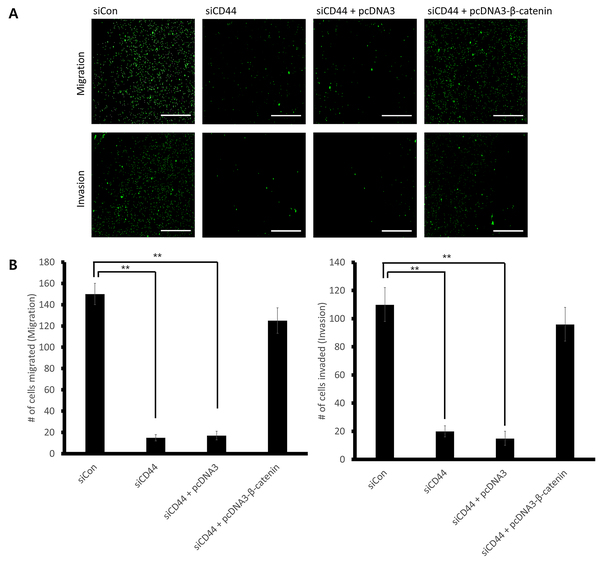
In this study, we aimed to characterize CD44-mediated regulation of the Wnt/β-catenin signaling pathway, which promotes cancer invasion and metastasis. We hypothesized that CD44 down-regulation will inhibit gastric cancer cell migration and invasion by leading to down-regulation of Wnt/β-catenin signaling. We found that CD44 up-regulation was significantly related to poor prognosis in gastric cancer patients. We demonstrated the CD44 down-regulation decreased β-catenin protein expression level. Our results suggest that CD44 down-regulation inhibits cell migration and invasion by down-regulating β-catenin expression level.

Read More...
QuitPuff: A Simple Method Using Saliva to Assess the Risk of Oral Pre-Cancerous Lesions and Oral Squamous Cell Carcinoma in Chronic Smokers

Shamsher et al. | Mar 27, 2019

QuitPuff: A Simple Method Using Saliva to Assess the Risk of Oral Pre-Cancerous Lesions and Oral Squamous Cell Carcinoma in Chronic Smokers

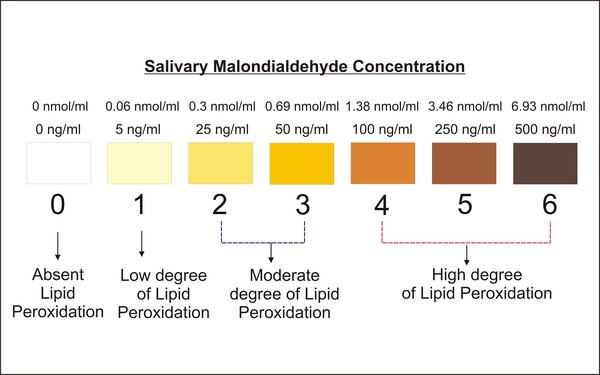
Smoking generates free radicals and reactive oxygen species which induce cell damage and lipid peroxidation. This is linked to the development of oral cancer in chronic smokers. The authors of this study developed Quitpuff, simple colorimetric test to measure the extent of lipid peroxidation in saliva samples. This test detected salivary lipid peroxidation with 96% accuracy in test subjects and could serve as an inexpensive, non-invasive test for smokers to measure degree of salivary lipid peroxidation and potential risk of oral cancer.

Read More...

Evaluation of platelet-rich plasma vs. platelet lysate: VEGF and PDGF concentration, stability, and shelf life

Prasad et al. | Mar 30, 2022

Evaluation of platelet-rich plasma vs. platelet lysate: VEGF and PDGF concentration, stability, and shelf life

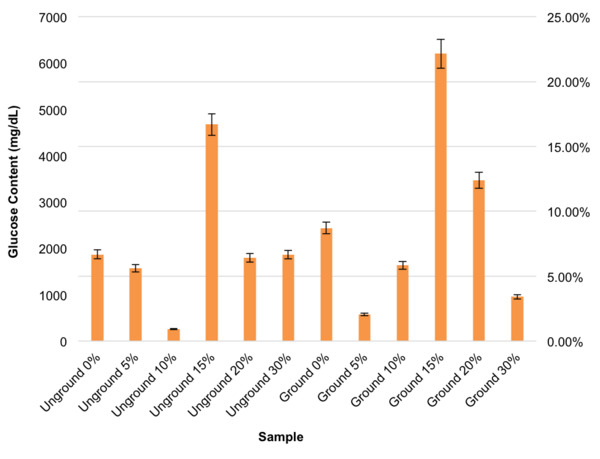
Cell-free biologicals are a novel method of treating clinical conditions which involve chronic inflammation such as tendonitis and osteoarthritis. This study compared platelet-derived growth factor (PDGF) and vascular endothelial growth factor (VEGF) in platelet-rich plasma (PRP), activated PRP (aPRP), and platelet lysate (PL). It was hypothesized that PL would contain higher concentrations of growth factors than PRP and that different storage temperatures for PL would diminish cytokine expression. Results demonstrated PL had the highest concentrations of both cytokines, with concentrations slightly diminishing at-80C. aPRP and PRP demonstrated lower concentrations of PDGF and VEGF than PL.

Read More...

Comparative singlet oxygen photosensitizer efficiency of berberine, rose bengal, and methylene blue by time course nuclear magnetic resonance (NMR) monitoring of a photochemical 4+2 cycloaddition endoperoxide formation

Su et al. | May 14, 2021

Comparative singlet oxygen photosensitizer efficiency of berberine, rose bengal, and methylene blue by time course nuclear magnetic resonance (NMR) monitoring of a photochemical 4+2 cycloaddition endoperoxide formation

Berberine, a natural product alkaloid, has been shown to exert biological activity via in situ production of singlet oxygen when photo irradiated. Berberine utilizes singlet oxygen in its putative mechanism of action, wherein it forms an activated complex with DNA and photosensitizes triplet oxygen to singlet oxygen to specifically oxidize guanine residues, thereby halting cell replication and leading to cell death. This has potential application in photodynamic therapy, alongside other such compounds which also act as photosensitizers and produce singlet oxygen in situ. The quantification of singlet oxygen in various photosensitizers, including berberine, is essential for determining their photosensitizer efficiencies. We postulated that the singlet oxygen produced by photoirradiation of berberine would be superior in terms of singlet oxygen production to the aforementioned photosensitizers when irradiated with UV light, but inferior under visible light conditions, due to its strong absorbance of UV wavelengths.

Read More...

The Effect of Ultraviolet Radiation and the Antioxidant Curcumin on the Longevity, Fertility, and Physical Structure of Drosophila melanogaster: Can We Defend Our DNA?

Lateef et al. | May 18, 2019

The Effect of Ultraviolet Radiation and the Antioxidant Curcumin on the Longevity, Fertility, and Physical Structure of <em>Drosophila melanogaster</em>: Can We Defend Our DNA?

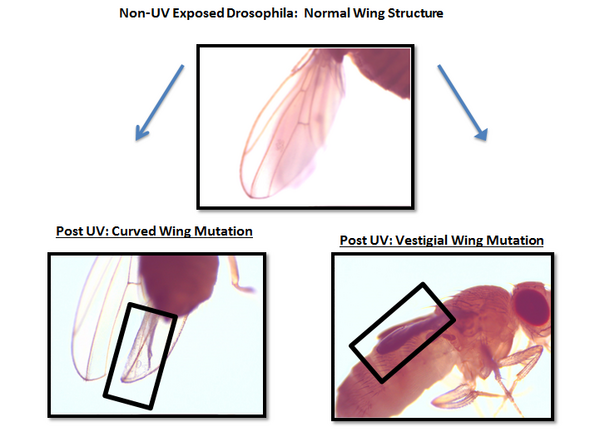
Ultraviolet (UV) radiation is known to alter DNA structure and impair cellular function in all living organisms. In this study, Lateef et al examine the effects of UV radiation to determine whether antioxidant-enriched nutrition can combat the potential deleterious effects of UV radiation on Drosophila melanogaster. They found that UVB (320nm) radiation caused a 59% decrease in the Drosophila lifespan and mutagenic effects on flies' physical appearance, but did not significantly affect fertility. Curcumin significantly prolonged lifespan and enhanced fertility for both UV- and non-UV-exposed flies. The research demonstrates the positive potential of natural antioxidants as weapons against radiation-induced diseases including cancer.

Read More...

Increased carmine red exposure periods yields a higher number of vacuoles formed in Tetrahymena pyriformis

Shah et al. | Nov 18, 2022

Increased carmine red exposure periods yields a higher number of vacuoles formed in <em>Tetrahymena pyriformis</em>

T. pyriformis can use phagocytosis to create vacuoles of carmine red, a dye which is made using crushed insects and is full of nutrients. Establishing a relationship between vacuole formation and duration of exposure to food can demonstrate how phagocytosis occurs in T. pyriformis. We hypothesized that if T. pyriformis was incubated in a carmine red solution, then more vacuoles would form over time in each cell.

Read More...