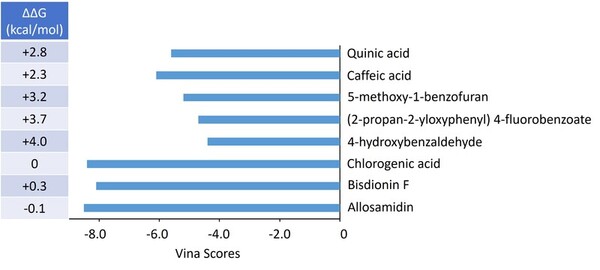
This study investigated whether chlorogenic acid, a plant compound with known health benefits, can interact with the proteins CHIT1 and CHI3L1, which could ultimately lead to new therapeutic strategies for a range of chronic diseases.
Read More...Computational prediction of chlorogenic acid binding to disease-linked proteins CHIT1 and CHI3L1
This study investigated whether chlorogenic acid, a plant compound with known health benefits, can interact with the proteins CHIT1 and CHI3L1, which could ultimately lead to new therapeutic strategies for a range of chronic diseases.
Read More...A low-cost, Arduino-based system for real-time abiotic monitoring of a local watershed
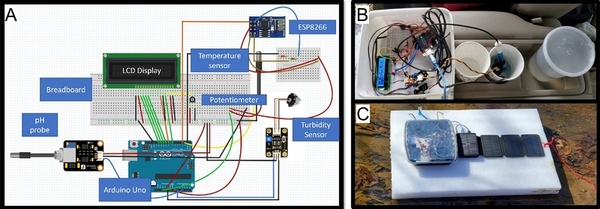
The authors monitored water quality over time looking for influences from construction and deforestation.
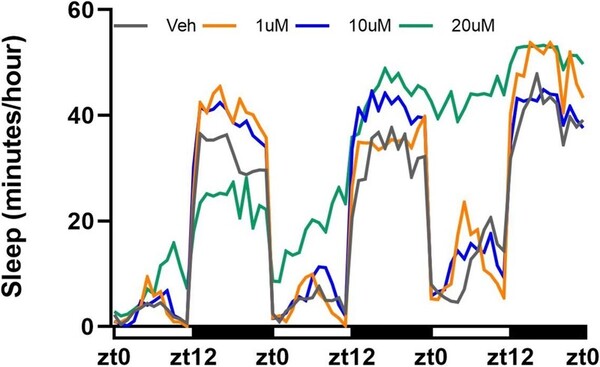
Read More...Dantrolene-induced ER stress alters sleep in Drosophila melanogaster
Social and psychosocial factors associated with mood states among adolescents: A questionnaire-based study

The authors assess the relationship between supportive family environments and internalized stigma in adolescents.
Read More...Analysis of bending loss in single-mode optical fiber with low-cost setup

This study investigates how bending radius, wavelength, and number of turns affect signal attenuation in single-mode optical fibers.
Read More...Evaluating the impact of prompting styles on LLM accuracy for AIME math questions
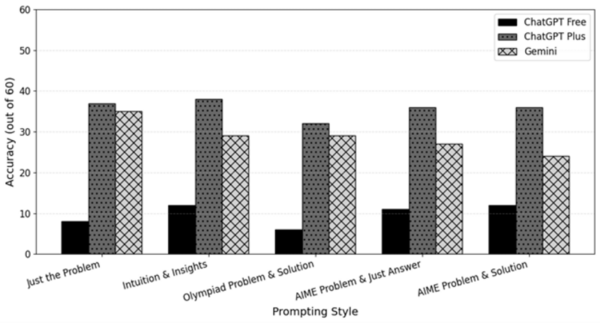
Large language models are increasingly used to solve math problems, but their ability to handle multi-step reasoning remains uncertain. In this study, students tested whether different prompting styles could improve LLM accuracy on challenging AIME math questions and found that detailed step-by-step solutions did not significantly outperform simpler prompts. These results suggest that improving LLM mathematical reasoning may require deeper model-level advances rather than changes in prompting style alone.
Read More...Testing the Impact of a Geometric Curvature Variable on the Accuracy of Econometric Forecasting Models
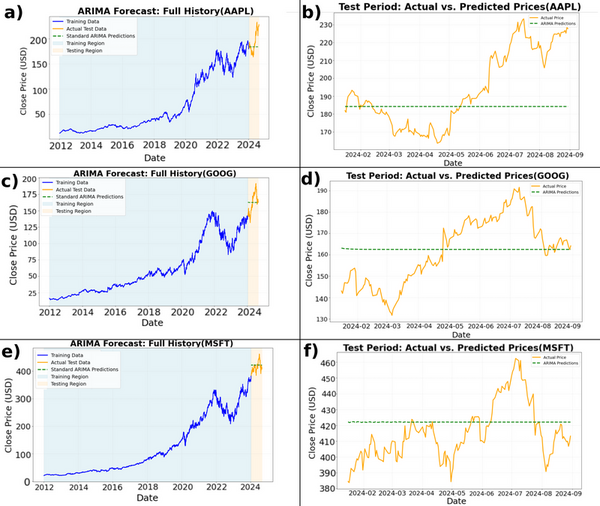
Classical financial forecasting models often fail to capture the complex, nonlinear dynamics of the stock market. This study demonstrates that incorporating a single variable to represent the 'geometric curvature' of a time series dramatically improves the accuracy of standard econometric forecasts. Our findings highlight that geometric properties are a significant predictive factor, opening new avenues for more powerful financial modeling.
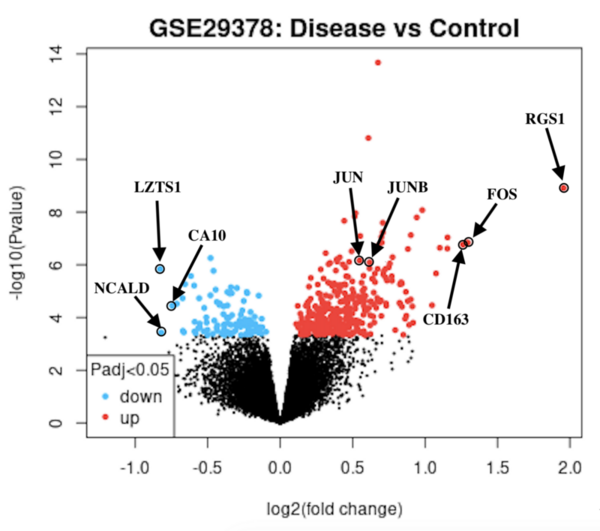
Read More...Upregulation of the AP-1 complex as a potential biomarker for Alzheimer’s disease (AD)
A model for angle evolution in conical piles formed using the fixed funnel method
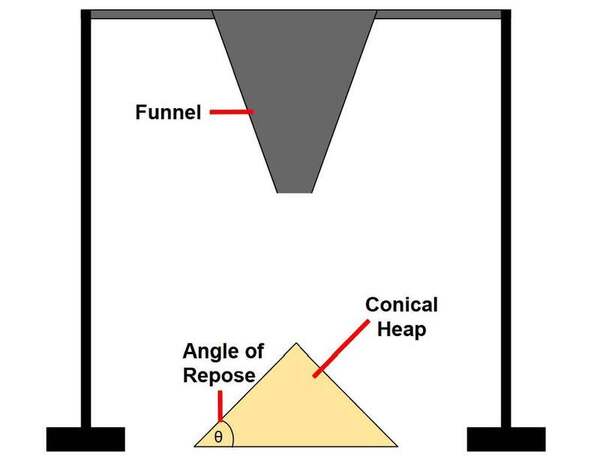
When granular materials are poured onto a surface, they form conical piles whose slopes increase before reaching a stable angle of repose. We found that this angle evolution follows a previously unrecognized two-phase exponential growth pattern that is conserved across granular materials with diverse particle properties. The parameters of this model correlate with particle friction and are influenced by deposition conditions, providing a quantitative framework for describing pile formation.
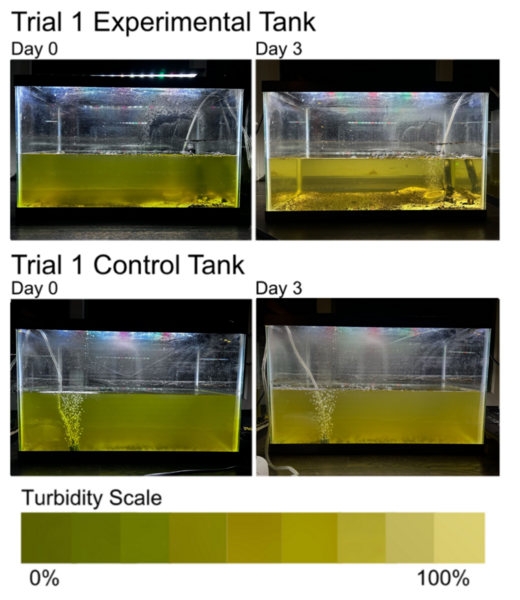
Read More...Evaluating the filtration efficiency and water quality impact of Corbicula javanicus