Browse Articles

The effect of activation function choice on the performance of convolutional neural networks

Wang et al. | Sep 15, 2023

The effect of activation function choice on the performance of convolutional neural networks
Image credit: Tara Winstead

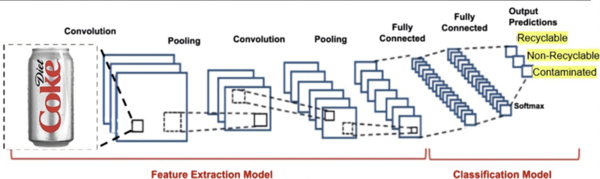
With the advance of technology, artificial intelligence (AI) is now applied widely in society. In the study of AI, machine learning (ML) is a subfield in which a machine learns to be better at performing certain tasks through experience. This work focuses on the convolutional neural network (CNN), a framework of ML, applied to an image classification task. Specifically, we analyzed the performance of the CNN as the type of neural activation function changes.

Read More...
Contribution of environmental factors to genetic variation in the Pacific white-sided dolphin

Talwar et al. | Jan 23, 2024

Contribution of environmental factors to genetic variation in the Pacific white-sided dolphin
Image credit: Flavio

Here the authors sought to understand the effects of different variables that may be tied to pollution and climate change on genetic variation of Pacific white-sided dolphins, a species that is currently threatened by water pollution. Based on environmental data collected alongside a genetic distance matrix, they found that ocean currents had the most significant impact on the genetic diversity of Pacific white-sided dolphins along the Japanese coast.

Read More...

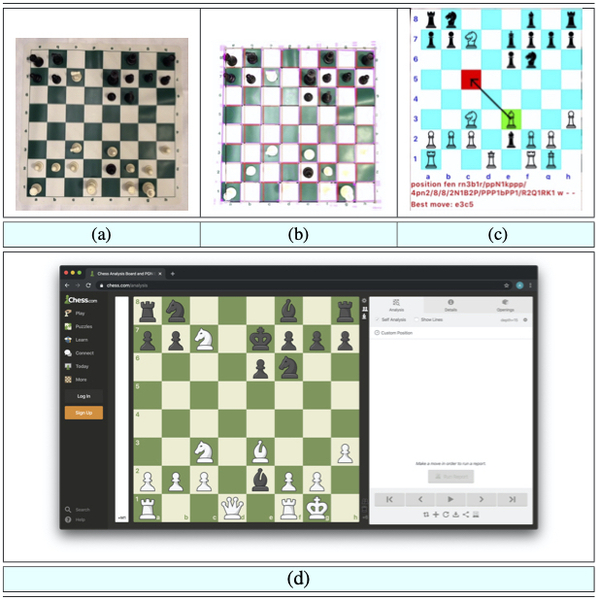
Augmented Reality Chess Analyzer (ARChessAnalyzer): In-Device Inference of Physical Chess Game Positions through Board Segmentation and Piece Recognition using Convolutional Neural Networks

Mehta et al. | Jul 17, 2020

Augmented Reality Chess Analyzer (ARChessAnalyzer): In-Device Inference of Physical Chess Game Positions through Board Segmentation and Piece Recognition using Convolutional Neural Networks

In this study the authors develop an app for faster chess game entry method to help chess learners improve their game. This culminated in the Augmented Reality Chess Analyzer (ARChessAnalyzer) which uses traditional image and vision techniques for chess board recognition and Convolutional Neural Networks (CNN) for chess piece recognition.

Read More...