Browse Articles

Algorithmic barriers: Investigating student perceptions of AI bias in subjective “culture fit” hiring

Mahatara et al. | May 25, 2026

Algorithmic barriers: Investigating student perceptions of AI bias in subjective “culture fit” hiring
Image credit: JonTyson

This study investigated perceptions of the emerging workforce toward the use of artificial intelligence in hiring, specifically for assessing subjective "culture fit." Through a mixed-methods survey of 150 high school and early-college students in Nepal, we found a significant disconnect between organizational adoption of AI and the profound skepticism of young job candidates, who express deep concerns about fairness, transparency, and the potential for AI to perpetuate systemic discrimination.

Read More...

Trust in the use of artificial intelligence technology for treatment planning

Srivastava et al. | Sep 18, 2024

Trust in the use of artificial intelligence technology for treatment planning

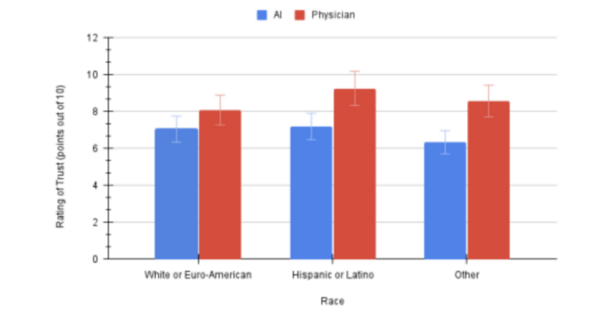
As AI becomes more integrated into healthcare, public trust in AI-developed treatment plans remains a concern, especially for emotionally charged health decisions. In a study of 81 community college students, AI-created treatment plans received lower trust ratings compared to physician-developed plans, supporting the hypothesis. The study found no significant differences in AI trust levels across demographic factors, suggesting overall skepticism toward AI-driven healthcare.

Read More...

Genetic Bioaugmentation of Oryza sativa to Facilitate Self-Detoxification of Arsenic In-Situ

Bhat et al. | Dec 03, 2024

Genetic Bioaugmentation of Oryza sativa to Facilitate Self-Detoxification of Arsenic In-Situ

Arsenic contamination in rice, caused by the use of arsenic-laden groundwater for irrigation, is a growing global concern, affecting over 150 million people. To address this, researchers hypothesized that genetically modifying rice plants with arsenic-resistant genes could reduce arsenic uptake and allow the plants to detoxify arsenic, making them safer to consume.

Read More...

Rhizosphere metagenome analysis and wet-lab approach to derive optimal strategy for lead remediation in situ

Bhat et al. | Jul 18, 2023

Rhizosphere metagenome analysis and wet-lab approach to derive optimal strategy for lead remediation <i>in situ</i>
Image credit: Karolina Grabowska

The Environmental Protection Agency (EPA) reports a significant number of heavy metal-contaminated sites across the United States. To address this public health concern, rhizoremediation using microbes has emerged as a promising solution. Here, a combination of soil microbes were inoculated in the rhizosphere in soil contaminated with 500 parts per million (ppm) of lead. Results showed rhizoremediation is an effective bioremediation strategy and may increase crop productivity by converting nonarable lands into arable lands.

Read More...

A Crossover Study Comparing the Effect of a Processed vs. Unprocessed Diet on the Spatial Learning Ability of Zebrafish

Banga et al. | Sep 18, 2022

A Crossover Study Comparing the Effect of a Processed vs. Unprocessed Diet on the Spatial Learning Ability of Zebrafish

The authors compared the short-term effects of processed versus unprocessed food on spatial learning and survival in zebrafish, given the large public concern regarding processed foods. By randomly assigning zebrafish to a diet of brine shrimp flakes (processed) or live brine shrimp (unprocessed), the authors show while there is no immediate effect on a fish's decision process between the two diets, there are significant correlations between improved learning and stress response with the unprocessed diet.

Read More...