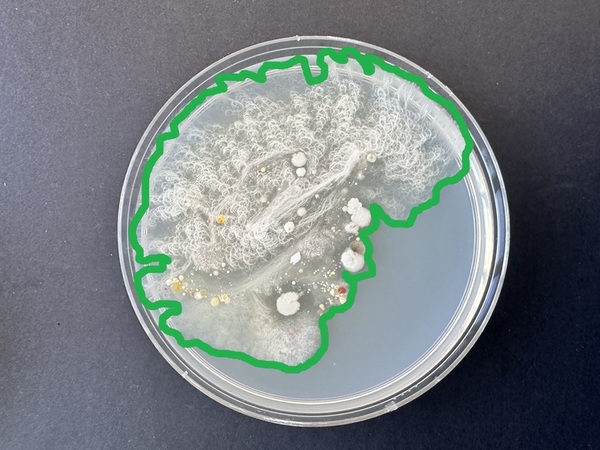
The authors studied bacterial contamination of the New York City transit system, as well as the effectiveness of hand washing and hand sanitizer.
Read More...Bacterial contamination on New York City transit and the effectiveness of hand hygiene
The authors studied bacterial contamination of the New York City transit system, as well as the effectiveness of hand washing and hand sanitizer.
Read More...Implications of various pure tones on Phaseolus vulgaris and Gaultheria shallon
.jpg)
This study investigated how different sound frequencies (0, 1,000, 5,000, and 15,000 Hz) affect the growth of Phaseolus vulgaris and the transpiration rates of Gaultheria shallon. Although some differences in plant growth were observed, the authors found no consistent evidence that sound frequency enhanced overall growth or transpiration, highlighting the need for further research.
Read More...Early detection of student burnout using data science: a study of behavioral and psychological indicators

This study examined behavioral and psychological predictors of burnout among high school and university students in Pakistan using survey data and machine-learning models. Shorter sleep and greater mental fatigue—especially fatigue—were associated with higher burnout risk, while a Random Forest model successfully identified students at risk of burnout.
Read More...Evaluation of hepatotoxicity from excessive acetaminophen: physiological and histological changes
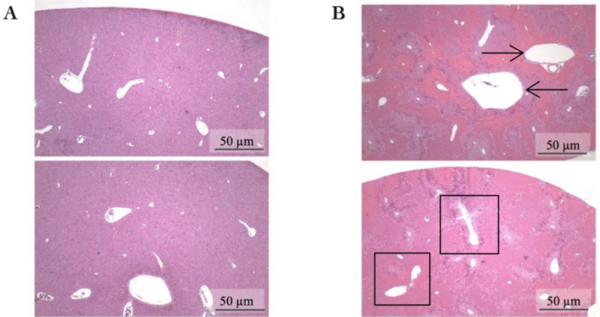
The authors looked at how acetaminophen may cause liver damage by looking at both serum level markers of liver damage as well as liver pathology.
Read More...Investigating the effects of glucose reintroduction on acutely starved HeLa cells
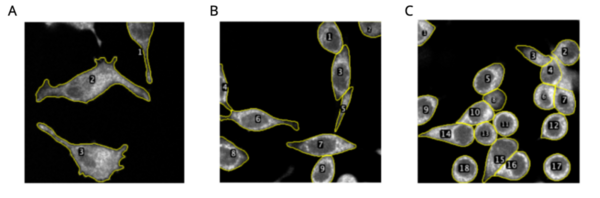
Cancer cells rely heavily on glycolysis, but how they respond when glucose is reintroduced after acute starvation is not well understood. Using fluorescence lifetime imaging microscopy, students tracked metabolic changes in HeLa cells and found a rapid shift toward glycolysis within 20 minutes of glucose reintroduction, followed by heterogeneous recovery toward oxidative phosphorylation. These results highlight metabolic flexibility and variability in cancer cells, offering insights relevant to treatment resistance and therapeutic design.
Read More...Measuring effects of caffeine and melatonin on learning trends of Zebrafish juveniles
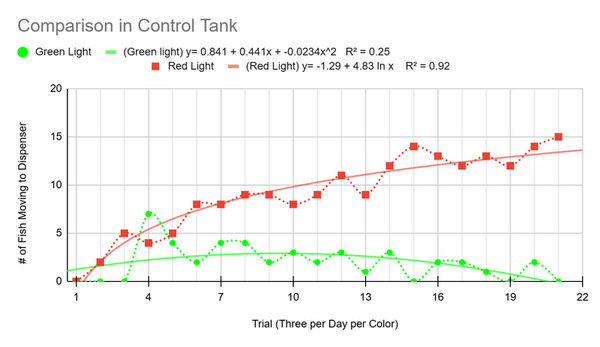
This study investigates how caffeine and melatonin affect learning in adolescent zebrafish, serving as a model for human teens. Using an automated system to track behavior, we found that melatonin slowed learning while caffeine caused erratic, inconsistent responses, suggesting both substances can negatively impact adolescent learning patterns. These findings highlight the need for further research into their physiological effects and potential implications for human adolescents.
Read More...Mitigating skin color bias in dermatology AI using CycleGAN-based data augmentation
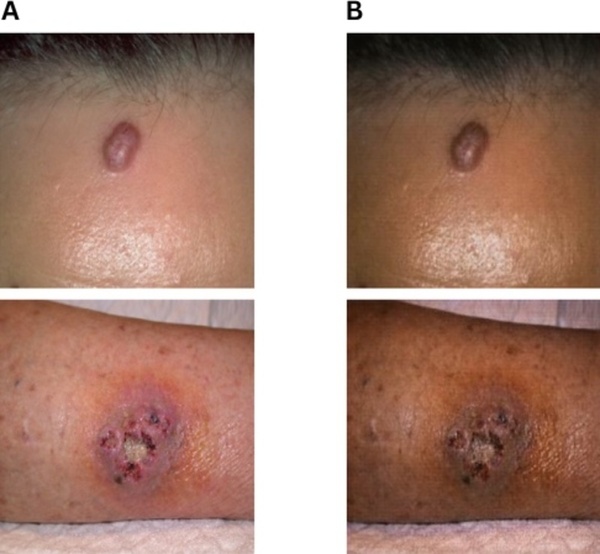
This study investigates skin tone bias in artificial intelligence models used for dermatological disease classification and evaluates a CycleGAN-based data augmentation approach to improve diagnostic performance on darker skin types. We generated synthetic dark-skinned images to enhance dataset diversity and compared model performance before and after augmentation. The results demonstrate that augmentation with synthetic dermatological images can help reduce disparities in diagnostic performance across skin tones, highlighting a practical strategy for improving fairness in dermatology AI systems.
Read More...The role of Gymnema sylvestre tea in modulating the perception of sweetness

This study investigates the ability of Gymnema sylvestre tea to acutely suppress sweet taste perception across various food groups. Our findings demonstrate how this natural botanical can reduce sugar cravings, offering a potential complementary strategy for managing dietary intake in type 2 diabetes.
Read More...Large-scale brain network connectivity under anxiety induced by naturalistic story listening
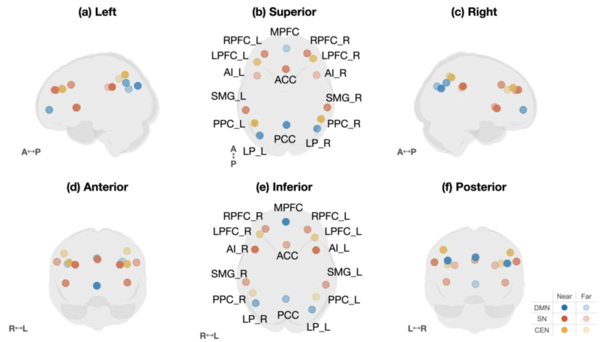
This study found that anxiety induced by a suspenseful story increased communication between the brain’s salience, default mode, and central executive networks, with the central executive network acting as a bridge during peak tension. These findings suggest that anxiety alters large-scale brain connectivity patterns and may help inform future diagnostic tools and personalized treatments for anxiety disorders.
Read More...Eye color, visual acuity and photophobia: How eye color affects light sensitivity
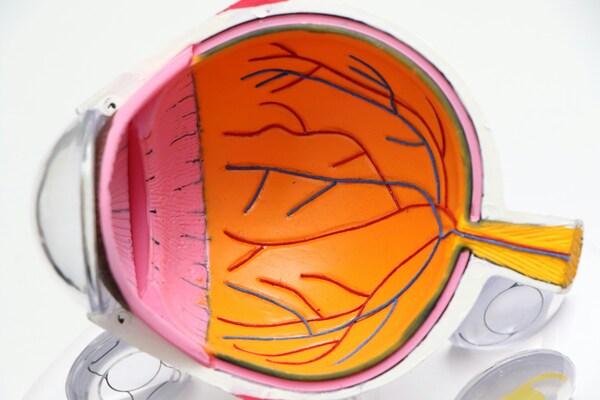
This study examined whether eye color affects photophobia and vision in elementary school students and staff, finding no significant relationship between eye color, light sensitivity, or visual acuity. However, photophobia was common across age groups, highlighting the need for greater awareness of light sensitivity in learning environments.
Read More...