Browse Articles

Development of Diet-Induced Insulin Resistance in Drosophila melanogaster and Characterization of the Anti-Diabetic Effects of Resveratrol and Pterostilbene

Dhar et al. | Jul 02, 2018

Development of Diet-Induced Insulin Resistance in Drosophila melanogaster and Characterization of the Anti-Diabetic Effects of Resveratrol and Pterostilbene

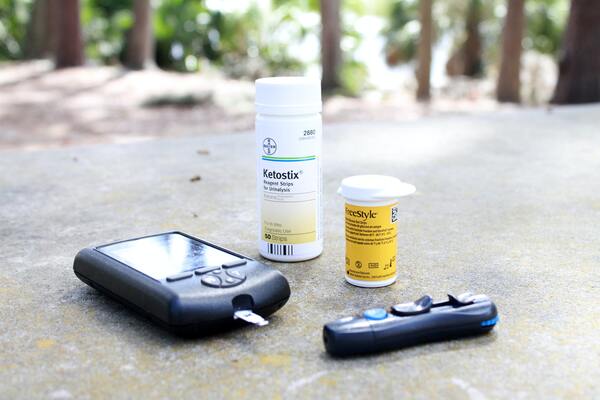
Dhar and colleagues established a Type II diabetes mellitus (T2DM) model in fruit flies, using this model to induce insulin resistance and characterize the effects Resveratrol and Pterostilbene on a number of growth and activity metrics. Resveratrol and Pterostilbene treatment notably overturned the weight gain and glucose levels. The results of this study suggest that Drosophila can be utilized as a model organism to study T2DM and novel pharmacological treatments.

Read More...

More Efficient Helicopter Blades Based on Whale Tubercles

Weitzman et al. | Dec 22, 2013

More Efficient Helicopter Blades Based on Whale Tubercles

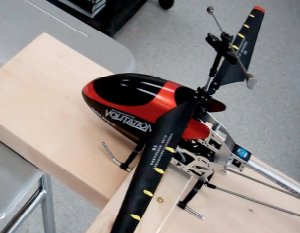
Biomimicry is the practice of applying models and systems found in nature to improve the efficiency and usefulness of human technologies. In this study, the authors designed helicopter blades with tubercle structures similar to those found on the tails of humpback whales. The authors found that certain arrangements of these tubercle structures improved the windspeed and efficiency of a model helicopter.

Read More...

Analyzing market dynamics and optimizing sales performance with machine learning

Kamat et al. | May 31, 2025

Analyzing market dynamics and optimizing sales performance with machine learning

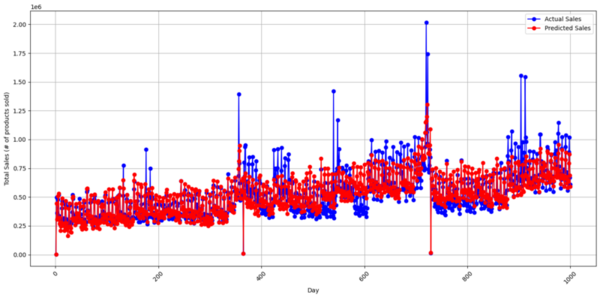
This study uses interpretable machine learning models, lasso and ridge regression with Shapley analysis, to identify key sales drivers for Corporación Favorita, Ecuador’s largest grocery chain. The results show that macroeconomic factors, especially labor force size, have the greatest impact on sales, though geographic and seasonal variables like city altitude and holiday proximity also play important roles. These insights can help businesses focus on the most influential market conditions to enhance competitiveness and profitability.

Read More...

Early detection of student burnout using data science: a study of behavioral and psychological indicators

Baber et al. | Jul 13, 2026

Early detection of student burnout using data science: a study of behavioral and psychological indicators

This study examined behavioral and psychological predictors of burnout among high school and university students in Pakistan using survey data and machine-learning models. Shorter sleep and greater mental fatigue—especially fatigue—were associated with higher burnout risk, while a Random Forest model successfully identified students at risk of burnout.

Read More...

Mitigating skin color bias in dermatology AI using CycleGAN-based data augmentation

Kannan et al. | Jun 24, 2026

Mitigating skin color bias in dermatology AI using CycleGAN-based data augmentation
Image credit: Kannan and Ramasamy

This study investigates skin tone bias in artificial intelligence models used for dermatological disease classification and evaluates a CycleGAN-based data augmentation approach to improve diagnostic performance on darker skin types. We generated synthetic dark-skinned images to enhance dataset diversity and compared model performance before and after augmentation. The results demonstrate that augmentation with synthetic dermatological images can help reduce disparities in diagnostic performance across skin tones, highlighting a practical strategy for improving fairness in dermatology AI systems.

Read More...

Collaboration beats heterogeneity: Improving federated learning-based waste classification

Chong et al. | Jul 18, 2023

Collaboration beats heterogeneity: Improving federated learning-based waste classification

Based on the success of deep learning, recent works have attempted to develop a waste classification model using deep neural networks. This work presents federated learning (FL) for a solution, as it allows participants to aid in training the model using their own data. Results showed that with less clients, having a higher participation ratio resulted in less accuracy degradation by the data heterogeneity.

Read More...