Browse Articles

Optimizing AI-generated image detection using a Convolutional Neural Network model with Fast Fourier Transform

Gupta et al. | Oct 24, 2025

Optimizing AI-generated image detection using a Convolutional Neural Network model with Fast Fourier Transform

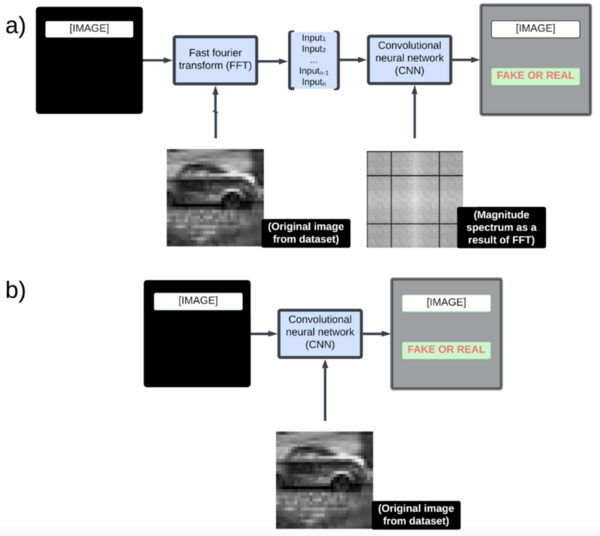
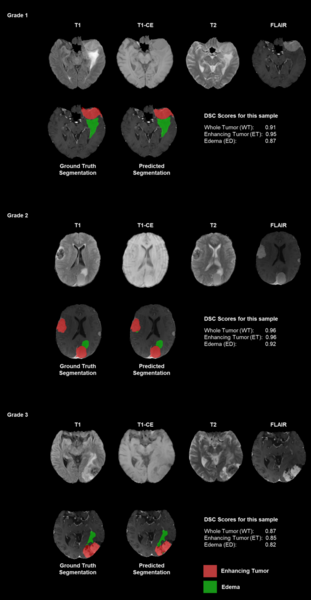
Recent advances in generative AI have made it increasingly hard to distinguish real images from AI-generated ones. Traditional detection models using CNNs or U-net architectures lack precision because they overlook key spatial and frequency domain details. This study introduced a hybrid model combining Convolutional Neural Networks (CNN) with Fast Fourier Transform (FFT) to better capture subtle edge and texture patterns.

Read More...

Trust in the use of artificial intelligence technology for treatment planning

Srivastava et al. | Sep 18, 2024

Trust in the use of artificial intelligence technology for treatment planning

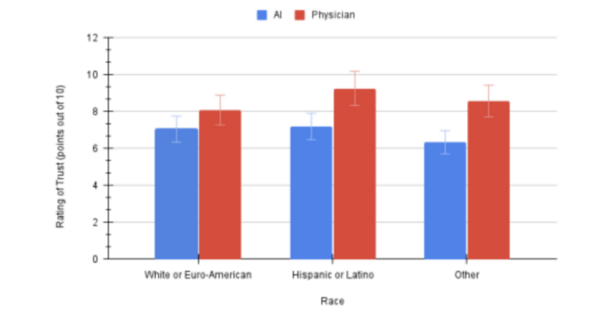
As AI becomes more integrated into healthcare, public trust in AI-developed treatment plans remains a concern, especially for emotionally charged health decisions. In a study of 81 community college students, AI-created treatment plans received lower trust ratings compared to physician-developed plans, supporting the hypothesis. The study found no significant differences in AI trust levels across demographic factors, suggesting overall skepticism toward AI-driven healthcare.

Read More...

Using Artificial Intelligence to Forecast Continuous Glucose Monitor(CGM) readings for Type One Diabetes

Jalla et al. | Aug 07, 2024

Using Artificial Intelligence to Forecast Continuous Glucose Monitor(CGM) readings for Type One Diabetes
Image credit: The authors

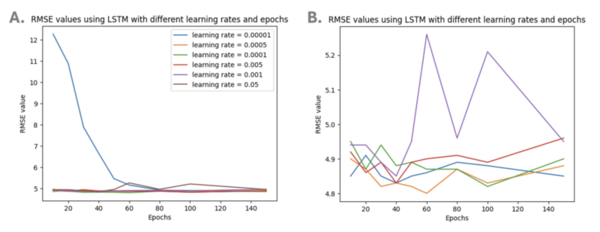
People with Type One diabetes often rely on Continuous Blood Glucose Monitors (CGMs) to track their blood glucose and manage their condition. Researchers are now working to help people with Type One diabetes more easily monitor their health by developing models that will future blood glucose levels based on CGM readings. Jalla and Ghanta tackle this issue by exploring the use of AI models to forecast blood glucose levels with CGM data.

Read More...

Groundwater prediction using artificial intelligence: Case study for Texas aquifers

Sharma et al. | Apr 19, 2024

Groundwater prediction using artificial intelligence: Case study for Texas aquifers

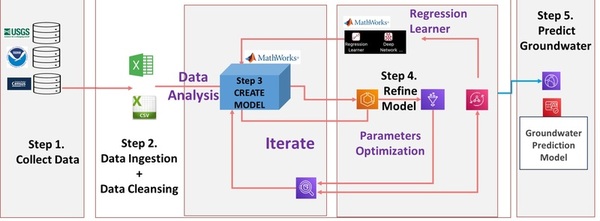
Here, in an effort to develop a model to predict future groundwater levels, the authors tested a tree-based automated artificial intelligence (AI) model against other methods. Through their analysis they found that groundwater levels in Texas aquifers are down significantly, and found that tree-based AI models most accurately predicted future levels.

Read More...

Error mitigation of quantum teleportation on IBM quantum computers

Chen et al. | May 15, 2023

Error mitigation of quantum teleportation on IBM quantum computers

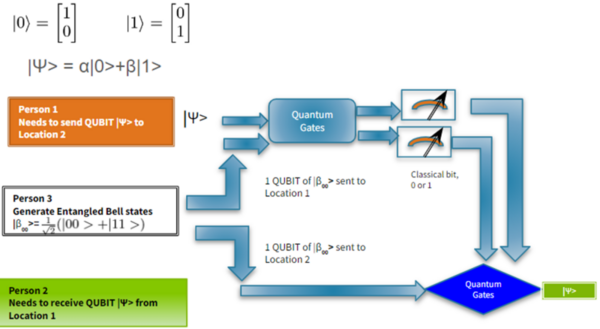
Quantum computers can perform computational tasks beyond the capability of classical computers, such as simulating quantum systems in materials science and chemistry. Quantum teleportation is the transfer of quantum information across distances, relying on entangled states generated by quantum computing. We sought to mitigate the error of quantum teleportation which was simulated on IBM cloud quantum computers.

Read More...

Efficacy of electrolytic treatment on degrading microplastics in tap water

Schroder et al. | Apr 23, 2023

Efficacy of electrolytic treatment on degrading microplastics in tap water
Image credit: Imani

Here seeking to identify a method to remove harmful microplastics from water, the authors investigated the viability of using electrolysis to degrade microplastics in tap water. Compared to control samples, they found electrolysis treatment to significantly the number of net microplastics, suggesting that this treatment could potentially implemented into homes or drinking water treatment facilities.

Read More...

An improved video fingerprinting attack on users of the Tor network

Srikanth et al. | Mar 31, 2022

An improved video fingerprinting attack on users of the Tor network

The Tor network allows individuals to secure their online identities by encrypting their traffic, however it is vulnerable to fingerprinting attacks that threaten users' online privacy. In this paper, the authors develop a new video fingerprinting model to explore how well video streaming can be fingerprinted in Tor. They found that their model could distinguish which one of 50 videos a user was hypothetically watching on the Tor network with 85% accuracy, demonstrating that video fingerprinting is a serious threat to the privacy of Tor users.

Read More...