Browse Articles

Enhancing the quantum efficiency of a silicon solar cell using one dimensional thin film interferometry

Ahuja et al. | May 03, 2024

Enhancing the quantum efficiency of a silicon solar cell using one dimensional thin film interferometry
Image credit: American Public Power Association

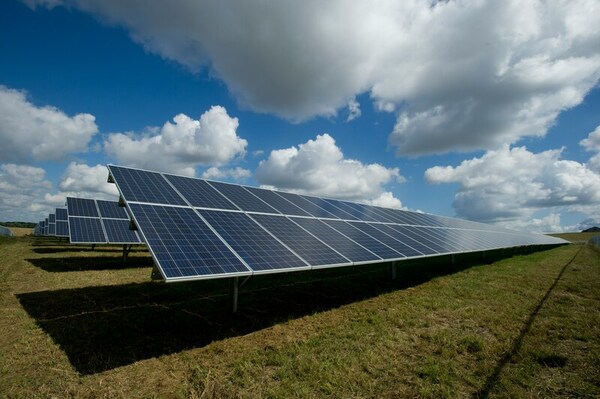
Here, recognizing the need to improve the efficiency of the conversion of solar energy to electrical energy, the authors used MATLAB to mathematically simulate a multi-layered thin film with an without an antireflective coating. They found that the use of alternating ZnO-SiO2 multilayers enhanced the transmission of light into the solar cell, increasing its efficiency and reducing the reflectivity of the Si-Air interface.

Read More...

Genetic underpinnings of the sex bias in autism spectrum disorder

Lee et al. | Mar 29, 2024

Genetic underpinnings of the sex bias in autism spectrum disorder
Image credit: Louis Reed

Here, seeking to identify a possible explanation for the more frequent diagnosis of autism spectrum disorder (ASD) in males than females, they sought to investigate a potential sex bias in the expression of ASD-associated genes. Based on their analysis, they identified 17 ASD-associated candidate genes that showed stronger collective sex-dependent expression.

Read More...

The effect of neuroinflammation and oxidative stress on the recovery time of seizures

Kantipudi et al. | Jul 31, 2023

The effect of neuroinflammation and oxidative stress on the recovery time of seizures

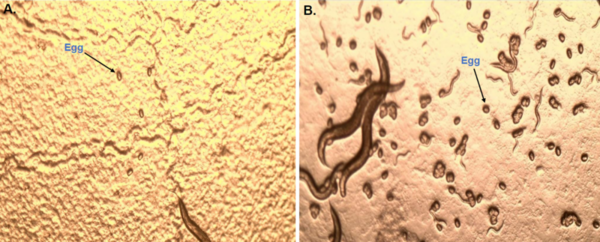
Neuroinflammation and oxidative stress are both known to play a role in the occurrence and severity of seizures. This study tested effects of oxidative stress from seizures by evaluating the longevity, egg-laying, and electroshock resilience of C. elegans. Results revealed that oxidative stress and neuroinflammation diminish longevity and reproductivity while also increasing recovery time after seizures in C. elegans. This research can help lead to future studies and may also lead to finding new therapeutics for epilepsy.

Read More...

Effects of Wi-Fi EMF on Drosophila melanogaster

Anand et al. | Jan 29, 2020

Effects of Wi-Fi EMF on <em>Drosophila melanogaster</em>

While increased access to Wi-Fi has been a great advancement, we have a limited understanding if there are any health effects on animals. In this study, Anand and Anand exposed fruit flies (Drosophila melanogaster) to different concentrations of Wi-Fi electromagnetic fields, and observed effects on their reproduction and survivability.

Read More...

Testing the Effects of Salep Derived From the Tubers of Orchis mascula, Aloe vera, and Alpha-chymotrypsin on Wound Healing in Drosophila melanogaster Larvae

Halder et al. | Sep 09, 2019

Testing the Effects of Salep Derived From the Tubers of <em>Orchis mascula</em>, <em>Aloe vera</em>, and Alpha-chymotrypsin on Wound Healing in <em>Drosophila melanogaster</em> Larvae

Aloe vera and alpha-chymotrypsin have been used in are known for their various wound healing properties. Halder et al hypothesized that these treatments would enhance wound healing in Drosophila melanogaster larvae over 2 weeks by decreasing wound size more effectively compared to controls. The results of two of the treatment groups, Salep and Aloe vera, yielded wound sizes small enough to present a significant percent decrease when compared with the wound sizes of the control group. Their results show support that both Salep and Aloe vera were effective for enhancing wound healing in epithelial cells in D. melanogaster larvae.

Read More...

Implications of various pure tones on Phaseolus vulgaris and Gaultheria shallon

Judit et al. | Jul 13, 2026

Implications of various pure tones on <i>Phaseolus vulgaris</i> and <i>Gaultheria shallon<i>

This study investigated how different sound frequencies (0, 1,000, 5,000, and 15,000 Hz) affect the growth of Phaseolus vulgaris and the transpiration rates of Gaultheria shallon. Although some differences in plant growth were observed, the authors found no consistent evidence that sound frequency enhanced overall growth or transpiration, highlighting the need for further research.

Read More...