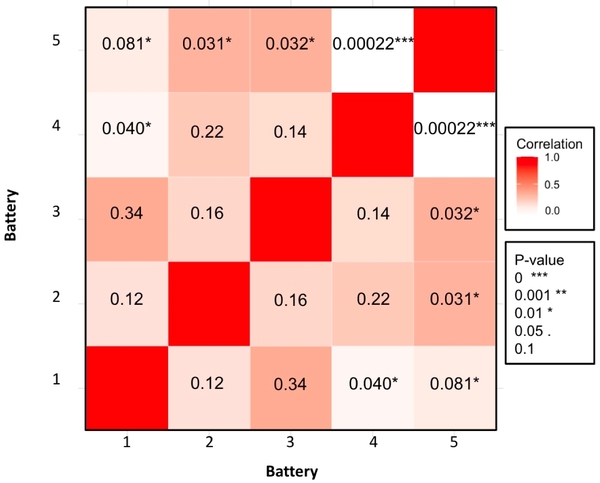
The authors survey adolescents about aspects of the COVID-19 pandemic to explore perspectives that may give rise to cognitive dissonance.
Read More...Investigating the impact of the COVID-19 pandemic on the cognitive dissonance of adolescents
The authors survey adolescents about aspects of the COVID-19 pandemic to explore perspectives that may give rise to cognitive dissonance.
Read More...Impacts of the gut microbiota on arginine synthesis
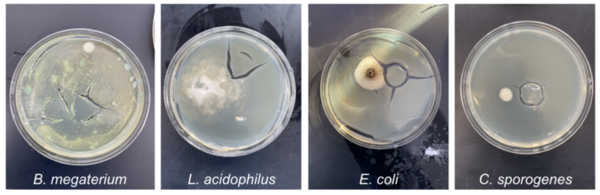
In this article the authors looked at arginine synthesis across different bacteria commonly found in different regional diets. They found that B. megaterium and C. sporogenes both caused a higher pH to occur on their agar plates compared to other bacteria tested indicating a greater amount of arginine synthesis.
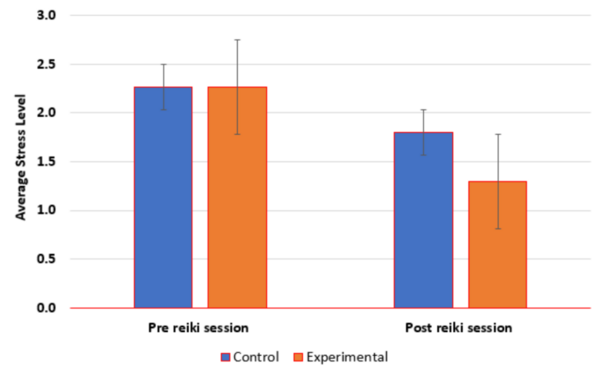
Read More...The effect of reiki, a Japanese relaxation technique, on stress in middle schoolers
Enhancing marine debris identification with convolutional neural networks
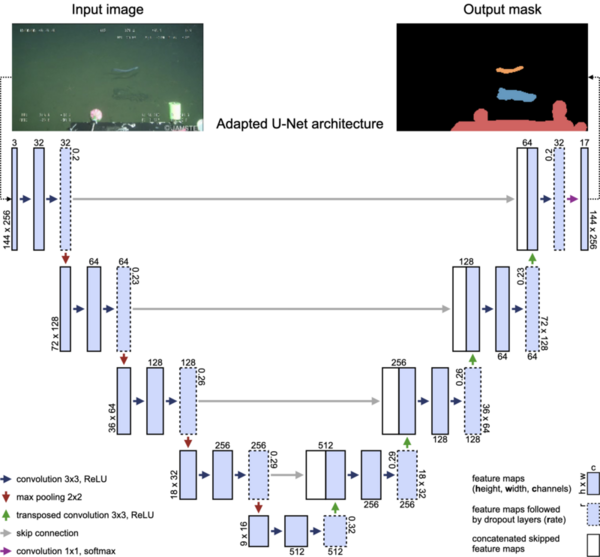
Plastic pollution in the ocean is a major global concern. Remotely Operated Vehicles (ROVs) have promise for removing debris from the ocean, but more research is needed to achieve full effectiveness of the ROV technology. Wahlig and Gonzales tackle this issue by developing a deep learning model to distinguish trash from the environment in ROV images.
Read More...The optical possibilities of gelatin

Here the authors investigated the optical possibilities of gelatin and acrylic in regards to potential implementations at soft contact lenses. They fabricated lenses of different shapes and evaluated the refraction of laser light finding that gelatin needed to be thickened or increased in curvature to account for its lower refractive index compared to plastics, or used in a mixture to strengthen the lens.
Read More...Impact of carbon number and atom number on cc-pVTZ Hartree-Fock Energy and program runtime of alkanes
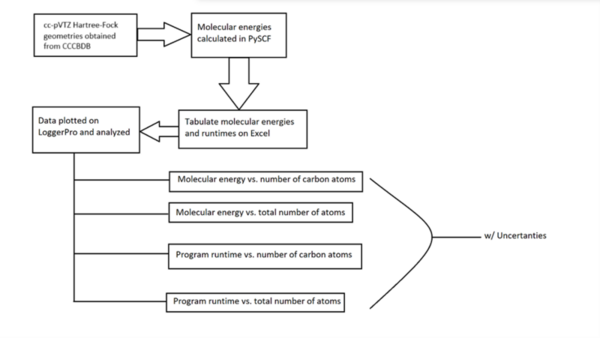
It's time-consuming to complete the calculations that are used to study nuclear reactions and energy. To uncover which computational chemistry tools are useful for this challenge, Pan, Vaiyakarnam, Li, and McMahan investigated whether the Python-based Simulations of Chemistry Framework’s Hartree-Fock (PySCF) method is an efficient and accurate way to assess alkane molecules.
Read More...Fitness social media is positively associated with the use of performance-enhancing drugs among young men

Here the authors investigated the relationship between fitness-related social media and the high usage of performance-enhancing drugs (PEDs) specifically by men in the US age 18-35. In a survey with 149 participants they identified that young men that use fitness-related social media are more likely to use PEDs. Their results suggest the necessity to consider potential risk behaviors which may be related to social media consumption.
Read More...A novel calibration algorithm and its effects on heading measurement accuracy of a low-cost magnetometer
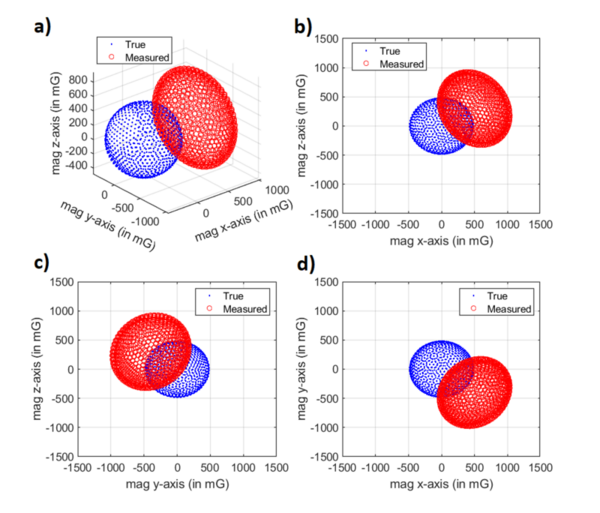
Digital compasses are essential in technology that we use in our everyday lives: phones, vehicles, and more. Li and Liu address the accuracy of these devices by presenting a new algorithm for accurately calibrating low-cost magnetometers.
Read More...Identifying the wavelength that generates the most voltage and current in a solar panel
.jpg)
A key barrier to adoption of solar energy technology is the low efficiency of solar cells converting solar energy into electricity. Sims and Sims tackle this problem by coding a Raspberry Pi as a multimeter to determine which wavelength of light generates the most voltage and current from a solar panel.
Read More...Utilizing meteorological data and machine learning to predict and reduce the spread of California wildfires
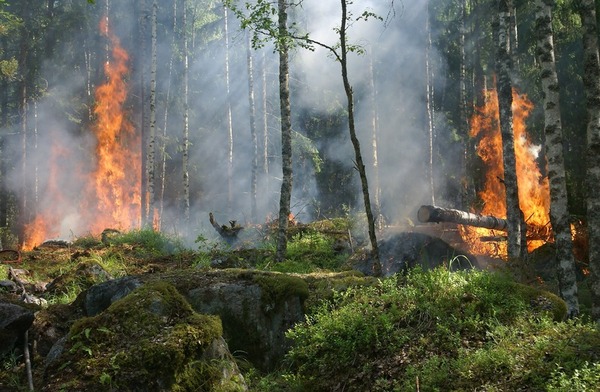
This study hypothesized that a machine learning model could accurately predict the severity of California wildfires and determine the most influential meteorological factors. It utilized a custom dataset with information from the World Weather Online API and a Kaggle dataset of wildfires in California from 2013-2020. The developed algorithms classified fires into seven categories with promising accuracy (around 55 percent). They found that higher temperatures, lower humidity, lower dew point, higher wind gusts, and higher wind speeds are the most significant contributors to the spread of a wildfire. This tool could vastly improve the efficiency and preparedness of firefighters as they deal with wildfires.
Read More...