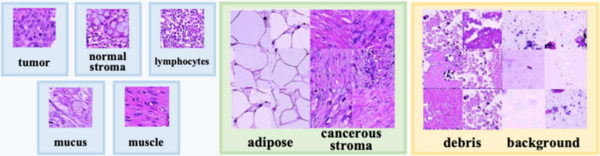
The authors develop a machine learning method to reduce misclassification of objects in safety-critical applications such as medical diagnosis.
Read More...Mitigating open-set misclassification in a colorectal cancer detecting neural network
The authors develop a machine learning method to reduce misclassification of objects in safety-critical applications such as medical diagnosis.
Read More...An in vitro comparative analysis of the growth factors present in FBS vs PLAY®

Here the authors performed a comparative analysis to investigate the viability of using PLAY® instead of fetal bovine serum (FBS) as a growth medium to culture cells with an enzyme-linked immunosorbent assay.
Read More...pH-dependent drug interactions with acid reducing agents
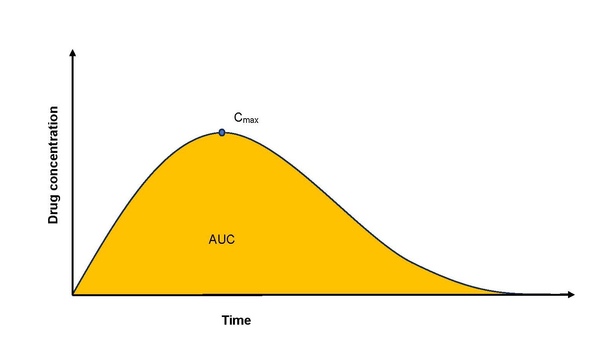
Some cancer treatments lose efficacy when combined with treatments for excessive stomach acid, due to the changes in the stomach environment caused by the stomach acid treatments. Lin and Lin investigate information on oral cancer drugs to see what information is available on interactions of these drugs.
Read More...Analysis of ultraviolet light as a bactericide of gram-negative bacteria in Cladophora macroalgae extracts
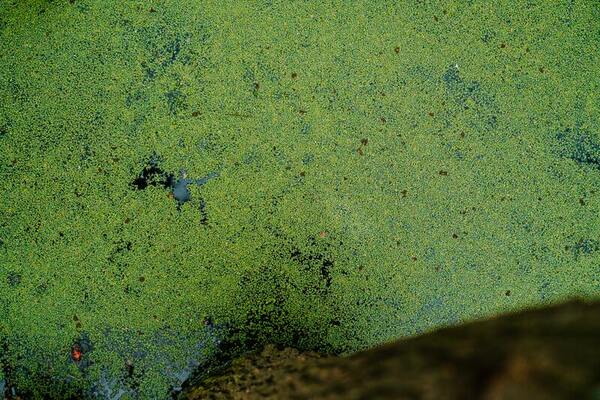
Here, the authors sought to use Cladophora macroalgae as a possible antibiotic to address the growing threat of antibiotic resistance in pathogenic bacteria. However, when they observed algae extracts to be greatly contaminated with gram-negative bacteria, they adapted to explore the ability to use ultraviolet light as a bactericide. They found that treatment with ultraviolet light had a significant effect.
Read More...Fluorescein or Green Fluorescent Protein: Is It Possible to Create a Sensor for Dehydration?
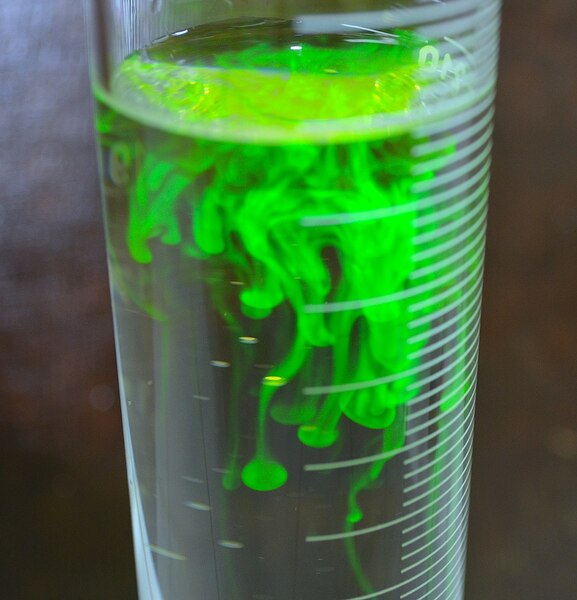
Currently there is no early dehydration detection system using temperature and pH as indicators. A sensor could alert the wearer and others of low hydration levels, which would normally be difficult to catch prior to more serious complications resulting from dehydration. In this study, a protein fluorophore, green fluorescent protein (GFP), and a chemical fluorophore, fluorescein, were tested for a change in fluorescence in response to increased temperature or decreased pH. Reversing the pH change did not restore GFP fluorescence, but that of fluorescein was re-established. This finding suggests that fluorescein could be used as a reusable sensor for a dehydration-related pH change.
Read More...Psychosocial impact of home-based learning among students during the COVID-19 Pandemic in Singapore

In this study, the authors surveyed a number of students in Singapore to determine how their experiences changed after the implementation of home-based learning during the COVID-19 pandemic.
Read More...The comparative effect of remote instruction on students and teachers

In this study, high school students and teachers responded to a survey consisting of Likert-type scale, multiple-choice, and open-ended questions regarding various aspects of remote instruction. After analyzing the data collected, they found that remote learning impacted high school students academically and socially. Students took longer to complete assignments, and both students and teachers felt that students do not learn as much in remote learning compared to in-person instruction. However, most high school students demonstrated a comprehensive understanding of the topics, and an overall negative impact on students' grades was not detected.
Read More...Effects of Temperature on Hand Sanitizer Efficiency

Here, recognizing the widespread use of hand sanitizers, the authors investigated their effectiveness in relation to storage temperature. They applied hand sanitizer before and after touching a cell phone and used LB-agar plates to monitor the growth of bacteria following this process. They found that 70% ethyl-alcohol-based sanitizers are least effective at temperatures above 107.27 °F and most effective at 96.17 °F.
Read More...Examining the correlation between Massa Medicata Fermentata and Crohn’s disease: Implications for treatment and patient safety
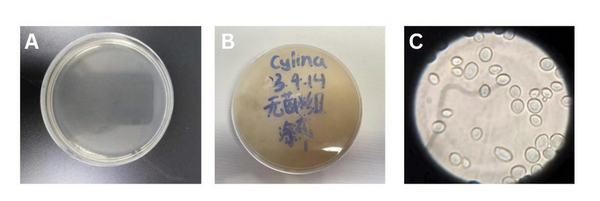
Crohn’s disease is a chronic inflammatory bowel condition with symptoms like abdominal pain, fatigue, diarrhea, and malnutrition. Though there's no cure, various treatments help manage it. This study explored the potential impact of Massa Medicata Fermentata (MMF), a fermented Chinese herbal medicine containing Saccharomyces cerevisiae, on Crohn’s disease.
Read More...Environmental, Social, and Governance (ESG) Standards and Financial Performance in Vietnam’s Media Sector
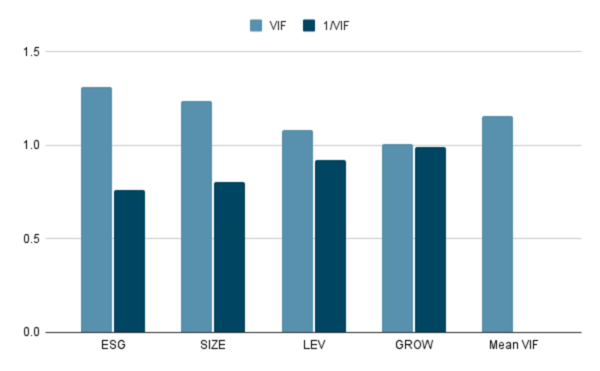
In this study, the authors examine the relationship between ESG (Environmental, Social, and Governance) factors on financial performance of Vietnamese media companies, as measured by ROA and ROE. They find that ESG is positively correlated with financial performance, as is sales growth. They also find that financial leverage is negatively correlated with ROA. Overall, this is a quality study, although the methods section requires more detail.
Read More...