Browse Articles

Using economic indicators to create an empirical model of inflation

Kasera et al. | Dec 01, 2022

Using economic indicators to create an empirical model of inflation

Here, seeking to understand the correlation of 50 of the most important economic indicators with inflation, the authors used a rolling linear regression to identify indicators with the most significant correlation with the Month over Month Consumer Price Index Seasonally Adjusted (CPI). Ultimately the concluded that the average gasoline price, U.S. import price index, and 5-year market expected inflation had the most significant correlation with the CPI.

Read More...
How Ya Doin'? with COVID-19

Kung et al. | Dec 02, 2021

How Ya Doin'? with COVID-19

In this study, the authors survey students and adults about how the COVID-19 pandemic has impacted their sleep patterns, eating habits, mood, physical activity, and screen time.

Read More...

Examining effects of E. muscae on olfactory function in D. melanogaster

Friedman et al. | Jul 08, 2021

Examining effects of <em>E. muscae</em> on olfactory function in <em>D. melanogaster</em>

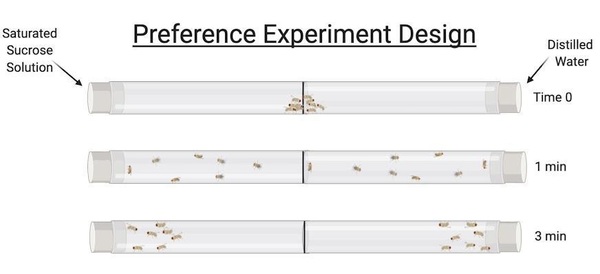
In this article, the authors investigate the effects of fungus E. muscae on fruit fly behavior. More specifically, they investigate whether this fungus affects olfaction. Their findings contribute to a broader set of studies seeking to understand how host's central nervous systems can be affected by infections.

Read More...

The Effect of Anubias barteri Plant Species on Limiting Freshwater Acidification

Ramanathan et al. | Jul 06, 2021

The Effect of <i>Anubias barteri</i> Plant Species on Limiting Freshwater Acidification

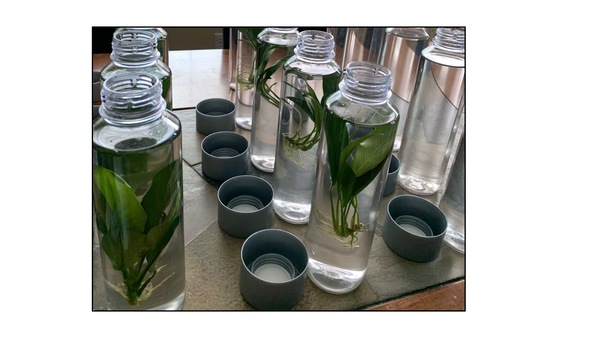
Research relating to freshwater acidification is minimal, so the impact of aquatic plants, Anubias barteri var. congensis and Anubias barteri var. nana, on minimizing changes in pH was explored in an ecosystem in Northern California. Creek water samples, with and without the aquatic plants, were exposed to dry ice to simulate carbon emissions and the pH was monitored over an eight-hour period. There was a 25% difference in the observed pH based on molar hydrogen ion concentration between the water samples with plants and those without plants, suggesting that aquatic plants have the potential to limit acidification to some extent. These findings can guide future research to explore the viable partial solution of aquatic plants in combating freshwater acidification.

Read More...

A Data-Centric Analysis of “Stop and Frisk” in New York City

Bhat et al. | Apr 18, 2021

A Data-Centric Analysis of “Stop and Frisk” in New York City

The death of George Floyd has shed light on the disproportionate level of policing affecting non-Whites in the United States of America. To explore whether non-Whites were disproportionately targetted by New York City's "Stop and Frisk" policy, the authors analyze publicly available data on the practice between 2003-2019. Their results suggest African Americans were indeed more likely to be stopped by the police until 2012, after which there was some improvement.

Read More...

How has California’s Shelter-in-Place Order due to COVID-19 and the Resulting Reduction in Human Activity Affected Air and Water Quality?

Everitt et al. | Feb 15, 2021

How has California’s Shelter-in-Place Order due to COVID-19 and the Resulting Reduction in Human Activity Affected Air and Water Quality?

As the world struggled to grapple with the emerging COVID-19 pandemic in 2020, many countries instated policies to help minimize the spread of the virus among residents. This inadvertently led to a decrease in travel, and in some cases, industrial output, two major sources of pollutants in today's world. Here, the authors investigate whether California's shelter-in-place policy was associated with a measurable decrease in water and air pollution in that state between June and July of 2020, compared to the preceeding five years. Their findings suggest that, by some metrics, air quality improved within certain areas while water quality was relatively unchanged. Overall, these findings suggest that changing human behavior can, indeed, help reduce the level of air pollutants that compromise air quality.

Read More...