Browse Articles

How has California’s Shelter-in-Place Order due to COVID-19 and the Resulting Reduction in Human Activity Affected Air and Water Quality?

Everitt et al. | Feb 15, 2021

How has California’s Shelter-in-Place Order due to COVID-19 and the Resulting Reduction in Human Activity Affected Air and Water Quality?

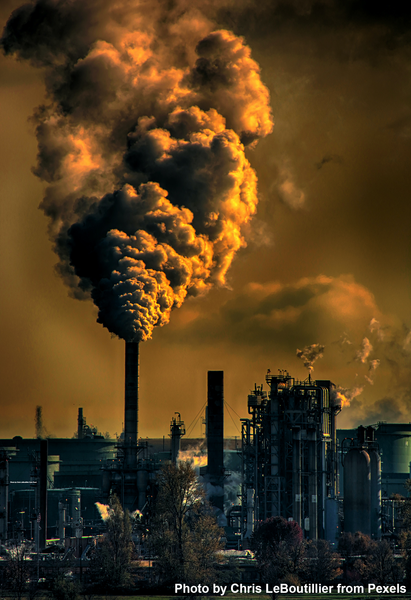
As the world struggled to grapple with the emerging COVID-19 pandemic in 2020, many countries instated policies to help minimize the spread of the virus among residents. This inadvertently led to a decrease in travel, and in some cases, industrial output, two major sources of pollutants in today's world. Here, the authors investigate whether California's shelter-in-place policy was associated with a measurable decrease in water and air pollution in that state between June and July of 2020, compared to the preceeding five years. Their findings suggest that, by some metrics, air quality improved within certain areas while water quality was relatively unchanged. Overall, these findings suggest that changing human behavior can, indeed, help reduce the level of air pollutants that compromise air quality.

Read More...

Repurposing citrus peel waste and its positive effects on our health and communities

Kim et al. | Feb 08, 2021

Repurposing citrus peel waste and its positive effects on our health and communities

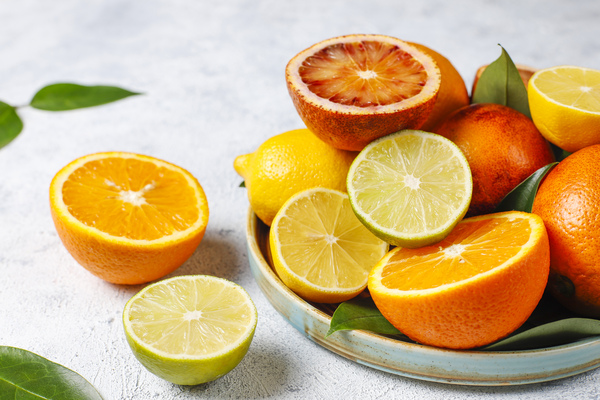
Every year, more than 30% of food products go to waste. This is approximately 1.3 billion tons of food, which is equivalent to 1.3 trillion U.S. dollars. While conventional solid waste treatments and fertilization of food waste are common, citrus fruit peels require secondary applications and advanced disposal management due to their low pH values and high antimicrobial characteristics. Since citrus fruits are well-known sources of vitamin C and antioxidants, we hypothesized that their peels also contain high amounts of vitamin C and antioxidants. In our study, five common citrus peels including grapefruit, lemon, lime, orange, and tangerine, were used to determine the amounts of vitamin C and total soluble antioxidants.

Read More...

Evaluation of Microplastics in Japanese Fish Using Visual and Chemical Dissections

Srebnik et al. | Jan 20, 2021

Evaluation of Microplastics in Japanese Fish Using Visual and Chemical Dissections

Does the overuse of plastic in Japan poses an ecological risk to marine species and their consumers? Using visual and chemical dissection, all fish in this study were found to have microplastics present in their gastrointestinal tract, including two species that are typically eaten whole in Japan. Overall, these results are concerning as previous studies have found that microplastics can carry persistent organic pollutants. It is presumed that the increasing consumption of microplastics will have negative implications on organ systems such as the liver, gut, and hormones.

Read More...

Comparing the Dietary Preference of Caenorhabditis elegans for Bacterial Probiotics vs. Escherichia coli.

Lulla et al. | Dec 18, 2020

Comparing the Dietary Preference of <i>Caenorhabditis elegans</i> for Bacterial Probiotics vs. <i>Escherichia coli</i>.

In this experiment, the authors used C. elegans as a simple model organism to observe the impact of probiotics on the human digestive system. The results of the experiments showed that the C. elegans were, on average, most present in Chobani cultures over other tested yogurts. While not statistically significant, these results still demonstrated that C. elegans might prefer Chobani cultures over other probiotic yogurts, which may also indicate greater gut benefits from Chobani over the other yogurt brands tested.

Read More...

Fingerprint patterns through genetics

O'Brien et al. | Dec 02, 2020

Fingerprint patterns through genetics

This study explores the link between fingerprints and genetics by analyzing familial fingerprints to show how the fingerprints between family members, and in particular siblings, could be very similar. The hypothesis was that the fingerprints between siblings would be very similar and the dominant fingerprint features within the family would be the same throughout the generations. Fingerprints between the siblings showed a trend of similarity, with only very small differences which makes these fingerprints unique. This work helps to support the link between fingerprints and genetics while providing a modern technological application.

Read More...

Luteolin's positive inhibition of melanoma cell lines.

Su et al. | Nov 17, 2020

Luteolin's positive inhibition of melanoma cell lines.

Luteolin (3′,4′,5,7-tetrahydroxyflavone) is a flavonoid that occurs in fruits, vegetables, and herbs. Research suggests that luteolin is effective against various forms of cancer by triggering apoptosis pathways. This experiment analyzes the effects of luteolin on the cell viability of malignant melanoma cells using an in vitro experiment to research alternative melanoma treatments and hopefully to help further cancer research as a whole.

Read More...

Physical Appearance and Its Effect on Trust

Ledesma et al. | Nov 09, 2020

Physical Appearance and Its Effect on Trust

Do different physical traits affect teenagers’ initial trust of an unknown person? Would they give greater trust to women and people of similar ethnicity? To test these hypotheses, the authors developed a survey to determine the sets of physical characteristics that affect a person's trustworthiness. They found that gender and expression were the main physical traits associated with how trustworthy an individual looks, while ethnicity was also important.

Read More...

The Effects of Barley Straw (Hordeum vulgare) Extract and Barley Straw Pellets on Algal Growth and Water Quality

McHargue et al. | Oct 06, 2020

The Effects of Barley Straw (Hordeum vulgare) Extract and Barley Straw Pellets on Algal Growth and Water Quality

Algal overgrowth often threatens to clog irrigation pipes and drinking water lines when left unchecked, as well as releasing possible toxins that threaten plant and human health. It is thus important to find natural, non-harmful agents that can decrease algal growth without threatening the health of plants and humans. In this paper, the authors test the efficacy of barely extract in either liquid or pellet form in decreasing algal growth. While their results were inconclusive, the experimental set-up allows them to investigate a wider range of agents as anti-algal treatments that could potentially be adopted on a wider scale.

Read More...

An Analysis of the Density and Patterns of the Solutions of Diophantine Equations of the Third Power

Grewal et al. | Oct 05, 2020

An Analysis of the Density and Patterns of the Solutions of Diophantine Equations of the Third Power

In this study, the authors sought to find out how many mathematical solutions there were to the Indian mathematician Ramanujan's formula, which is a3 + b3 + c3 = d3, and also quantify the densities its solutions. They wrote their own computer program to do so and kept values of a, b, and c less than 10,000. While conducting the analysis, they were also looking for perfect power taxicab numbers and their frequency. They were able to find solutions and densities for the equation. Additionally, while they found that most perfect cube taxicab numbers had a frequency of 2 or 3, they also found on number with a frequency of 42!

Read More...

An analysis of the distribution of microplastics along the South Shore of Long Island, NY

Sanderson et al. | Sep 21, 2020

An analysis of the distribution of microplastics along the South Shore of Long Island, NY

This study is focused on the distribution of microplastics in Long Island, NY. Microplastics are plastic particles that measure less than 5 mm in length and pose an environmental risk due to their size, composition, and ubiquitous location in the marine environment. Focusing on the South Shore of Long Island, the authors investigated the locations and concentrations of microplastics at four locations along the shore line. While they did not find significant differences in the number of microplastics per location, there were microplastics at all four locations. This finding is important to drive future research and environmental policy as well.

Read More...