Browse Articles

Can Children Acquire Their Parents’ History of Fracture?

Boulis et al. | Sep 24, 2018

Can Children Acquire Their Parents’ History of Fracture?

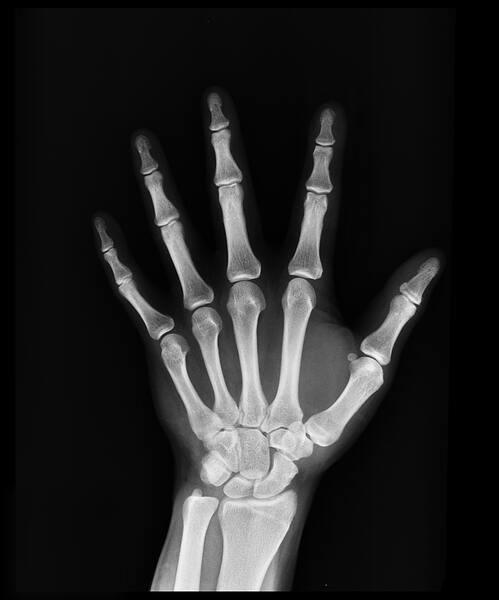
While the genetic basis of hip fracture risk has been studied extensively in adults, it is not known whether parental history of bone fractures affects their children's fracture risk. In this article, the authors investigated whether a parental history of bone fractures influences the rate of fractures in their children. They found that adolescent children whose parents had a more extensive history of fractures were more likely to have a history of fractures themselves, suggesting that parents' medical histories may be an important consideration in future pediatric health research.

Read More...

A Novel Method for Assessment of Proprioception

Trevithick et al. | Jun 22, 2018

A Novel Method for Assessment of Proprioception

Trevithick & Park were interested in whether proprioception, the sense of the relative position of body parts and movement, differed between varsity and non-varsity athletes, as well as between the sport practiced. The authors found that there was no correlation between athleticism and better proprioception, but that dancers had superior proprioceptive abilities compared to those that practiced other sports.

Read More...

Redesigning an Experiment to Determine the Coefficient of Friction

Hu et al. | Jun 27, 2016

Redesigning an Experiment to Determine the Coefficient of Friction

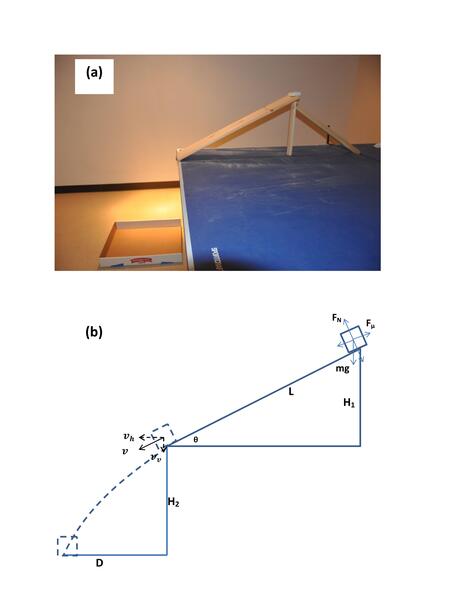
In a common high school experiment to measure friction coefficients, a weighted mass attached to a spring scale is dragged across a surface at a constant velocity. While the constant velocity is necessary for an accurate measurement, it can be difficult to maintain and this can lead to large errors. Here, the authors designed a new experiment to measure friction coefficients in the classroom using only static force and show that their method has a lower standard deviation than the traditional experiment.

Read More...