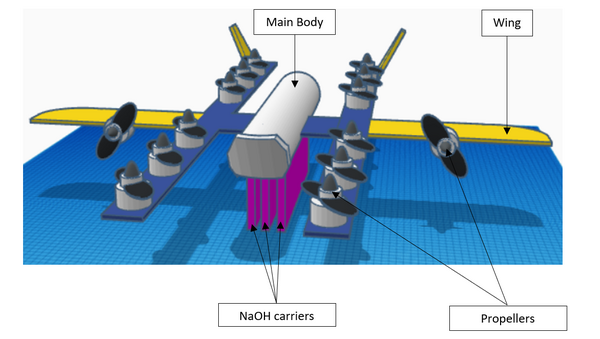
In this study, the authors address the current climate concern of high CO2 levels by testing solid forms of hydroxide for CO2 reduction and designing a drone to fly it in ambient air!
Read More...Use of drone with sodium hydroxide carriers to absorb carbon dioxide from ambient air
In this study, the authors address the current climate concern of high CO2 levels by testing solid forms of hydroxide for CO2 reduction and designing a drone to fly it in ambient air!
Read More...Assessing and Improving Machine Learning Model Predictions of Polymer Glass Transition Temperatures
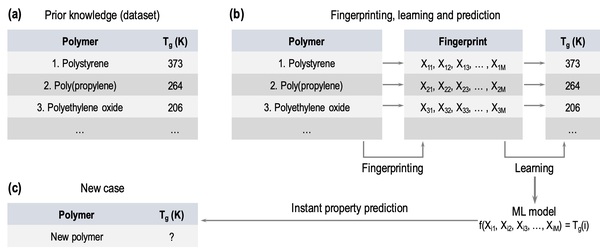
In this study, the authors test whether providing a larger dataset of glass transition temperatures (Tg) to train the machine-learning platform Polymer Genome would improve its accuracy. Polymer Genome is a machine learning based data-driven informatics platform for polymer property prediction and Tg is one property needed to design new polymers in silico. They found that training the model with their larger, curated dataset improved the algorithm's Tg, providing valuable improvements to this useful platform.
Read More...Influence of induction heating on static recrystallization kinetics of AISI 4130 steel
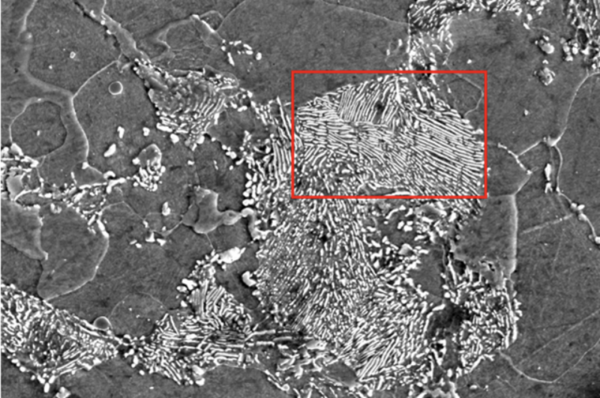
This article investigates whether induction heating can speed up static recrystallization in AISI 4130 steel compared with traditional radiant heating. It was found that induction-heated samples recrystallized faster, softened more quickly, and showed earlier microstructural changes like grain nucleation and pearlite spheroidization, suggesting induction heating could be a more efficient alternative for industrial metal heat treatments.
Read More...Analysis of the catalytic efficiency of spent coffee grounds and titanium dioxide using UV-Vis spectroscopy
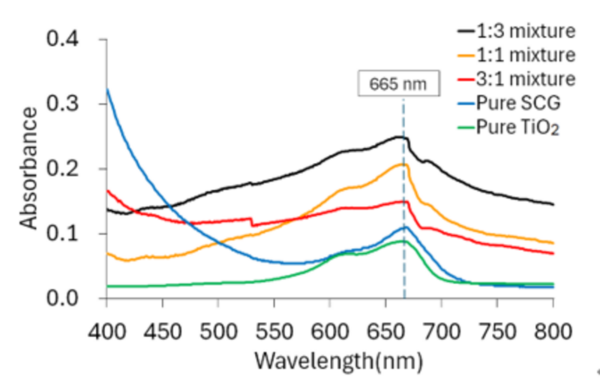
This paper looks at using spent coffee grounds as a partial substitute for titanium dioxide (TiO2) as a catalyst for chemical reactions. Using UV-Vis spectrophotometry, they found that adding the coffee grounds to TiO2 in a 3:1 ratio, there is still meaningful catalytic activity. This offers a cheaper solution than just using pure TiO2.
Read More...Optical anisotropy of crystallized vanillin thin film: the science behind the art
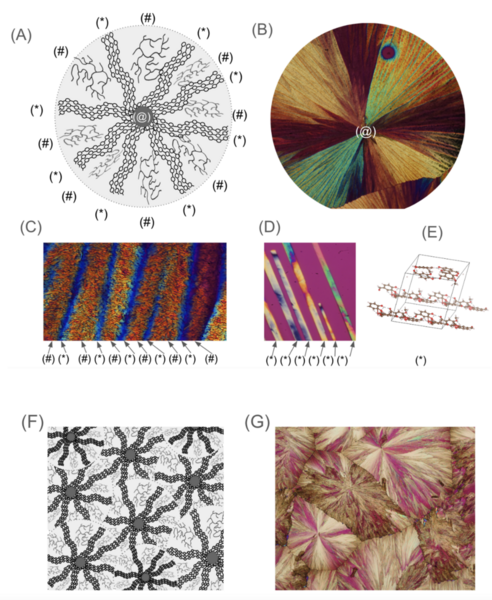
Microscopic beauty is hiding in common kitchen ingredients - even vanillin flavoring can be turned into mesmerizing artwork by crystallizing the vanillin and examining it under a polarizing microscope. Wang and Pang explore this hidden beauty by determining the optimal conditions to grow crystalline vanillin films and by creating computer simulations of chemical interactions between vanillin molecules.
Read More...Determining degree of dissociation through conductivity
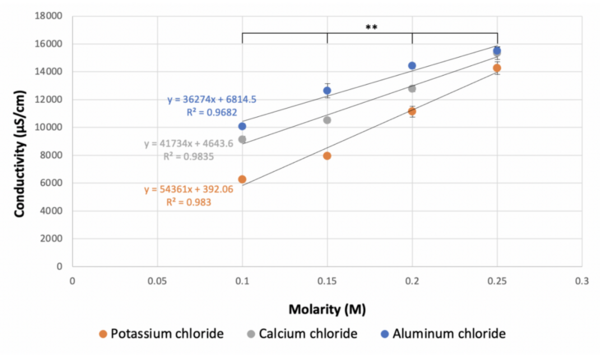
The authors looked at how molarity impacts the degree to which ionic compounds dissociate in solution. They found that lower molarities led to decreased conductivity of solutions in a manner that did not follow the theoretical predictions.
Read More...Changing the surface properties of the backside of a silicon wafer to repel oil and prevent particle binding
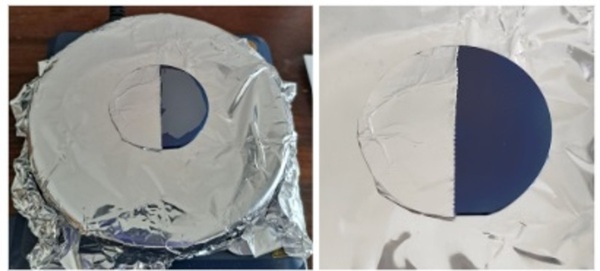
Wafers, essential in microchip production, can develop issues like leveling problems and wafer slip due to the formation of silanol bonds on their backside, which attract silica particles and oil. Authors tested addressing this issue with a coating of [acetoxy(polyethyleneoxy)propyl]triethoxysilane (APTS) applied to the wafer’s backside, preventing particle binding and oil adherence.
Read More...Role of Environmental Conditions on Drying of Paint

Reducing paint drying time is an important step in improving production efficiency and reducing costs. The authors hypothesized that decreased humidity would lead to faster drying, ultraviolet (UV) light exposure would not affect the paint colors differently, white light exposure would allow for longer wavelength colors to dry at a faster rate than shorter wavelength colors, and substrates with higher roughness would dry slower. Experiments showed that trials under high humidity dried slightly faster than trials under low humidity, contrary to the hypothesis. Overall, the paint drying process is very much dependent on its surrounding environment, and optimizing the drying process requires a thorough understanding of the environmental factors and their interactive effects with the paint constituents.
Read More...Differentiation of Waste Plastic Pyrolysis Fuels to Conventional Diesel Fuel
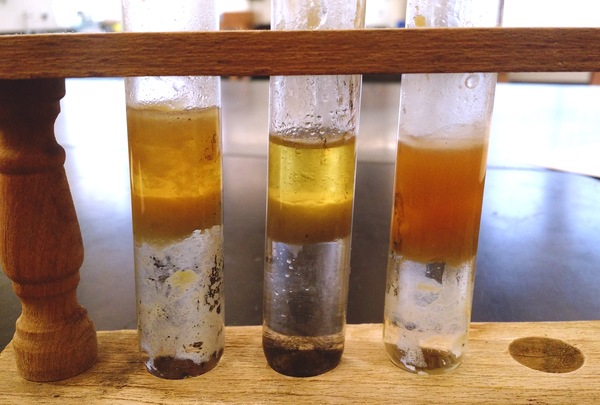
Plastic pollution and energy shortages are pressing issues in today’s world. The authors examined whether waste plastic pyrolysis fuels are similar to conventional diesel and, thus, a plausible alternative fuel. Results showed that waste plastic pyrolysis fuels did not match up to diesel overall, though several fuels came close in calorific value.
Read More...Incorporating graphite from pencils as a component of lithium-ion batteries
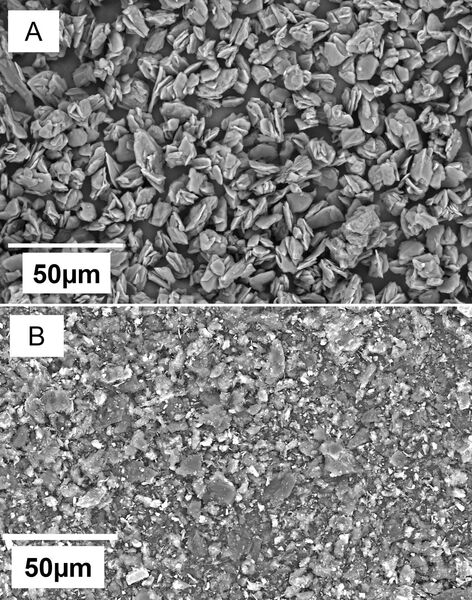
The authors looked at the ability to use graphite from pencils in anodes of lithium-anode batteries.
Read More...