Browse Articles

Using data science along with machine learning to determine the ARIMA model’s ability to adjust to irregularities in the dataset

Choudhary et al. | Jul 26, 2021

Using data science along with machine learning to determine the ARIMA model’s ability to adjust to irregularities in the dataset

Auto-Regressive Integrated Moving Average (ARIMA) models are known for their influence and application on time series data. This statistical analysis model uses time series data to depict future trends or values: a key contributor to crime mapping algorithms. However, the models may not function to their true potential when analyzing data with many different patterns. In order to determine the potential of ARIMA models, our research will test the model on irregularities in the data. Our team hypothesizes that the ARIMA model will be able to adapt to the different irregularities in the data that do not correspond to a certain trend or pattern. Using crime theft data and an ARIMA model, we determined the results of the ARIMA model’s forecast and how the accuracy differed on different days with irregularities in crime.

Read More...

Early detection of student burnout using data science: a study of behavioral and psychological indicators

Baber et al. | Jul 13, 2026

Early detection of student burnout using data science: a study of behavioral and psychological indicators

This study examined behavioral and psychological predictors of burnout among high school and university students in Pakistan using survey data and machine-learning models. Shorter sleep and greater mental fatigue—especially fatigue—were associated with higher burnout risk, while a Random Forest model successfully identified students at risk of burnout.

Read More...

Optical anisotropy of crystallized vanillin thin film: the science behind the art

Wang et al. | Jul 09, 2024

Optical anisotropy of crystallized vanillin thin film: the science behind the art
Image credit: The authors

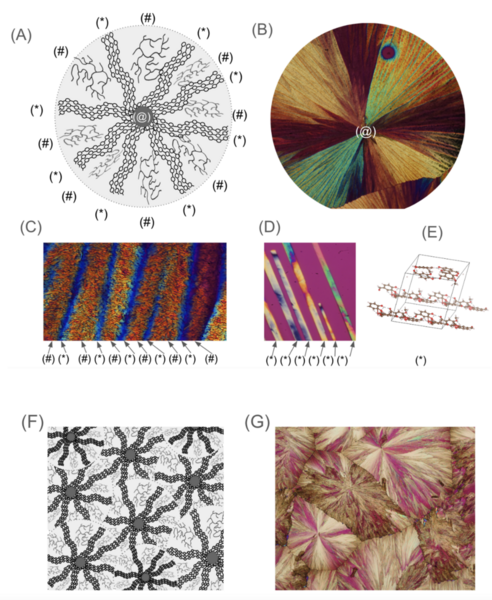
Microscopic beauty is hiding in common kitchen ingredients - even vanillin flavoring can be turned into mesmerizing artwork by crystallizing the vanillin and examining it under a polarizing microscope. Wang and Pang explore this hidden beauty by determining the optimal conditions to grow crystalline vanillin films and by creating computer simulations of chemical interactions between vanillin molecules.

Read More...

The effects of social media on STEM identity in adolescent girls

Sreekanth et al. | Mar 11, 2024

The effects of social media on STEM identity in adolescent girls
Image credit: Diane Serik

Social media is widely used and easily accessible for adolescents, it has the potential to increase STEM (Science, Technology, Engineering, and Math) identity in girls. We aimed to investigate the effects of exposure to counter-stereotypical portrayals of women in STEM on social media on the STEM identity of adolescent girls. The study concluded that social media alone may not be an effective tool to increase STEM identity in girls. Social media can still be used as a complementary tool to support and encourage women in STEM, but it should not be relied upon solely to address the gender disparity in STEM fields.

Read More...

The gender gap in STEM at top U.S. Universities: change over time and relationship with ranking

Kruus et al. | Jun 25, 2024

The gender gap in STEM at top U.S. Universities: change over time and relationship with ranking

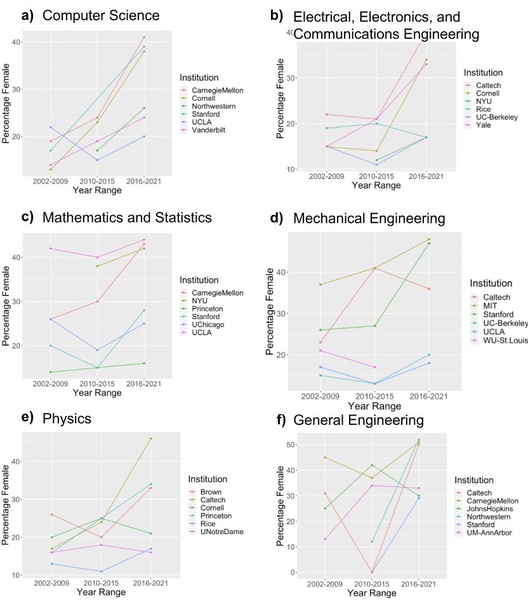
Authors address the gender disparity in STEM fields, examining changes in gender diversity across male-dominated undergraduate programs over 19 years at 24 top universities. Analyzing data from NCES IPEDS, it identifies STEM as persistently male-dominated but notes increasing gender diversity in many disciplines, particularly in recent years. Results indicate that higher-ranked universities in disciplines like computer science and mechanical engineering show a weak correlation with improved gender diversity, suggesting effective initiatives can mitigate the gender gap in STEM, despite ongoing challenges.

Read More...

Error mitigation of quantum teleportation on IBM quantum computers

Chen et al. | May 15, 2023

Error mitigation of quantum teleportation on IBM quantum computers

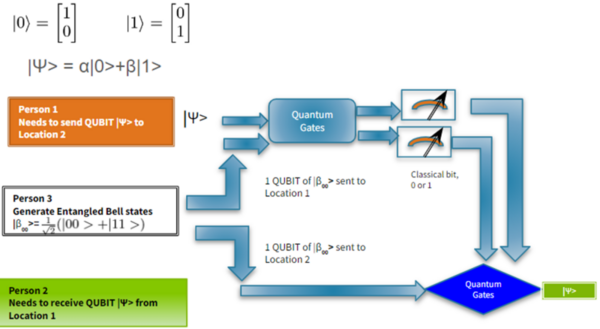
Quantum computers can perform computational tasks beyond the capability of classical computers, such as simulating quantum systems in materials science and chemistry. Quantum teleportation is the transfer of quantum information across distances, relying on entangled states generated by quantum computing. We sought to mitigate the error of quantum teleportation which was simulated on IBM cloud quantum computers.

Read More...

Can the Growth Mindset Encourage Girls to Pursue “Male” Careers?

Lateef et al. | Oct 03, 2021

Can the Growth Mindset Encourage Girls to Pursue “Male” Careers?

Despite major advances in gender equality, men still far outnumber women in science, technology, engineering and math (STEM) professions. The purpose of this project was to determine whether mindset could affect a student’s future career choices and whether this effect differed based on gender. When looking within the gender groups, 86% of females who had a growth mindset were likely to consider a “male” career, whereas only 16% of females with fixed mindset would likely to consider a “male” career. Especially for girls, cultivating a growth mindset may be a great strategy to address the problem of fewer girls picking STEM careers.

Read More...

The Cohesiveness of the Oscillating Belousov-Zhabotinsky Reaction

Gottlieb et al. | Dec 18, 2018

The Cohesiveness of the Oscillating Belousov-Zhabotinsky Reaction

In this study the author undertakes a careful characterization of a special type of chemical reaction, called an oscillating Belousov-Zhabotinsky (or B-Z) reaction, which has a number of existing applications in biomedical engineering as well as the potential to be useful in future developments in other fields of science and engineering. Specifically, she uses experimental measurements in combination with computational analysis to investigate whether the reaction is cohesive – that is, whether the oscillations between chemical states will remain consistent or change over time as the reaction progresses. Her results indicate that the reaction is not cohesive, providing an important foundation for the development of future technologies using B-Z reactions.

Read More...

Machine learning on crowd-sourced data to highlight coral disease

Narayan et al. | Jul 26, 2021

Machine learning on crowd-sourced data to highlight coral disease

Triggered largely by the warming and pollution of oceans, corals are experiencing bleaching and a variety of diseases caused by the spread of bacteria, fungi, and viruses. Identification of bleached/diseased corals enables implementation of measures to halt or retard disease. Benthic cover analysis, a standard metric used in large databases to assess live coral cover, as a standalone measure of reef health is insufficient for identification of coral bleaching/disease. Proposed herein is a solution that couples machine learning with crowd-sourced data – images from government archives, citizen science projects, and personal images collected by tourists – to build a model capable of identifying healthy, bleached, and/or diseased coral.

Read More...