Browse Articles

Investigating the Role of the Novel ESCRT-III Recruitment Factor CCDC11 in HIV Budding: A Potential Target for Antiviral Therapy

Takemaru et al. | Feb 24, 2020

Investigating the Role of the Novel ESCRT-III Recruitment Factor CCDC11 in HIV Budding: A Potential Target for Antiviral Therapy

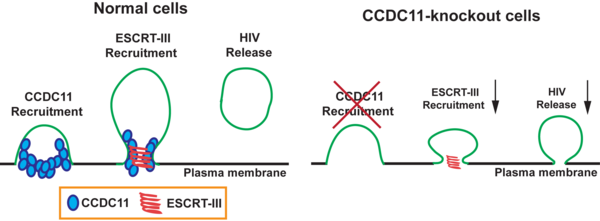
Acquired immunodeficiency syndrome (AIDS) is a life-threatening condition caused by the human immunodeficiency virus (HIV). In this work, Takemaru et al explored the role of Coiled-Coil Domain-Containing 11 (CCDC11) in HIV-1 budding. Their results suggest that CCDC11 is critical for efficient HIV-1 budding, potentially indicating CCDC11 a viable target for antiviral therapeutics without major side effects.

Read More...

Increased carmine red exposure periods yields a higher number of vacuoles formed in Tetrahymena pyriformis

Shah et al. | Nov 18, 2022

Increased carmine red exposure periods yields a higher number of vacuoles formed in <em>Tetrahymena pyriformis</em>

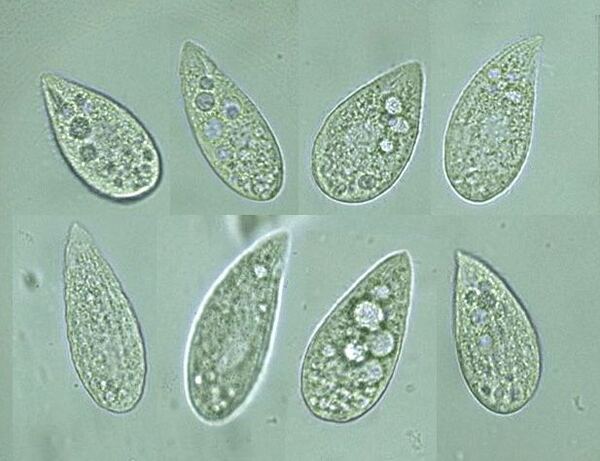
T. pyriformis can use phagocytosis to create vacuoles of carmine red, a dye which is made using crushed insects and is full of nutrients. Establishing a relationship between vacuole formation and duration of exposure to food can demonstrate how phagocytosis occurs in T. pyriformis. We hypothesized that if T. pyriformis was incubated in a carmine red solution, then more vacuoles would form over time in each cell.

Read More...

Development of anti-cancer bionanoparticles isolated from corn for bone cancer treatment

Richardson et al. | Apr 20, 2023

Development of anti-cancer bionanoparticles isolated from corn for bone cancer treatment

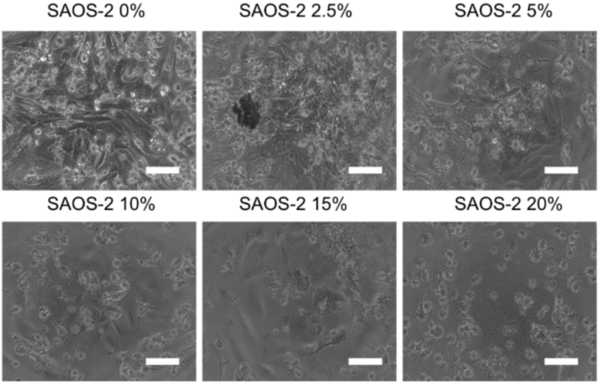
This study hypothesizes that nanoparticles derived from corn (cNPs)may have anti-proliferative effects on bone cancer and metastasized bone cancer. It finds that human osteosarcoma and human lung carcinoma metastasized to bone marrow cell viability decreased to 0% when treated with cNPs. Overall, these results indicate that cNPs have anti-proliferative effects on bone cancer cells and cancer cells that metastasize to the bone.

Read More...

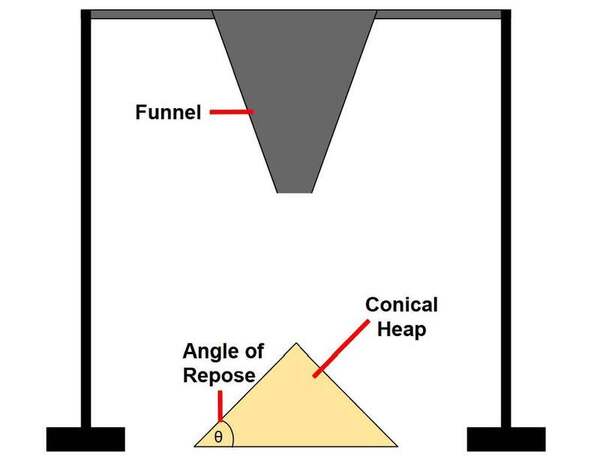
A model for angle evolution in conical piles formed using the fixed funnel method

Capaldi et al. | Jul 20, 2026

A model for angle evolution in conical piles formed using the fixed funnel method

When granular materials are poured onto a surface, they form conical piles whose slopes increase before reaching a stable angle of repose. We found that this angle evolution follows a previously unrecognized two-phase exponential growth pattern that is conserved across granular materials with diverse particle properties. The parameters of this model correlate with particle friction and are influenced by deposition conditions, providing a quantitative framework for describing pile formation.

Read More...

Factors Influencing Muon Flux and Lifetime: An Experimental Analysis Using Cosmic Ray Detectors

Samson et al. | May 18, 2020

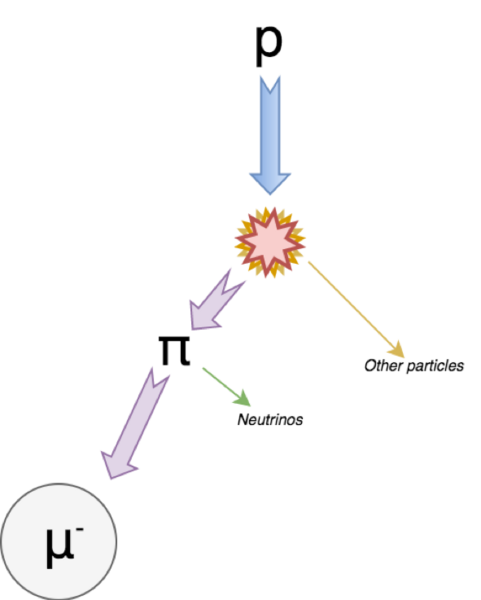
Factors Influencing Muon Flux and Lifetime: An Experimental Analysis Using Cosmic Ray Detectors

Muons, one of the fundamental elementary particles, originate from the collision of cosmic rays with atmospheric particles and are also generated in particle accelerator collisions. In this study, Samson et al analyze the factors that influence muon flux and lifetime using Cosmic Ray Muon Detectors (CRMDs). Overall, the study suggests that water can be used to decrease muon flux and that scintillator orientation is a potential determinant of the volume of data collected in muon decay studies.

Read More...

Lettuce seed germination in the presence of microplastic contamination

Kochar et al. | Dec 09, 2024

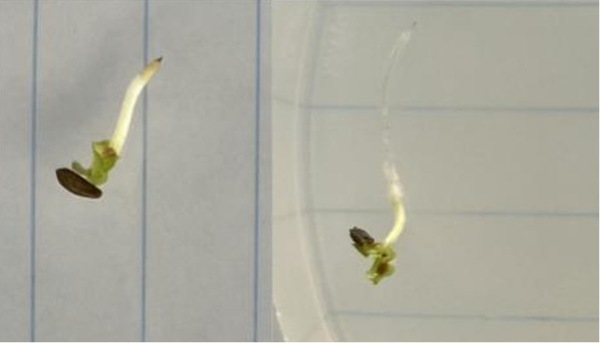
Lettuce seed germination in the presence of microplastic contamination

Microplastic pollution is a pressing environmental issue, particularly in the context of its potential impacts on ecosystems and human health. In this study, we explored the ability of plants, specifically those cultivated for human consumption, to absorb microplastics from their growing medium. We found no evidence of microplastic absorption in both intact and mechanically damaged roots. This outcome suggests that microplastics larger than 10 μm may not be readily absorbed by the root systems of leafy crops such as lettuce (L. sativa).

Read More...