Browse Articles

A novel encoding technique to improve non-weather-based models for solar photovoltaic forecasting

Ahmed et al. | Jun 09, 2023

A novel encoding technique to improve non-weather-based models for solar photovoltaic forecasting

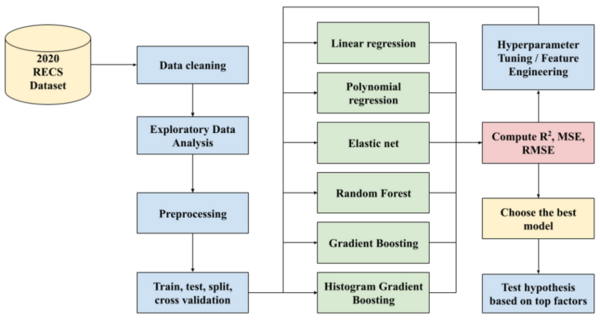
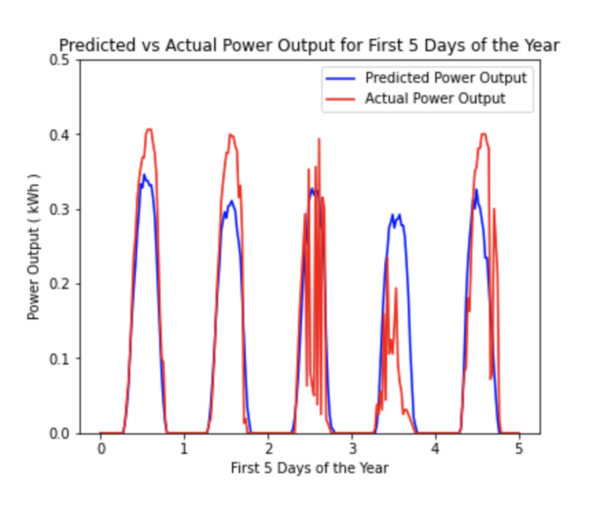
Several studies have applied different machine learning (ML) techniques to the area of forecasting solar photovoltaic power production. Most of these studies use weather data as inputs to predict power production; however, there are numerous practical issues with the procurement of this data. This study proposes models that do not use weather data as inputs, but rather use past power production data as a more practical substitute to weather-based models. Our proposed models demonstrate a better, cheaper, and more reliable alternatives to current weather models.

Read More...
Population Forecasting by Population Growth Models based on MATLAB Simulation

Li et al. | Aug 31, 2020

Population Forecasting by Population Growth Models based on MATLAB Simulation

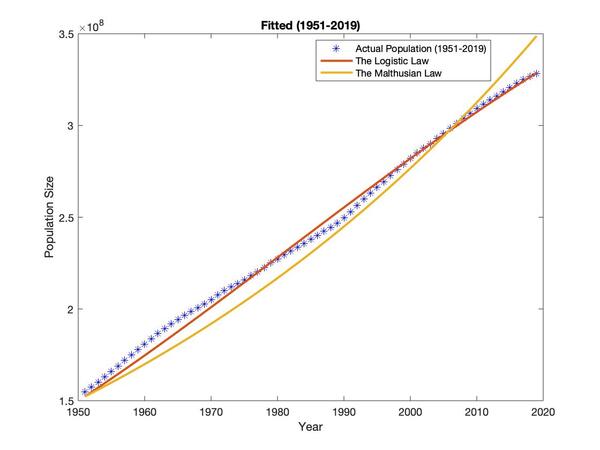
In this work, the authors investigate the accuracy with which two different population growth models can predict population growth over time. They apply the Malthusian law or Logistic law to US population from 1951 until 2019. To assess how closely the growth model fits actual population data, a least-squared curve fit was applied and revealed that the Logistic law of population growth resulted in smaller sum of squared residuals. These findings are important for ensuring optimal population growth models are implemented to data as population forecasting affects a country's economic and social structure.

Read More...

Differences in Reliability and Predictability of Harvested Energy from Battery-less Intermittently Powered Systems

Sampath et al. | Apr 29, 2020

Differences in Reliability and Predictability of Harvested Energy from Battery-less Intermittently Powered Systems

Solar and radio frequency harvesters serve as a viable alternative energy source to batteries in many cases where the battery cannot be easily replaced. Using specifically designed circuit models, the authors quantify the reliability of different harvested energy sources to identify the most practical and efficient forms of renewable energy.

Read More...

The Effect of Bead Shape and Texture on the Energy Loss Characteristics in a Rotating Capsule

Misra et al. | Jan 25, 2019

The Effect of Bead Shape and Texture on the Energy Loss Characteristics in a Rotating Capsule

Industrial process are designed to optimize speed, energy use and quality. Some steps involve the translation of product-filled barrels, how far and fast this happens depends on the properties of the product within. This article investigates such properties on a mini-scale, where the roll of bead size, texture and material on the distance travelled by a cylindrical capsule is investigated.

Read More...

The Effect of Various Liquid Mediums on the Transport of Photonic Energy and its Impact on the Quantum Efficiency of Photovoltaic Cells

Payra et al. | May 05, 2015

The Effect of Various Liquid Mediums on the Transport of Photonic Energy and its Impact on the Quantum Efficiency of Photovoltaic Cells

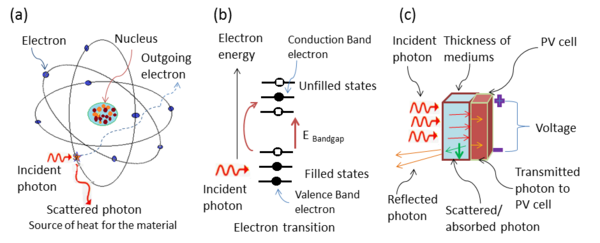
A photovoltaic cell (PV cell), or solar cell, converts the energy of light into electricity and is the basis for solar power. In order to increase the efficiency of PV cells, the authors in this study used common household items as photon transmissions mediums and measured their effects on the temperature and voltage output of the PV cells.

Read More...

Towards an Integrated Solution for Renewable Water and Energy

Chen et al. | Jan 09, 2015

Towards an Integrated Solution for Renewable Water and Energy

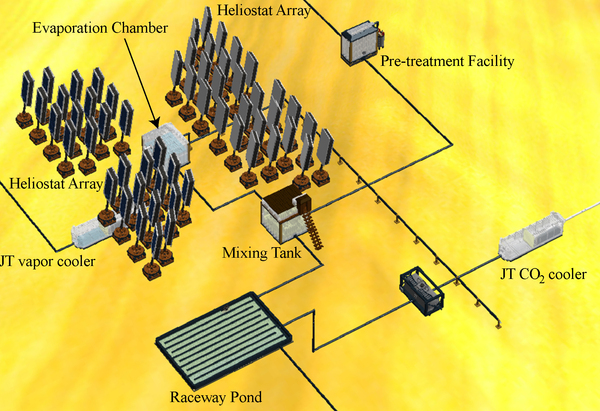
An integrated plant that would generate energy from solar power and provide clean water would help solve multiple sustainability issues. The feasibility of such a plant was investigated by looking at the efficacy of several different modules of such a plant on a small scale.

Read More...

A 3D printed triboelectric nanogenerator for bridge vibration energy harvesting and sensing

Walavalkar et al. | Jul 19, 2026

A 3D printed triboelectric nanogenerator for bridge vibration energy harvesting and sensing
Image credit: Jakub Żerdzicki

This study strongly illustrates that optimizing 3D printing parameters would enhance a triboelectric nanogenerator's performance. The design improvements substantiate the potential of optimized, 3D-printed TENGs for developing scalable, cost-effective solutions for powering low-energy electronics, particularly in applications such as structural health monitoring.

Read More...