Browse Articles

A novel deep learning model for visibility correction of environmental factors in autonomous vehicles

Dey et al. | Oct 31, 2022

A novel deep learning model for visibility correction of environmental factors in autonomous vehicles

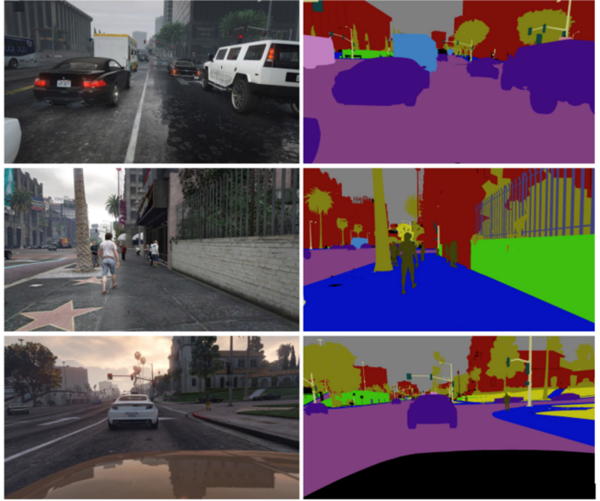
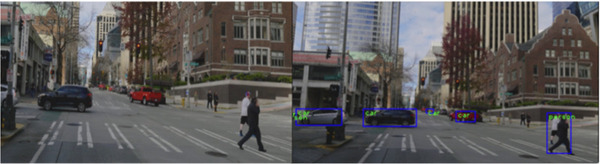
Intelligent vehicles utilize a combination of video-enabled object detection and radar data to traverse safely through surrounding environments. However, since the most momentary missteps in these systems can cause devastating collisions, the margin of error in the software for these systems is small. In this paper, we hypothesized that a novel object detection system that improves detection accuracy and speed of detection during adverse weather conditions would outperform industry alternatives in an average comparison.

Read More...
The effect of activation function choice on the performance of convolutional neural networks

Wang et al. | Sep 15, 2023

The effect of activation function choice on the performance of convolutional neural networks
Image credit: Tara Winstead

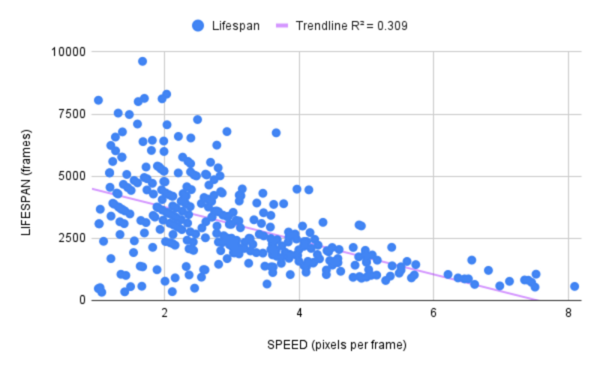
With the advance of technology, artificial intelligence (AI) is now applied widely in society. In the study of AI, machine learning (ML) is a subfield in which a machine learns to be better at performing certain tasks through experience. This work focuses on the convolutional neural network (CNN), a framework of ML, applied to an image classification task. Specifically, we analyzed the performance of the CNN as the type of neural activation function changes.

Read More...

Comparative study on three machine learning models in novel autonomous drone-based detection of invasive plant Brassica nigra

Ho et al. | Jul 05, 2026

Comparative study on three machine learning models in novel autonomous drone-based detection of invasive plant <em>Brassica nigra</em>

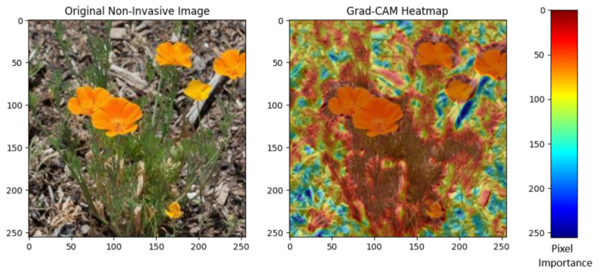
Autonomous drone imaging combined with machine learning offers a promising approach for early detection of invasive species. In this study, students built an autonomous drone and compared three models: CNN, SGDC, and XGBoost, to identify Brassica nigra from aerial footage. Their results show that CNNs most effectively recognize key visual features, demonstrating strong potential for supporting conservation and invasive plant management.

Read More...

AeroPurify: Autonomous air filtration UAV using real-time 3-D Monte Carlo gradient search

Kadakia et al. | Sep 01, 2025

AeroPurify: Autonomous air filtration UAV using real-time 3-D Monte Carlo gradient search
Image credit: Ian Usher

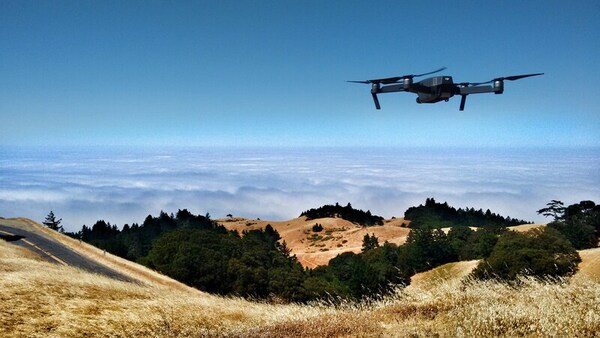
Here the authors present an autonomous drone air filtration system that uses a novel algorithm, the gradient ascent ML particle filter (GA/MLPF), to efficiently locate and mitigate outdoor air pollution. They demonstrate that their GA/MLPF algorithm is significantly more efficient than the conventional gradient ascent algorithm, reducing both the time and number of waypoints needed to find the source of pollution.

Read More...